











Capsule Size Chart: 000 to 5 Volume and Fill Weight by Density
A complete reference for empty hard capsule sizes 000 through 5 — outer dimensions, lock length, fill volume, and the fill-weight-by-density matrix that turns a formulation's bulk density into a target capsule size.
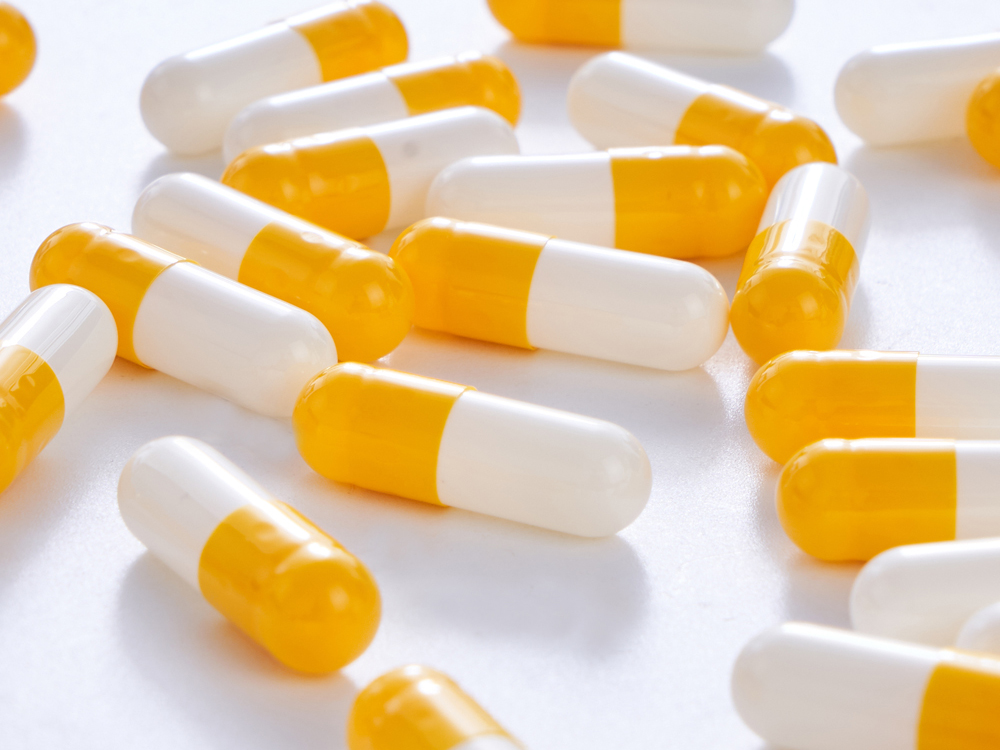
I export empty hard capsules to pharmaceutical and supplement buyers across North America, Europe, the Middle East, and Southeast Asia, and the single most common question my team gets is: "what size capsule do I need for a 500 mg dose of my formulation?" The answer is not just "size 0" or "size 00" — it depends on the bulk density of your formulation, which determines the volume your dose occupies, which in turn determines the capsule size you should specify. Because the same milligram dose can occupy very different volumes depending on whether the powder is fluffy (low density) or dense (high density), a fill-weight-only chart is misleading — buyers need the volume number, the density of their formulation, and the working-fill factor in order to lock in the right capsule.
The chart above is the working reference we use internally. The dimensions come from the pharmacopeia-aligned standard for empty hard capsules — published across WHO general guidance for pharmaceutical excipients, the United States Pharmacopeia (USP) informational chapter on capsule dimensions, the European Pharmacopoeia (EP) monograph on capsules, and the Japanese Pharmacopoeia (JP) capsule chapter. For regulatory compliance in the US market, the operative rule for capsule composition, dissolution, and labeling is 21 CFR, Chapter I, Subchapter D, administered by the FDA. For buyers working across multiple markets, the European Medicines Agency (EMA) and Japan PMDA provide the corresponding regulatory frames.
How to Read the Chart (Volume + Density + Working Fill)
The chart is a three-step calculation: bulk density turns dose into volume, capsule volume picks the size, and the working-fill factor keeps the capsule from splitting. Because the nominal volume of a capsule is what limits how much powder it can hold — not the mass — buyers who specify capsules by milligram dose alone will either undersize (capsule does not close) or oversize (capsule feels under-filled to the consumer).
Step 1 — Measure the Bulk Density of Your Formulation
Bulk density is the mass per unit volume of your powder or granule as it it, in a graduated cylinder or density cup, without tapping. Divide the mass by the volume to get bulk density in g/mL. For reference:
- Light / fluffy botanical powders (e.g., milk thistle, turmeric extract): typically 0.3–0.5 g/mL
- Standard vitamin / mineral powders (e.g., ascorbic acid, magnesium citrate): typically 0.5–0.7 g/mL
- Dense mineral blends (e.g., calcium carbonate, zinc oxide): typically 0.8–1.0 g/mL
- Heavy granulated APIs (e.g., paracetamol DC grade): typically 0.9–1.2 g/mL
Step 2 — Convert Your Dose into a Volume
Volume (mL) = Dose (mg) / (Bulk density (g/mL) × 1000). For example, a 500 mg dose of an 0.8 g/mL formulation occupies 500 / (0.8 × 1000) = 0.625 mL of volume. Looking at the chart, size 0 (0.78 mL) and size 00 (0.95 mL) both have enough volume — with size 0 leaving a tighter margin.
Step 3 — Apply the 90% Working Fill Rule
The fill-weight values in the chart are calculated at 90% of nominal volume — leaving 10% headspace inside the closed capsule. Because overfilling is the most common cause of capsule splitting, mal-closure, and machine jamming, the 90% working fill is the conservative default that holds across manual and automatic encapsulation equipment. For low-density fluffy powders where flow is hard to control, 80% may be the safer target.
Size Dimensions Reference
The standard capsule sizes run from largest (000) to smallest (5), with size 0 and size 00 being the most common in dietary supplement and OTC pharmaceutical products. Because size 0 and size 00 are the two sizes that match the majority of human oral dosage forms and are also the most readily available from any GMP-certified capsule supplier, buyers defaulting to one of these two sizes avoid both tooling shortages and minimum-order-quantity premiums.
| Size | Common application | Typical formulation |
|---|---|---|
| 000 | Maximum-fill nutraceuticals, herbal doses | Multi-ingredient botanical blends, large-dose protein isolates |
| 00 | Standard large nutraceutical, OTC pain reliever | Multi-vitamin, glucosamine/chondroitin, omega-3 powder blends |
| 0 | Default pharmaceutical / supplement size | Standard vitamin D, magnesium, probiotic blends, prescription generics |
| 1 | Smaller supplement dose, pediatric (under supervision) | CoQ10, lutein, lower-dose single ingredients |
| 2 | Smaller active dose, micro-tablet alternative | Lycopene, astaxanthin, specialty extracts |
| 3 | Low-dose active, micro-nutrient | Folate, biotin, vitamin B12 (high-potency) |
| 4 | Very low dose, clinical / research use | Trial medications, hormonal micro-doses |
| 5 | Micro-dose, veterinary micro-tablet | Potent APIs, hormone micro-dosing, veterinary trace additives |
Material Considerations: Gelatin vs HPMC vs Pullulan
The empty capsule material affects dissolution behavior, shelf-life moisture sensitivity, and slightly the fill capacity of the same size. Because HPMC capsule walls are marginally thicker than gelatin walls of the same nominal size, switching a formulation from gelatin to HPMC typically reduces fill capacity by 5-10% — which means a formulation that exactly fits a size 0 gelatin capsule may need a size 00 HPMC capsule to hold the same dose.
- Gelatin (bovine / porcine): Most common; fast dissolution (typically under 10 minutes); best for powders, granules, and most standard pharmaceutical formulations. Sensitive to high humidity during storage. Browse gelatin hollow capsules →
- HPMC (hydroxypropyl methylcellulose): Vegetarian / vegan; slower dissolution but tolerant of low-humidity conditions; best for hygroscopic APIs and probiotic formulations. Slightly thicker walls, ~5-10% less fill capacity than gelatin.
- Pullulan: Plant-based polysaccharide; clean-label friendly; excellent oxygen barrier; best for oxygen-sensitive APIs, probiotics, and high-end nutraceutical positioning. Comparable fill capacity to gelatin.
Industry Standard Tolerances and Pharmacopeia Compliance
Empty hard capsules from any GMP-certified manufacturer will fit the same encapsulation tooling to within standard tolerance bands, because the dimensions are pharmacopeia-defined. Because USP, EP, and JP all publish capsule dimension standards within tight tolerance bands (typically ±0.1 mm on outer diameter and ±0.5 mm on lock length), buyers can switch capsule suppliers without re-tooling their encapsulation machine — provided both suppliers are pharmacopeia-compliant.
| Standard | Coverage | Verification |
|---|---|---|
| USP (United States Pharmacopeia) | Capsule dimensions, disintegration, dissolution, composition limits | Supplier CoA per batch |
| EP (European Pharmacopoeia) | Capsule dimensions, identification, microbial limits | EP monograph 0016 (capsules) |
| JP (Japanese Pharmacopoeia) | Capsule dimensions, dissolution, content uniformity | JP monograph on capsules |
| 21 CFR (US Code of Federal Regulations) | Composition, labeling, GMP manufacturing requirements | FDA inspection / DMF reference |
| WHO (TRS guidance) | Excipient safety, global supply chain quality | WHO Technical Report Series |
| IPEC (International Pharmaceutical Excipients Council) | Excipient GMP, supply chain qualification | IPEC-PQG GMP guide |
The International Pharmaceutical Excipients Council (IPEC) is the industry body that defines the GMP framework for excipient manufacturers, including capsule producers. The GMP compliance framework that all reputable capsule suppliers work to is anchored in IPEC-PQG guidance and harmonized with the FDA's current Good Manufacturing Practice (cGMP) expectations. For buyers sourcing across markets, the WHO Health Product and Policy Standards team publishes the cross-cutting framework that most regulators align to.
4 Common Capsule-Fill Mistakes (and How to Avoid Them)
Most fill-weight problems trace back to one of four mistakes that the chart above helps catch before they cost a production run.
// Mistake 01 — Specifying capsule size by milligram dose alone
A 500 mg dose in a 0.3 g/mL botanical powder occupies 1.67 mL — that needs size 000, not size 0. Buyers who specify by dose without checking bulk density end up with split capsules or jammed machinery.
Fix: Always measure bulk density first, convert dose to volume, then pick the size that holds 110-115% of that volume before the 90% working fill rule.// Mistake 02 — Forgetting the working-fill factor
Filling a size 0 capsule to 100% of nominal 0.78 mL leaves zero headspace. Any small variation in fill weight, capsule wall thickness, or machine dosing tolerance pushes the cap loose or splits the capsule on closing.
Fix: Use 90% of nominal volume as the working fill ceiling. For low-density powders where flow is uneven, drop to 80%.// Mistake 03 — Switching capsule suppliers without re-running the fill trial
Even pharmacopeia-standard capsules vary in actual lock length and wall thickness between suppliers. A size 0 from one GMP supplier may have a lock length of 21.7 mm; another may have 21.4 mm — and the difference affects fill uniformity on automated equipment.
Fix: Run a 100-capsule fill trial at every new supplier qualification, and check fill-weight uniformity against the USP <905> uniformity-of-dose standard.// Mistake 04 — Ignoring material-specific fill adjustments
A formulation that fits a size 0 gelatin capsule may not fit a size 0 HPMC capsule, because HPMC walls are thicker. Switching material without re-checking the chart wastes a production batch.
Fix: Re-run the bulk density check and the fill trial every time you switch capsule material — even if the nominal size and dose are unchanged.Practical Selection Guide
For buyers working in pharmaceutical R&D or clinical trial manufacturing, the smaller sizes (3, 4, 5) become the default because most APIs in development are potent at low doses. For buyers working in the dietary supplement category, the bigger sizes (0, 00, 000) are the default because most botanical and vitamin doses are large by mass. Shancy's GMP-certified capsule line covers the full size range from 000 to 5, with sample kits available for buyers running multi-size trials.
Need Samples or a Quote for a Specific Size?
Send us your formulation's bulk density, your target dose in mg, and your preferred capsule material (gelatin / HPMC / pullulan). We will send back a sample kit with the recommended sizes and a quote for the production run — typically within two working days.
REQUEST QUOTE & SAMPLES →Closing Note
If I had to summarize capsule sizing in one sentence for a buyer about to specify the production BOM: capsule size selection is a volume calculation, not a weight calculation — measure your formulation's bulk density, convert your dose to volume, then pick the size that holds 110-115% of that volume. The chart above is the working reference that turns that sentence into a number.
For a project-specific walkthrough of which size fits your formulation, which material is right for your market, and what sample kit to send first, the Shancy team is happy to put a side-by-side recommendation together. Reach out via the contact page or browse the gelatin hollow capsule product range to see the full size and color options.