











Empty Hard Capsule Procurement Checklist for US FDA-Registered Contract Manufacturers
Quick Navigation: Why the Right Capsule Supplier Matters | Regulatory Baseline | Capsule Type Selection | Technical Specifications | Supplier Qualification | Quality & Documentation | Cost & Supply Chain | FAQ
Who This Checklist Is For: This guide is written for procurement managers, quality assurance leads, and supply chain directors at US FDA-registered contract manufacturing organizations (CMOs) who are qualifying or re-qualifying suppliers of empty hard capsules for solid oral dose drug products. Whether you are sourcing gelatin capsules, HPMC capsules, or pullulan capsules, the principles here apply across all three material types.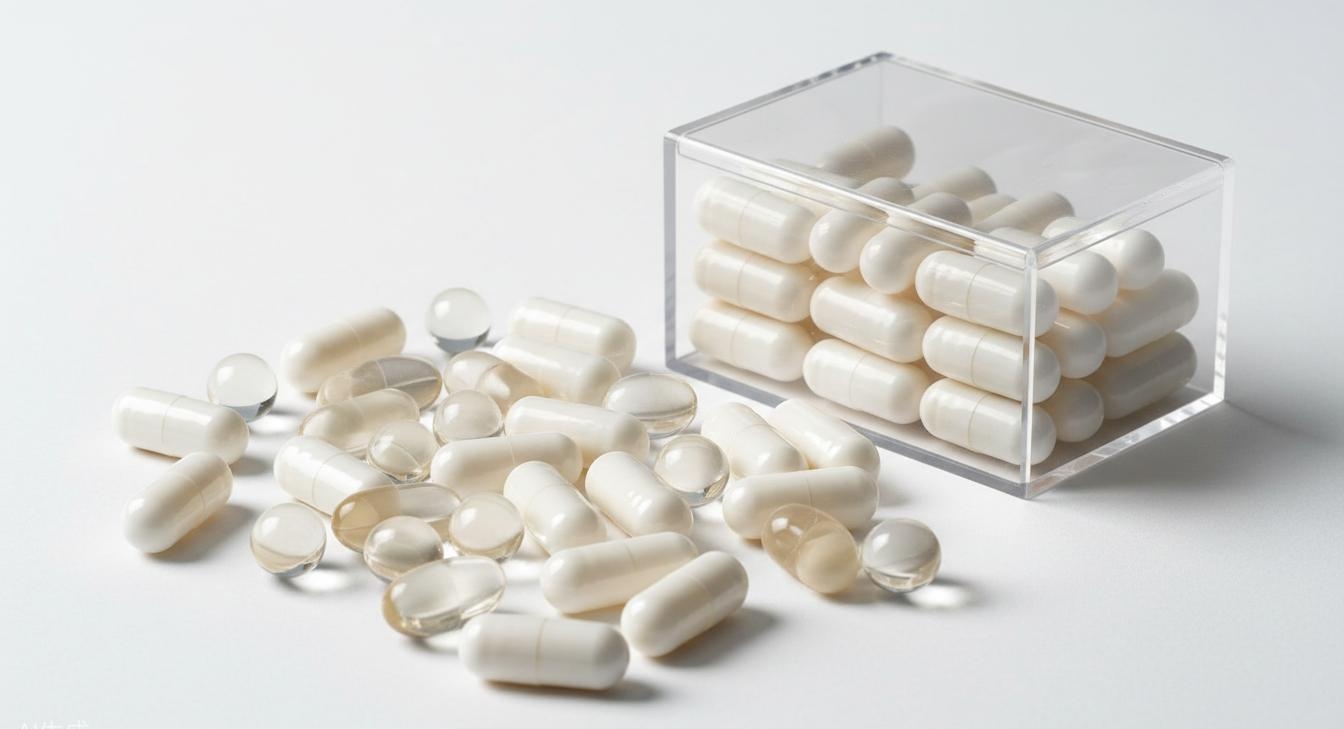
1. Why the Right Capsule Supplier Actually Matters
When you are running a US FDA-registered contract manufacturing operation, the capsule you buy is not just a packaging component. It is a drug product constituent. The FDA treats empty hard capsules as critical pharmaceutical excipients because they directly affect bioavailability, stability, and patient safety. A poor procurement decision does not just cost you money — it can trigger a Form483 observation, a voluntary recall, or worse, a Warning Letter citing inadequate control of pharmaceutical excipients.
I have worked with contract manufacturers across North America, Europe, and Southeast Asia for over a decade, and the single most common procurement failure I see is treating capsule sourcing as a commodity purchasing decision rather than a regulatory qualification exercise. The difference between a qualified supplier and a random supplier is stark: qualified suppliers maintain Type III Drug Master Files (DMFs) with the FDA, operate under cGMP conditions, and provide batch-specific Certificates of Analysis (CoA) that your QA team can actually audit. Random suppliers sell you capsules that may perform adequately in a pilot batch and then fail badly at registration stability or commercial scale.
This checklist is designed to give you a structured, field-tested framework for evaluating capsule suppliers — whether you are running your first qualification or re-qualifying a current supplier after a regulatory audit finding. Work through each section before you issue a purchase order.
2. Regulatory Baseline: FDA Requirements, DMF Status, and cGMP Compliance
2.1 FDA Registration and DMF Requirements
Your contract manufacturer's regulatory team needs to confirm — before you place any order — that the capsule supplier holds a valid Type III Drug Master File with the FDA. A Type III DMF covers the chemistry, manufacturing, and controls (CMC) data for the capsule material and is the mechanism by which the FDA evaluates the excipient without disclosing confidential supplier data to your company directly.
Specifically, verify the following:
- DMF Number and Status: Confirm the DMF is listed as "active" in the FDA's published DMF list. A DMF that has been withdrawn or deemed inactive cannot be referenced by your contract manufacturer's NDA or ANDA submission.
- Letter of Authorization (LOA): The supplier must provide a Letter of Authorization that allows your contract manufacturer to reference the DMF in their regulatory submission. Without an LOA, your CMO cannot legally rely on the DMF data.
- DMF Annual Update: Check whether the DMF has been updated within the last 12 months. The FDA expects DMF holders to file annual reports. A stale DMF is a red flag for inadequate regulatory maintenance.
- FDA Facility Registration: The manufacturing facility must be registered with the FDA under the Food Safety Modernization Act (FSMA). Request the FDA Establishment Identifier (FEI) number and verify it against the FDA's online registry.
2.2 cGMP Compliance Documentation
The FDA expects pharmaceutical excipient manufacturers to comply with appropriate cGMP requirements. For empty hard capsules, relevant frameworks include:
- ISO 15378:2017: The primary GMP standard for manufacturers of primary packaging materials for medicinal products. This is the non-negotiable baseline for capsule manufacturers supplying the pharmaceutical industry.
- 21 CFR Part 211 (Subparts B through I): Relevant subparts cover identity and strength testing of components (211.84), control of components and drug product containers and closures (211.94), and production and process controls (211.100).
- ICH Q7 Good Manufacturing Practice Guidance: While primarily for active pharmaceutical ingredients (APIs), Q7 principles are increasingly applied to critical excipients including capsules.
Request a copy of the supplier's most recent GMP audit report. If they cannot produce one within 30 days of your request, that itself is a qualification failure. A serious supplier will have third-party audit reports from organizations such as NSF International, SGS, or Bureau Veritas — not just internal audit reports.
3. Capsule Type Selection: Gelatin, HPMC, and Pullulan
Choosing the right capsule material is the first and most consequential decision in the procurement process. Each of the three primary capsule types carries distinct regulatory, technical, and commercial implications for a US FDA-registered contract manufacturer.
3.1 Gelatin Capsules
Gelatin capsules remain the most widely specified capsule type globally, accounting for an estimated 75–80% of all empty hard capsule usage in the pharmaceutical industry. They are manufactured from collagen derived from bovine hide, porcine skin, or fish sources. For US FDA-registered manufacturers, the animal source matters significantly:
- BSE/TSE Compliance: The supplier must provide a Certificate of Suitability (CEP) from the European Directorate for the Quality of Medicines (EDQM) or equivalent documentation confirming the gelatin is free from Transmissible Spongiform Encephalopathy (TSE) risk. For regulatory guidance on TSE risk, consult the WHO guidelines on TSE risk assessment.
- Animal Source Disclosure: Your contract manufacturer is obligated to disclose the capsule's animal origin in their regulatory submission. For certain markets (Middle East, Southeast Asia), bovine gelatin requires HALAL certification.
- Gelatin Grade: Pharmaceutical-grade gelatin must meet USP less-than 661 greater-than specifications. Food-grade or industrial-grade gelatin is not acceptable for drug product encapsulation.
3.2 HPMC (Hydroxypropyl Methylcellulose) Capsules
HPMC capsules are plant-based and have become the preferred alternative for vegetarian and vegan formulations, as well as for products where gelatin cross-linking poses a stability challenge. The global HPMC capsule market has grown at approximately 7–9% annually since 2020, driven largely by the expansion of nutraceutical contracts specifying plant-based excipients.
For US FDA-registered manufacturers, HPMC capsules present a specific technical consideration: moisture absorption kinetics differ from gelatin. HPMC capsules typically have lower moisture content at equilibrium, which can be an advantage for hygroscopic drug formulations but requires re-validation of the dissolution and disintegration profile if you are switching from gelatin. Your formulation team needs to run bridging studies before approving HPMC for a commercial product.
- USP less-than 661 greater-than Compliance: HPMC capsules must meet the same USP less-than 661 greater-than testing requirements as gelatin capsules, including container closure integrity testing (CCIT) in some applications.
- Non-GMO Verification: For contract manufacturers serving the European or North American nutraceutical markets, Non-GMO project verification may be required. Request the supplier's raw material statement.
- Colorant and Additive Disclosure: HPMC capsules use different colorant systems than gelatin. Verify that all additives are listed in the supplier's DMF and are included in your CMO's regulatory submission.
3.3 Pullulan Capsules
Pullulan capsules are the newest entrant in the pharmaceutical-grade empty capsule market, manufactured from the fermentation of tapioca starch by the fungus Aureobasidium pullulans. Pullulan is a naturally gluten-free, vegan polysaccharide with excellent film-forming properties. For US FDA-registered manufacturers, pullulan capsules are particularly attractive for:
- Oxygen barrier properties superior to both gelatin and HPMC — important for moisture- and oxygen-sensitive APIs
- No risk of animal-sourced pathogen concerns (TSE/BSE, viral contamination)
- Clear film transparency allowing visual inspection of the fill contents
- Excellent compatibility with hygroscopic formulations due to low moisture equilibrium
Pullulan capsules are currently priced at a premium of approximately 30–50% above equivalent gelatin capsules, which limits their use to high-value formulations. However, for contract manufacturers serving the clinical trial supply market or high-potency drug products, the technical performance benefits often justify the cost premium.
4. Technical Specifications Checklist
Before issuing a purchase order, your QA and formulation teams need to sign off on these technical specifications. Each parameter must appear in the supplier's specification sheet and be verified against the batch-specific CoA delivered with each shipment.
| Parameter | Test Method | Acceptance Criterion | CoA Required? |
|---|---|---|---|
| Capsule Size | Calibrated gauge / micrometer | Per USP less-than 479 greater-than (Size 0 to 5) | Yes |
| Cap-Body Locking Strength | USP less-than 1174 greater-than Separation Force | Greater-than or equal to 20 N (typical) | Yes |
| Disintegration Time | USP less-than 701 greater-than in 0.1N HCl at 37 degrees C | Less-than or equal to 10 minutes (unfilled) | Yes |
| Dissolution | USP less-than 711 greater-than Apparatus 1 (basket), 50 rpm | Greater-than or equal to 75% dissolved in 30 min (unfilled) | Yes |
| Moisture Content (LOD) | USP less-than 731 greater-than Loss on Drying | Gelatin: less-than or equal to 13%; HPMC: less-than or equal to 7%; Pullulan: less-than or equal to 6% | Yes |
| Friability | USP less-than 1216 greater-than | Less-than or equal to 1% weight loss | Yes |
| Microbial Limits (TVMC) | USP less-than 61 greater-than | TVMC less-than or equal to 10 superscript 3 CFU/g; E. coli: absent; S. aureus: absent | Yes |
| Heavy Metals | USP less-than 233 greater-than ICP-OES | Pb less-than or equal to 5 ppm; As less-than or equal to 2 ppm; Cd less-than or equal to 1 ppm; Hg less-than or equal to 1 ppm | Yes |
| Appearance | Visual inspection | No cracks, dents, or deformation; uniform color | Yes |
Fill Volume and Size Selection Note: The correct capsule size is determined by the bulk density and dose weight of the fill formulation, not by guesswork. Standard capsule fill volumes range from approximately 0.13 mL (Size 5) to 1.37 mL (Size 000). Your formulation team should use the formula:Minimum capsule volume = (dose weight / bulk density) times 1.2 (the 1.2 factor provides 20% headspace for proper cap seating). Selecting an undersized capsule results in overfill and failed regulatory content uniformity tests (USP less-than 905 greater-than).
5. Supplier Qualification Checklist
Use this section as your formal supplier qualification record. Each item must be documented and retained in your vendor management file for FDA inspection readiness.
- Vendor Questionnaire: Complete the supplier's standard vendor questionnaire covering manufacturing facilities, quality management system, regulatory history, and change control procedures. Require a response within 15 business days.
- On-Site Audit or Third-Party Audit Report: For initial qualifications, conduct an on-site GMP audit of the capsule manufacturing facility. If travel is not feasible, accept a third-party audit report from an accredited organization. Audit scope must cover: incoming raw material control, manufacturing process controls, in-process quality testing, finished product release testing, environmental monitoring, and change control.
- Regulatory History Review: Search the FDA's Warning Letters database and import alerts to identify any regulatory compliance actions against the supplier. A history of import alerts for capsules is a disqualifying condition. The FDA compliance guidance for pharmaceutical excipients provides the regulatory framework used in these actions.
- Financial Stability Assessment: Request two years of audited financial statements or a bank reference. A supplier that goes bankrupt mid-supply contract is a serious risk to your product continuity and regulatory obligations.
- Change Control Policy: Obtain the supplier's written change control policy. You need to know in advance how the supplier will notify you of material changes — manufacturing site relocation, raw material supplier change, specification tightening, or discontinuation of a capsule size. A supplier without a formal change control procedure is a major regulatory risk.
- Traceability System: Verify that the supplier maintains complete traceability from the raw material batch (e.g., gelatin lot from a specific animal processing facility) to the finished capsule batch shipped to you. Traceability documentation must be retrievable within 48 hours of a regulatory inquiry.
- Capacity and Lead Time Assessment: Confirm the supplier's annual production capacity against your projected volume. For commercial products, minimum committed inventory should cover 90 days of demand. Lead times for custom capsule colors or sizes typically range from 8 to 16 weeks.
- Customer References: Request two to three reference customers in the pharmaceutical industry who have used the supplier for at least 12 months. Ask specifically about: responsiveness to quality complaints, CoA accuracy and completeness, on-time delivery performance, and how they handled a documented quality failure.
6. Quality Assurance, Documentation, and Ongoing Monitoring
Supplier qualification is not a one-time event — it is a continuous process. The FDA expects your quality unit to maintain ongoing oversight of all critical suppliers, including capsule suppliers.
6.1 Incoming Quality Control (IQC) Testing
Upon receipt of each capsule shipment, your QC laboratory must perform at minimum:
- Visual inspection of 100 capsules for appearance defects (cracking, deformation, color variation)
- Weight variation test per USP less-than 2091 greater-than (20 capsules, individual weights)
- Disintegration verification on a random sample of 6 capsules
- CoA verification against your approved specification sheet
- Container closure integrity test (CCIT) if specified for your product
6.2 Periodic Supplier Audits
Schedule a formal re-qualification audit every two years for suppliers with an established and compliant track record. For new suppliers or suppliers with audit findings, conduct annual audits. Document all audit findings, corrective action requests (CARs), and supplier responses. The FDA Guide to Inspections of Pharmaceutical Quality Control Laboratories provides additional context on how inspectors evaluate supplier control programs.
6.3 Complaint Handling and Deviation Management
Establish a written procedure for managing capsule-related complaints. A quality complaint related to capsules — such as inconsistent locking strength causing cap separation during packaging, or disintegration failures in stability samples — must trigger a formal investigation within your quality system and a Supplier Corrective Action Request (SCAR) to the capsule manufacturer. Your supplier service level agreement (SLA) should specify maximum response times: 24 hours for urgent complaints (e.g., a product recall threat), 10 business days for standard corrective action plans.
7. Cost Drivers, Pricing Models, and Supply Chain Risk
Empty hard capsule pricing is influenced by multiple factors that procurement managers need to understand before negotiating a supply agreement. Gelatin capsule pricing is primarily driven by raw material collagen prices, which fluctuate with cattle market conditions. In 2023–2024, bovine gelatin prices ranged from approximately USD 6–12 per kilogram for pharmaceutical-grade material, depending on source, certification level, and order volume.
HPMC capsule pricing is driven by cellulose ether feedstock costs, which are less volatile than bovine markets but have shown increasing price pressure due to tightness in specialty chemical supply chains. Pullulan capsule pricing remains the highest due to the fermentation-based manufacturing process and lower global production capacity.
Key Commercial Terms to Negotiate:
- Volume Commitment Tiers: Most capsule suppliers offer tiered pricing based on annual volume commitments. A12-month rolling forecast with a minimum order quantity (MOQ) commitment typically unlocks the best pricing. Negotiate for a +/- 20% flexibility window on volume commitments to protect against demand fluctuations.
- Price Adjustment Clauses: For multi-year contracts, include a raw material price escalation clause tied to a publicly available commodity index. Without this, a gelatin price spike could make your supply agreement commercially unviable within 18 months.
- Dual-Source Strategy: For critical commercial products, qualify two approved capsule suppliers. A single-source strategy for a critical excipient is a significant supply chain risk that your quality and operations leadership should formally acknowledge in a risk register. The FDA has issued specific guidance on single-source excipient risks in its Guidance for Industry on Supply Chain Integrity.
- Payment Terms: Standard payment terms in the pharmaceutical excipient industry are Net 30 from date of invoice, subject to satisfactory IQC release. Avoid prepayments for suppliers that have not been audited — this creates both financial and counterfeiting risk.
- Intellectual Property and Regulatory Ownership: Confirm in the supply agreement that the supplier will not claim ownership over any regulatory submissions or documentation you provide. Some suppliers have attempted to assert IP claims over formulation data submitted during the qualification process — this must be explicitly addressed in the contract.
8. Final Pre-Purchase Order Checklist
Before issuing a purchase order, run through this final checklist with your QA Manager and Supply Chain Manager. Every item must have a documented response — yes, no, or N/A with written justification.
- Type III DMF active and LOA received and filed?
- ISO 15378:2017 GMP certificate current and not expiring within 12 months of PO date?
- FDA facility registration confirmed (FEI number verified)?
- Third-party GMP audit report received and reviewed with no critical findings open?
- Capsule specification sheet reviewed and approved by QA?
- Capsule type selection (gelatin / HPMC / pullulan) confirmed by Formulation?
- Capsule size confirmed by Formulation based on fill density and dose weight?
- First article / pilot batch trial completed and results reviewed?
- Sample CoA received and verified against approved specification?
- HALAL / KOSHER / non-GMO certificates received and filed (if required by product labeling)?
- BSE/TSE CEP or equivalent documentation received and filed for gelatin capsules?
- Change control notification procedure reviewed and agreed with supplier?
- Traceability system documented and verified?
- Supplier SLA reviewed and signed: complaints, deviations, corrective actions?
- Commercial terms: pricing, lead time, MOQ, payment terms finalized?
- Dual-source risk formally assessed and accepted by management?
Frequently Asked Questions
What capsule types are approved for US FDA-registered contract manufacturers?
Gelatin, HPMC (plant-based), and pullulan capsules are all acceptable for US FDA-registered contract manufacturers. Gelatin capsules require USP-compliant bovine or porcine sourced material. HPMC capsules must meet USP less-than 661 greater-than requirements. Pullulan capsules offer vegetarian certification and are increasingly specified in clinical formulations. All three types must have a filed Drug Master File (DMF) with the FDA.
What is a Drug Master File (DMF) and why does it matter for capsule procurement?
A Drug Master File (DMF) is a confidential submission to the FDA containing data about the manufacturing process, facilities, controls, and specifications of a pharmaceutical excipient. A Type III DMF is the standard for empty hard capsules, and your contract manufacturer must have letternd access to reference it in their New Drug Application (NDA) or Abbreviated New Drug Application (ANDA).
How do I verify HALAL and KOSHER certifications for capsule sourcing?
Request the original HALAL certificate from a recognized certification body. Verify the certificate covers the specific production line and batch numbers you are purchasing. For gelatin capsules, confirm the animal source species and the slaughter method complies with HALAL requirements. Keep copies of all certificates on file and check expiry dates at every purchase order renewal.
What are the standard size ranges for empty hard capsules?
Empty hard capsules are manufactured in standard size categories from 000 (largest, approximately 1.37 mL fill volume) down to 5 (smallest, approximately 0.13 mL fill volume). The most common sizes for solid oral dose formulations are size 0, size 1, and size 2. Your contract manufacturer's formulation team must specify the capsule size based on the dose weight, bulk density of the fill material, and the target dissolution profile.
What quality tests should be specified in a capsule Certificate of Analysis (CoA)?
A compliant Certificate of Analysis for empty hard capsules should include: appearance and color, dimensions, locking strength (separation force), friability, disintegration time in simulated gastric fluid at 37 degrees Celsius, moisture content (Loss on Drying), dissolution per USP 711, microbial limits per USP 61 and 62, heavy metals per USP 233, and particle size distribution. Request batch-specific CoA with each shipment.
How does GMP compliance factor into capsule supplier qualification?
GMP compliance for capsule manufacturers is governed by 21 CFR Part 211 and 21 CFR Part 110. For contract manufacturers sourcing capsules, the supplier must demonstrate ISO 9001:2015 quality management system, ISO 15378 GMP for pharmaceutical packaging materials, regular internal and third-party audits, documented change control procedures, environmental monitoring programs, and traceability from raw material to finished capsule batch.