











Gelatin Capsules Wholesale: Size 0 to 4 BSE/TSE-Free Bovine Source for Pharmaceutical Contract Manufacturers
TL;DR — Key Takeaways
- BSE/TSE-free gelatin capsules in sizes 0-4 are available wholesale from GMP-certified Chinese manufacturers, with FDA-registered facilities and HALAL certification. Shancy Capsule produces 10 billion+ capsules annually across 12 automated production lines at the Renhe facility.
- Size 0 capsules hold approximately 680mg of fill weight; Size 1 holds ~400mg. Always match capsule size to your filling equipment compatibility specs before placing large orders.
- A valid FDA Drug Master File (DMF) and BSE/TSE Certificate of Suitability are non-negotiable requirements for pharmaceutical contract manufacturers sourcing from Chinese suppliers.
- Low minimum order quantities starting at 1 full carton (~70,000-100,000 capsules) make it feasible for emerging contract manufacturers to access premium-quality capsules.
- Request batch-specific Certificate of Analysis for every shipment—including dissolution, moisture, microbial, and heavy metal results per USP/EP standards—before releasing product into your manufacturing line.
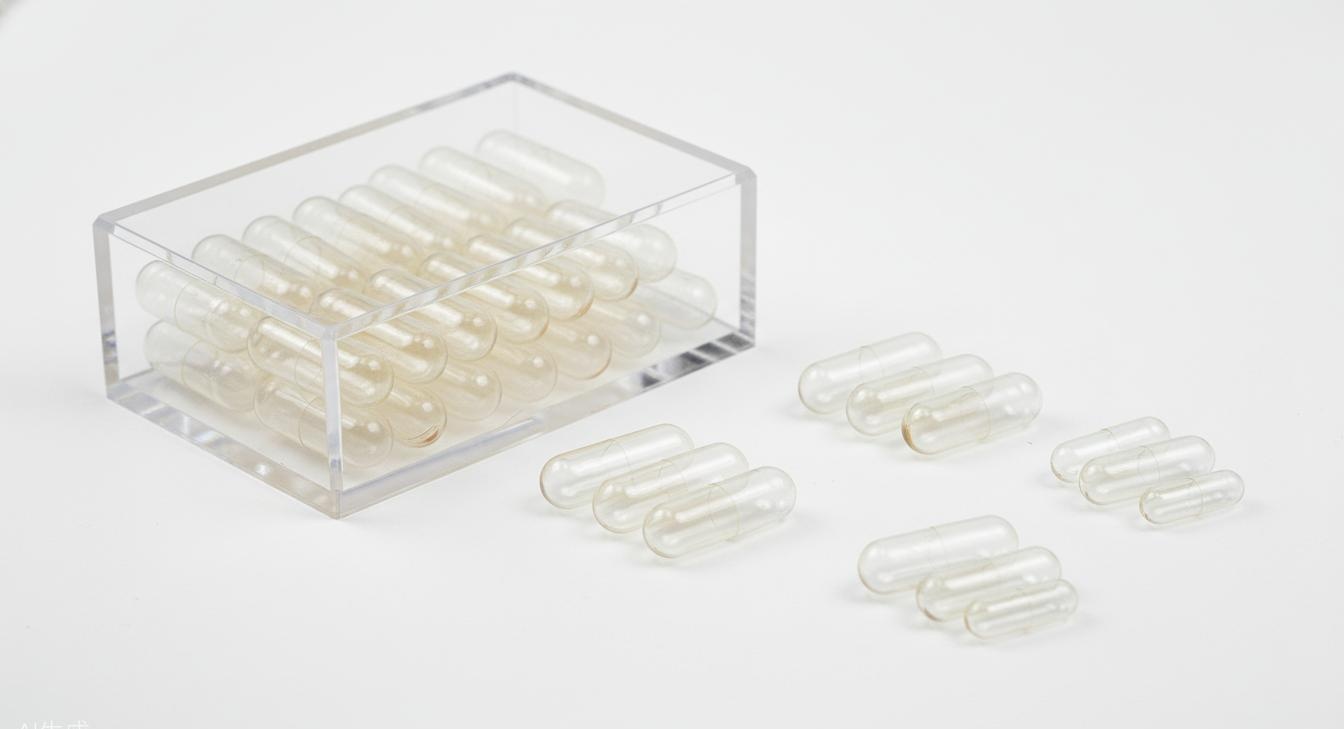
Why BSE/TSE-Free Sourcing Is Non-Negotiable for Pharmaceutical Contracts
When I first started working with pharmaceutical contract manufacturers in North America and Europe eight years ago, one of the very first questions their quality teams asked me was: "Can you confirm your gelatin is BSE/TSE-free?" At the time, I noticed that some buyers did not fully understand why this mattered—they just knew their procurement spec required it. Let me explain why this certification is foundational to any serious pharmaceutical supply relationship.
BSE (Bovine Spongiform Encephalopathy) and TSE (Transmissible Spongiform Encephalopathy) refer to a family of progressive neurodegenerative diseases affecting cattle. The infectious agent—a misfolded prion protein—cannot be eliminated through standard sterilization or pharmaceutical manufacturing processes. Because gelatin is derived from bovine hides and bones, any gelatin used in orally administered pharmaceuticals must be sourced from verified BSE/TSE-free animals. This is not a regulatory checkbox. It is a patient safety imperative.
In the European Union, the EMA has maintained strict sourcing requirements for pharmaceutical gelatin since the BSE crisis peaked in the 1990s. In the United States, FDA guidance and the presence of a DMF with BSE/TSE certification are expected by quality-aware pharmaceutical buyers. If you are a contract manufacturer sourcing capsules for a regulated market, your customer will ask you to demonstrate the BSE/TSE-free status of every excipient—including your capsules. That is why we ensure every batch from Shancy's Renhe facility comes with a Certificate of Suitability (CEP) from a relevant regulatory authority.
Capsule Size Guide: Matching Size 0-4 to Your Formulation and Equipment
One of the most common mistakes I see among emerging pharmaceutical contract manufacturers is ordering capsule sizes based on assumptions rather than actual equipment compatibility. Capsule size selection has direct implications for your fill weight, encapsulation speed, and downstream packaging. Here is what you need to know:
| Size | Body Diameter (mm) | Body Length (mm) | Approx. Fill Capacity (mg) | Common Application |
|---|---|---|---|---|
| 00 | 8.53 | 23.40 | 950 | Large-volume solid doses, herbal extracts |
| 0 | 7.65 | 21.70 | 680 | Standard pharmaceuticals, probiotics |
| 1 | 6.91 | 19.40 | 400 | Most prescribed capsules, antibiotics |
| 2 | 6.35 | 18.00 | 300 | Potent compounds, smaller doses |
| 3 | 5.82 | 16.00 | 200 | Pediatric formulations, low-dose drugs |
| 4 | 5.31 | 14.30 | 120 | Very low-dose formulations, research |
These figures are approximate and vary slightly by manufacturer. I always recommend that our clients order a physical sample kit (typically 1,000 capsules per size) and run compatibility trials on their actual filling equipment before committing to a large wholesale order. Nothing frustrates me more than hearing about a contract manufacturer who ordered a full container and then discovered their encapsulator runs most smoothly on Size 1, not the Size 0 they ordered. Do the sample trial first.
At Shancy Capsule, we produce capsules across all standard sizes from 00 down to 5. Beyond standard sizes, we offer custom size modifications for proprietary delivery systems. Our technical team works directly with your R&D and engineering groups during the qualification phase to ensure the capsule specifications you have selected will perform optimally on your production line.
What Certifications Must Your Wholesale Gelatin Capsule Supplier Have?
Not all certifications carry equal weight. In my experience reviewing supplier qualifications for pharmaceutical contract manufacturers across four continents, the following certifications are the ones that actually matter in practice—ranked by their importance in regulatory and quality assurance contexts.
GMP (Good Manufacturing Practice) Compliance
GMP compliance is the baseline expectation, not a differentiator. Any serious pharmaceutical capsule manufacturer must operate under GMP conditions. In China, this means compliance with NMPA (National Medical Products Administration) GMP regulations. For export to the US and EU markets, the facility should also demonstrate alignment with FDA 21 CFR Parts 210 and 211, and EMA GMP Annex 1. At Shancy, our Renhe facility operates under strict GMP protocols across all 12 of our automated production lines, with batch-by-batch inspection and complete traceability from raw material to finished product.
FDA Facility Registration and DMF
For US market access, your supplier must have an FDA facility registration number and ideally a Drug Master File (DMF) Type IV for the gelatin capsule product. The DMF contains confidential information about the manufacturing process, quality controls, and specifications that your customers' regulatory affairs teams can reference in their drug approval applications. When we receive RFIs from pharmaceutical companies in the United States, the first thing their quality teams check is whether we have a DMF on file. We do—it is one of the primary reasons contract manufacturers choose to work with us for US-targeted projects.
HALAL Certification for Islamic Markets
For pharmaceutical products destined for Middle Eastern, Southeast Asian, or other markets where HALAL compliance is required, gelatin capsules must be sourced from HALAL-certified manufacturers. This is distinct from BSE/TSE-free certification—HALAL certification addresses religious dietary compliance requirements. Shancy Capsule holds HALAL certification covering our gelatin capsule product line, which opens doors to markets in Saudi Arabia (SASO requirements), the UAE, Malaysia, Indonesia, and other countries where regulatory frameworks incorporate HALAL requirements for pharmaceutical products.
Additional Market-Specific Certifications
- EU CEP (Certificate of Suitability) — Confirms compliance with European Pharmacopoeia monographs and BSE/TSE-free status for EU market access.
- Kosher certification — For Jewish markets (notably the United States and Israel).
- Japan PMDA compliance — For Japanese pharmaceutical market entry.
- Australian TGA inclusion — For the Australian therapeutic goods market.
We maintain a comprehensive certification portfolio at Shancy and can provide updated certificates with every quotation and shipment. Raise market-specific certification requirements during the supplier qualification stage—certification documentation is far easier to obtain before a supply relationship begins than during an active project.
The Quality Documentation Your Supplier Must Provide — Every Batch, Without Exception
Here is a point I cannot stress enough: quality documentation is not optional and it is not negotiable. If a supplier tells you they can provide certificates "upon request" or only for the first batch, that should be a red flag. In the pharmaceutical industry, you are accountable to your customers for every ingredient that goes into their drug products. That accountability extends to your capsule supplier's quality performance. When we onboard a new contract manufacturing client at Shancy, we make it clear that every single shipment includes:
- Certificate of Analysis (CoA) — Batch-specific, showing test results for dissolution, moisture content, uniformity of dose, microbial limits (total plate count, yeast/mold, E. coli, Salmonella), and heavy metals. Tests are performed per USP 711 and EP standards.
- BSE/TSE Certificate of Suitability — Confirming the gelatin raw material is sourced from verified BSE/TSE-free cattle, with the certificate number and issuing authority referenced.
- Residual solvents report — For capsules manufactured with organic solvents in any coating or printing process.
- Stability data summary — Accelerated and real-time stability data under ICH conditions (25C/60% RH and 40C/75% RH) demonstrating the capsule's physical and chemical integrity over its shelf life.
- Heavy metal testing — Results for lead, cadmium, arsenic, and mercury, within USP 232/233 limits.
If any of these documents are missing from your supplier's standard shipment documentation, demand them. If your supplier cannot provide them, find a different supplier. Documentation gaps at the incoming material stage become regulatory liabilities that your customers will eventually discover—and when they do, the cost to your business relationship will far exceed any savings you made on capsule price.
Evaluating Chinese Gelatin Capsule Manufacturers: What to Look For and What to Avoid
Over the years, I have evaluated dozens of Chinese capsule manufacturers on behalf of our clients. Here is my honest assessment of what separates the reliable suppliers from the problematic ones. I share this not as marketing, but because I know how costly supplier failures can be for contract manufacturers whose production schedules and regulatory filings depend on incoming material quality.
Factory Capability: Automated Lines vs. Manual Production
The capsule manufacturing industry has largely moved toward automated production, but I still encounter smaller facilities in China that rely on semi-manual processes. For pharmaceutical-grade capsules, fully automated production lines are essential. Manual handling introduces variability in capsule dimensions, shell thickness, and lock integrity—all of which directly impact filling line performance and dosage uniformity. Our Renhe facility operates 12 fully automated production lines capable of producing 10 billion+ capsules annually. That scale also means we can maintain consistent quality through rigorous statistical process control, with every parameter monitored in real time.
Batch-to-Batch Consistency: The True Test of Quality
One batch of perfect capsules means very little. What contract manufacturers need is consistent quality across every single batch over months and years of production. Ask your prospective supplier for historical CoA data spanning at least three to five consecutive batches. Review the standard deviations on key parameters: dissolution time, moisture content, and capsule dimensional measurements. If you see wide variance between batches, that supplier's process control is not where it needs to be for pharmaceutical applications.
Communication Standards and Technical Support
I cannot tell you how many contract manufacturers have told me horror stories about suppliers who disappeared after placing an order. Responsive communication is not just a convenience—it is a quality attribute. When you are in the middle of a production run and you discover an incoming material issue, you need your capsule supplier reachable within hours, not days. At Shancy, we assign a dedicated account technical contact to every contract manufacturing client, and our average email response time during business hours is under four hours. For urgent production issues, we provide direct phone and WeChat contact paths.
Wholesale Pricing, Minimum Order Quantities, and the True Cost of Sourcing
Let me address the question I am asked most frequently in initial conversations: "What are the actual costs, and what is the minimum order?"
Wholesale gelatin capsule pricing varies based on capsule size, shell color and opacity (transparent, opaque, or custom color), print requirements (logo printing on capsules requires custom tooling), and total order volume. Standard specification capsules in opaque white or transparent natural (gelatin amber) typically start at highly competitive per-unit pricing for orders above 5 million capsules. For smaller orders—say 1 full carton of approximately 70,000-100,000 capsules—unit pricing is proportionally higher but still favorable compared to local distributor pricing in North America or Europe.
When evaluating the total cost of sourcing from China, I encourage contract manufacturers to look beyond the capsule unit price and consider the total cost of ownership (TCO):
- Freight and logistics: Sea freight from China to US West Coast typically runs /usr/bin/bash.03-0.08 per kilogram of capsules. For a standard 20-foot container holding approximately 300-400 million capsules, freight costs add a relatively modest per-unit premium.
- Import duties and customs: Gelatin capsules typically fall under HTS code 9602.00 in the US, with a duty rate of around 4.5%. Confirm current rates with your customs broker.
- Quality verification costs: Incoming QC testing for each batch—a standard requirement—costs time and lab resources. Suppliers with strong CoA documentation reduce your QC burden significantly.
- Supply chain risk: A supplier with consistent inventory and production capacity eliminates the cost of emergency air freight or line shutdowns due to material shortages.
In my experience, contract manufacturers who source from qualified Chinese wholesale suppliers typically achieve 25-40% cost savings on capsule procurement compared to equivalent specifications from Western or Japanese manufacturers. For high-volume production runs, that saving directly improves your contract margins or enables more competitive pricing to your pharmaceutical customers.
How to Place a Wholesale Gelatin Capsule Order: A Practical Walkthrough
The ordering process for pharmaceutical-grade capsules is more involved than ordering standard industrial goods. Here is what a typical procurement workflow looks like when working with a qualified supplier like Shancy:
- Specification confirmation: Define your capsule size, material (bovine gelatin, BSE/TSE-free certified), shell color, opacity, printing requirements (if any), and target markets (driving certification requirements).
- Sample trial: Request sample capsules in your target specifications. Run compatibility trials on your filling equipment. Confirm dissolution performance with your formulation. Allow 2-3 weeks for this phase.
- Technical qualification: Exchange quality agreements, supplier qualification questionnaires, and regulatory documentation. Confirm DMF status and FDA registration number. Review certificates (CEP, HALAL, etc.) for your target markets.
- Quotation and lead time confirmation: Receive formal quotation including unit price, total order value, lead time, packaging specifications, and shipping terms (FOB, CIF, DDP—choose based on your import capability).
- Purchase order and deposit: Standard terms typically require 30-50% deposit at order confirmation, with balance payable against shipping documents. Confirm payment terms before placing the order.
- Production and quality release: Supplier manufactures the order, performs QC testing, and issues batch CoA. You review CoA and authorize release for shipment.
- Shipping and customs clearance: Capsules are shipped via sea freight. Upon arrival at the destination port, your customs broker handles import clearance using the commercial invoice, packing list, and certificates provided by the supplier.
- Incoming QC and warehousing: Upon receipt, perform incoming QC per your SOPs. Transfer to controlled storage (typically 15-25C, below 60% RH for gelatin capsules) and record in your ERP system.
The total cycle from purchase order to warehouse receipt typically runs 4-6 weeks for standard specifications from Chinese manufacturers, plus sea freight transit time (typically 3-5 weeks to US West Coast ports). Build this timeline into your production planning to avoid line downtime waiting for incoming materials.
Why Contract Manufacturers Choose Shancy Capsule for Gelatin Capsules Wholesale
After 12 years serving pharmaceutical and dietary supplement clients across North America, Europe, the Middle East, and Southeast Asia, I have learned what matters most to contract manufacturers when they select a capsule supplier. It is not just about price, and it is not just about certifications. It is about the combination of reliable quality, responsive service, and the operational discipline to deliver what you promise, every time.
Here is what sets Shancy apart in the wholesale gelatin capsule market:
- Factory-direct advantage: We operate our own manufacturing through Renhe Capsule Co., Ltd., established in 1999. There is no middleman between our production floor and your receiving dock. That direct relationship means faster communication, tighter quality control, and more competitive pricing than buying through distributors.
- Massive production scale: With 10 billion+ capsules produced annually across 12 automated lines, we have capacity to fulfill large contracts without compromising quality or delivery schedules. We do not have production bottlenecks that force us to compromise on lead times.
- Comprehensive certification coverage: FDA registered, HALAL certified, and holding or providing access to DMF, CEP, and other certifications required by pharmaceutical markets worldwide. We maintain an active certification portfolio, not a static one.
- Customization capability: Beyond standard sizes 00-5, we offer custom colors, custom printing, and formulation-specific modifications. If your formulation requires a specific capsule shell property—adjusted moisture, modified dissolution profile, or special locking characteristics—our R&D team can develop a solution.
- One-stop technical support: Our team includes capsule specialists who understand pharmaceutical formulations, filling equipment, and regulatory requirements. We are not just a vendor—we are a technical partner who helps you solve capsule-related challenges before they become production problems.
- HPMC Vegetable Capsules — Plant-sourced, vegan-friendly alternative for hygroscopic or acid-sensitive formulations
- Pullulan Capsules — Superior oxygen barrier and pH-independent dissolution for oxidation-sensitive active ingredients
Frequently Asked Questions
What does BSE/TSE-free mean for gelatin capsules?
BSE (Bovine Spongiform Encephalopathy) and TSE (Transmissible Spongiform Encephalopathy) are neurodegenerative diseases affecting cattle. BSE/TSE-free certification confirms that the gelatin raw material is sourced from cattle verified free of these diseases through traceability programs and Certificates of Suitability issued by regulatory authorities. This certification is a mandatory requirement for pharmaceutical-grade gelatin capsules sold in regulated markets including the US, EU, and most of Asia.
What capsule sizes are available for pharmaceutical filling?
Standard pharmaceutical capsule sizes range from 00 (largest, approximately 950mg fill capacity) to 5 (smallest, approximately 70-120mg fill capacity). Size 0 (approximately 680mg) and Size 1 (approximately 400mg) are the most commonly specified for solid-dose pharmaceutical formulations. Always confirm size compatibility with your specific filling equipment model before placing large orders—capsule locking dimensions, body diameter tolerances, and cap attachment properties vary slightly between manufacturers.
How do I verify FDA registration for a gelatin capsule supplier?
FDA drug facility registration can be verified through the FDA Drug Establishment Current Registration Site (DECRS) at accessdata.fda.gov. A valid registration confirms the facility has paid annual registration fees and is listed with the agency. For pharmaceutical capsule buyers, a Drug Master File (DMF) on file with FDA is equally important—it provides confidential detailed information about the manufacturer's quality systems, manufacturing processes, and specifications that your regulatory affairs team can reference in your drug approval submissions.
What is the typical lead time for wholesale gelatin capsule orders?
Standard production lead times range from 15 to 30 business days depending on order volume and specification complexity. Common specifications in standard colors and sizes 0-3 often ship from inventory. Custom specifications—including special colors, custom printing, or non-standard sizes—typically require 30-45 business days. Add sea freight transit time of 3-5 weeks (US West Coast) or 4-6 weeks (US East Coast/Europe) to production lead time for total cycle time planning.
What quality tests should contract manufacturers request from capsule suppliers?
Every shipment from your capsule supplier should include a batch-specific Certificate of Analysis (CoA) showing dissolution rate (per USP 711), moisture content, dose uniformity, microbial limits (total plate count, yeast and mold, E. coli, Salmonella), and heavy metals (lead, cadmium, arsenic, mercury per USP 232/233). Additionally request: BSE/TSE Certificate of Suitability, residual solvents report if applicable, and ICH stability summary data. Reputable suppliers provide all of these as standard shipment documentation—no special request required.
Ready to Source BSE/TSE-Free Gelatin Capsules?
Get a free sample kit, specification sheet, and competitive wholesale quotation from Shancy Capsule's team.
Request a Free Sample & Quote