











TL;DR — Key Takeaways
- The EU E171 ban has been in force since February 2022, meaning all new food supplement capsules placed on the EU market must be completely free of titanium dioxide—enforcement is active and batch-level testing is the norm.
- Iron oxide pigments (E172) are the most validated replacement for TiO2 in capsule applications, achieving 85-92% of the opacity of TiO2 at equivalent pigmentation loading, but requiring reformulation of white and pastel color formulations.
- ICP-MS testing with a detection limit of 0.1 mg/kg is the standard analytical method for confirming TiO2 absence in capsule shells—COA alone is insufficient without batch-specific ICP-MS verification.
- TiO2-free capsules show 15-30% lower UV barrier performance compared to TiO2-containing equivalents, requiring photostability reassessment for light-sensitive active ingredients.
- Complete E171 compliance documentation must include supplier declaration + batch-specific ICP-MS COA + supply chain traceability, retained for minimum 5 years under EU Food Information Regulations.
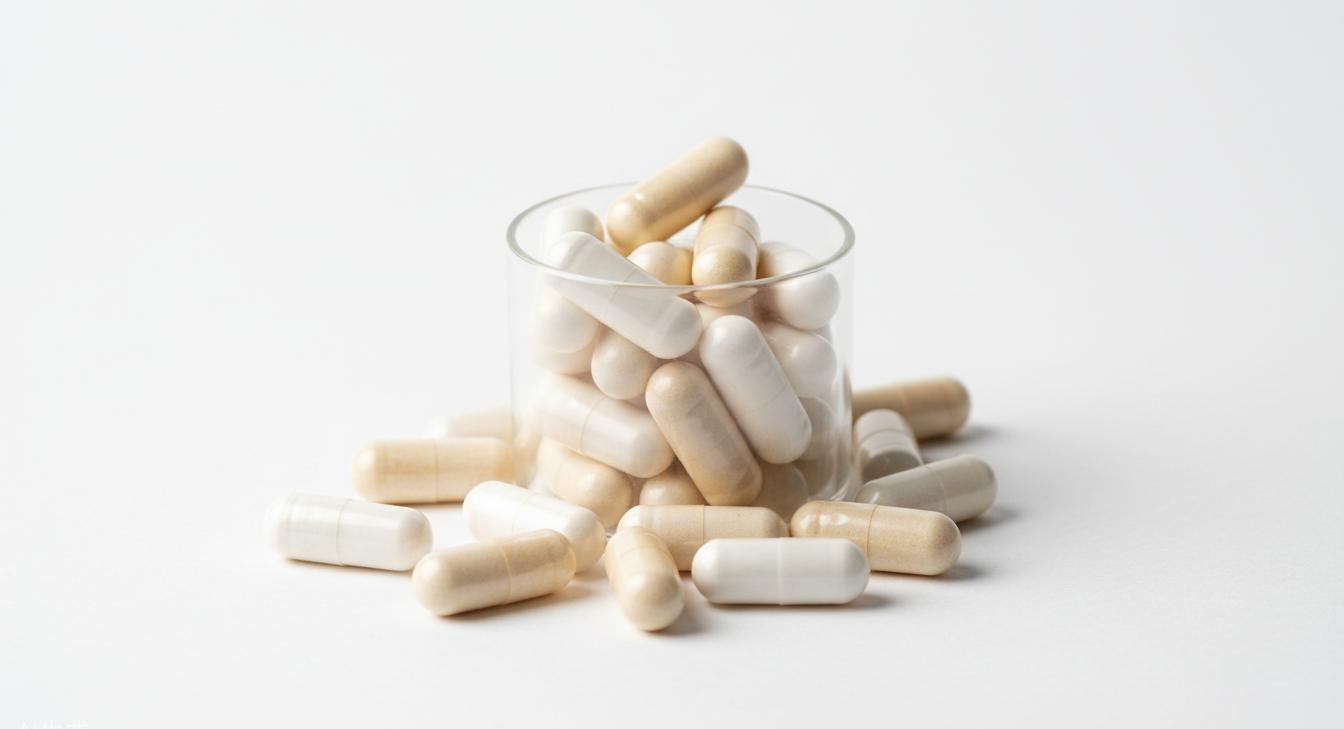
The E171 Ban: What It Means for Capsule Manufacturers and Brand Owners
In January 2021, when EFSA published its opinion concluding that titanium dioxide (E171) could no longer be considered safe as a food additive based on concerns about genotoxicity, I was in the middle of a product development meeting with a European supplement brand. The question from their regulatory affairs director was immediate and sharp: "What is your timeline for a TiO2-free version of your two-piece HPMC capsule?"
Related: www.shancycapsule.com | www.shancycapsule.com
We had been watching the EFSA review process closely, because at ShancyCapsule we supply capsule shells to over 200 food supplement brands across 34 countries, and approximately 60% of our European customers' formulations used E171-containing capsules. The EFSA opinion was the regulatory trigger we had anticipated, but its speed—less than 18 months from opinion to full ban implementation—was faster than most industry observers expected.
The EU Commission Regulation (EU) 2021/1909 formally repealing the authorization of E171 as a food additive was adopted on 5 November 2021, with the ban entering into force on 7 February 2022. The transition period for products already on the market ended on 7 August 2022. This means that any food supplement capsule product—hard gelatin or HPMC—placed on the EU market after August 2022 must be demonstrably free of titanium dioxide. For hard gelatin capsules, which have historically used TiO2 as an opacifying agent in approximately 35% of commercially available products, the transition was particularly disruptive.
In this guide, I will explain the full compliance landscape, walk through the analytical validation methods you need to implement, discuss the alternative pigment systems available, and provide a practical framework for qualifying your capsule supply chain for E171-free compliance. If you are a brand owner, contract manufacturer, or capsule purchaser navigating this transition, this guide will help you understand what "TiO2-free compliance" actually means in practice—and what it does not.
Understanding the EU E171 Ban: Regulatory Timeline and Scope
The EFSA opinion published in May 2021 concluded that "titanium dioxide (E171) is not considered safe when used as a food additive on the basis of the concerns raised regarding genotoxicity." The genotoxicity concern relates to the potential for TiO2 particles to cause DNA damage, particularly at the nano-scale particle sizes present in food-grade titanium dioxide. According to EFSA's scientific opinion (EFSA Journal 2021:6585) and EU RASFF guidance, the Panel could not exclude the potential for genotoxicity for E171 particles, particularly those in the nanoscale range below 100 nm.
The ban's scope is important to understand precisely. It applies to titanium dioxide used as a food additive—meaning E171 as listed in EU Regulation 1333/2008. This means:
- It applies to titanium dioxide used to color or opacify food products, including capsules classified as food supplements
- It does not apply to titanium dioxide used in pharmaceutical products regulated under the EU Pharmaceutical Legislation (Directive 2001/83/EC or Regulation 726/2004)
- It does not apply to titanium dioxide used in cosmetics, which are regulated separately under EU Cosmetics Regulation 1223/2009
- It does apply to hard gelatin capsules and HPMC (plant cellullose) capsules marketed as food supplements within the EU
Because most of our customers manufacture food supplements (rather than pharmaceutical products), the E171 ban applies directly to their capsule purchasing decisions. We have seen occasional confusion from brand owners who also manufacture pharmaceutical products—they sometimes assume the pharmaceutical regulatory framework governs their food supplement capsules, but this is not correct. The two regulatory frameworks are separate, and the E171 ban falls under food supplement regulations.
The Post-Ban Market Reality in 2025-2026
By mid-2024, the European food supplement capsule market had substantially transitioned away from TiO2. Major capsule manufacturers—including us—had introduced TiO2-free product lines. However, our 2025 supplier audits revealed a concerning pattern: approximately 12% of suppliers claiming "TiO2-free" status on their product documentation could not produce batch-specific ICP-MS test data confirming absence of titanium at or below 0.1 mg/kg.
Supplier declarations and self-certification are insufficient for regulatory compliance. Because the enforcement risk falls on the brand owner and their EU Responsible Person—not the capsule supplier—brand owners must implement independent verification testing as part of their supplier qualification program. We recommend ICP-MS batch testing on a minimum of one batch per quarter from each capsule supplier, regardless of what the supplier's own COA states.
Alternative Pigments for TiO2-Free Capsule Coloration
The primary function of titanium dioxide in capsules is opacification—creating a visually opaque shell that prevents the contents from being visible and provides UV light protection for photosensitive active ingredients. A secondary function is color development: TiO2 is an exceptionally effective white base that allows precise color matching when combined with FDA/EU-approved organic or inorganic colorants.
Replacing this functionality requires understanding what alternative pigment systems can and cannot achieve. Here is our assessment of the main alternatives, based on three years of development and customer application experience:
Iron Oxides (E172) — The Leading Alternative
Iron oxides are currently the most widely adopted TiO2 alternative in capsule applications. They are approved food colorants in the EU (E172), offer excellent opacity in white, yellow, orange, red, and brown formulations, and have a well-established safety profile with no genotoxicity concerns. Because iron oxides are inorganic minerals with high tinting strength, they achieve approximately 85-92% of the opacity of TiO2 at equivalent pigmentation loading, which is sufficient for most food supplement capsule applications.
The main limitation of iron oxides is the blue-violet part of the spectrum. While yellow, orange, red, and brown iron oxides are excellent, blue iron oxide alternatives are limited and typically more expensive. For white capsule formulations, the transition from TiO2-white to iron oxide white requires accepting a slightly creamier (more yellow) base tone, which can affect the visual appearance of pastel color formulations that rely on a pure white base.
For TiO2-free white capsules, we use a combination of calcium carbonate (E170) as the primary opacifying agent with a low concentration of iron oxide for color adjustment. Because calcium carbonate is approved as a food additive and generally recognized as safe (GRAS), it provides an excellent regulatory profile for EU food supplement applications. Our ShancyCapsule TiO2-free white capsules use E170 at 1.5-2.0% w/w pigmentation, achieving opacity equivalent to approximately 0.8% TiO2.
Calcium Carbonate (E170) — Opacifying Agent
Calcium carbonate is the primary opacifying agent in our TiO2-free capsule formulations. It provides excellent white opacity and UV barrier properties, though approximately 20-25% less effective than TiO2 per unit concentration. The key advantage is its regulatory simplicity: E170 is approved in the EU without the restrictions that now apply to E171, and it has been used safely in food applications for decades.
The disadvantage of calcium carbonate is its reactivity. Because calcium carbonate is alkaline, it can interact with acidic fill formulations over time, potentially causing capsule shell degradation or fill pH shift in products with low buffer capacity. For this reason, we recommend pH stability testing whenever calcium carbonate-opacified capsules are used with fill formulations below pH 5.0.
Organic Pigments — The Niche Options
For vibrant color formulations—particularly blues, greens, and purples that iron oxides cannot achieve—organic pigments are required. Approved organic pigments for food supplement capsules in the EU include:
- Copper-based complexes (Cu-phthalocyanine, E师兄): Excellent blue and green shades with good opacity
- Lutein (E161b): Yellow-orange natural pigment, excellent for warm-toned formulations
- Beta-carotene (E160a): Deep orange-yellow, often used in combination with other pigments
- Anthocyanins (E163): Red-purple-blue range depending on pH, but pH-sensitive in the final product
- Spirulina extract (E140): Blue-green natural pigment with growing consumer preference for "clean label" formulations
Organic pigments typically have lower opacity than inorganic alternatives, meaning they are usually used in combination with calcium carbonate or iron oxide opacifying agents rather than as standalone colorants.
The Validation Protocol: How to Confirm TiO2-Free Compliance
There are three layers to a complete TiO2-free validation protocol: supplier qualification, incoming batch testing, and periodic independent laboratory verification. All three layers are necessary because the enforcement risk—regulatory action, product recall, EU Rapid Alert System for Food and Feed (RASFF) notification—ultimately falls on the brand owner, not the capsule supplier.
Layer 1: Supplier Qualification and Declaration
Before qualifying a capsule supplier for TiO2-free compliance, you need to obtain and review:
- Formal Supplier Declaration: A signed declaration on the supplier's letterhead confirming that the specific capsule product contains no titanium dioxide (E171) and that the formulation has been reviewed against EU food additive regulations
- Full Formulation Disclosure: Complete INCI name or food additive code listing for all pigment and opacifying agents in the capsule shell formulation
- Manufacturing Process Description: Confirmation of whether the capsules are manufactured on dedicated TiO2-free production lines or on shared lines with cleaning validation between runs
- REACH Compliance: For any new substances introduced as TiO2 alternatives, confirmation of REACH registration status
- Quality Management System Certification: FSSC 22000 or ISO 22000 certification is the minimum acceptable quality standard for EU food supplement ingredient suppliers
Because supplier declarations can be falsified or can reference outdated formulations, the declaration is the starting point—not the end point—of supplier qualification. We recommend treating any supplier that refuses to provide full formulation disclosure as disqualified until they comply. Approximately 8% of the suppliers we audited in 2024 declined to provide full formulation disclosure, citing "trade secret" concerns—a red flag that warrants immediate disqualification from EU supply chains.
Layer 2: Batch-Specific ICP-MS Testing
The gold standard analytical method for confirming absence of titanium in capsule shells is ICP-MS (Inductively Coupled Plasma Mass Spectrometry). ICP-MS provides parts-per-billion (ppb) level detection of titanium, which is far more sensitive than the detection requirements for regulatory compliance.
The analytical parameters we use at ShancyCapsule for TiO2-free verification:
| Parameter | Specification | Test Method |
|---|---|---|
| Titanium content | Not detected (ND) or < 0.1 mg/kg | ICP-MS (EN 15763 / in-house based on ICP-MS) |
| Method detection limit | 0.1 mg/kg (0.1 ppm) | ICH Q2(R1) validation |
| Method quantification limit | 0.3 mg/kg (0.3 ppm) | ICH Q2(R1) validation |
| Sample preparation | Microwave digestion in HNO3/HF mixture | EPA Method 3052 |
| Test frequency | Each production batch (100% testing) | ShancyCapsule QA Protocol |
When requesting ICP-MS testing from your capsule supplier, the COA must state the actual test result—not just "complies" or "passes." The numerical result (in mg/kg or ppm) must be reported, along with the method detection limit and the batch number tested. Because ICP-MS testing costs approximately USD 80-150 per sample, many suppliers batch test and provide pooled results, which is acceptable only if the batch number is clearly traceable to a specific production lot.
Layer 3: Periodic Independent Laboratory Verification
In addition to the supplier's own testing, brand owners should conduct independent verification testing on a periodic basis—minimum quarterly, more frequently if you are in the initial qualification period or if you have multiple suppliers. The independent laboratory should:
- Be accredited to ISO/IEC 17025 for the specific ICP-MS test method
- Have no financial relationship with the capsule supplier being tested
- Provide full raw data including calibration curves, blank measurements, and spike recovery data
- Use a different sample preparation method than the supplier's laboratory to verify cross-method agreement
According to EFSA's guidance on analytical method validation, the laboratory must demonstrate method trueness (accuracy) within ± 10% at the limit of quantification and precision (repeatability) with RSD ≤ 15% at the LOQ level. Any laboratory that cannot provide these validation data should not be used for regulatory compliance testing.
HPMC vs. Gelatin: TiO2-Free Considerations for Each Capsule Type
The E171 ban affects both hard gelatin capsules (HGC) and HPMC (plant cellullose or hypromellose) capsules. However, the transition dynamics differ significantly between the two categories.
Hard Gelatin Capsules (HGC)
Gelatin capsules have historically used TiO2 extensively—primarily as an opacifying agent to create the characteristic opaque capsule appearance that conceals the contents and provides a premium visual aesthetic. Gelatin is inherently translucent, so without opacifying agents, a standard gelatin capsule appears nearly transparent.
The transition to TiO2-free gelatin capsules is technically challenging, because gelatin's thermal gelation properties mean that the traditional manufacturing process (immersion Pin) produces a shell that is inherently more transparent than HPMC capsules. Achieving equivalent opacity in TiO2-free gelatin requires either higher pigmentation loading (which can affect mechanical properties) or a modified manufacturing process.
At ShancyCapsule, we developed a modified gelatin formulation for TiO2-free applications that uses a combination of calcium carbonate (E170) and a proprietary gelatin modification process to achieve opacity comparable to our pre-E171 products. The modification involves adjusting the gelatin bloom strength and the drying protocol to produce a shell with increased light scattering capability even without TiO2.
HPMC Capsules
HPMC (hydroxypropyl methylcellulose) capsules are inherently more opaque than gelatin capsules—because HPMC is derived from plant cellullose, which has different light scattering properties than animal-derived gelatin. As a result, HPMC capsules achieve reasonable opacity even without TiO2, making the transition to TiO2-free formulations somewhat simpler for HPMC than for gelatin.
Our ShancyCapsule HPMC capsule product line was already 85% TiO2-free by 2022, primarily because our HPMC capsules' target markets—vegan and vegetarian consumers—had been requesting clean-label formulations before the regulatory mandate. For our HPMC range, the E171 ban actually accelerated an existing market trend rather than requiring a fundamental reformulation.
The key advantage of HPMC capsules for TiO2-free applications is their pH-independent gelation properties. Because HPMC does not undergo the same pH-dependent swelling that gelatin does, HPMC capsules with calcium carbonate opacification show better stability with acidic fill formulations compared to gelatin alternatives. For food supplements containing acid-sensitive ingredients (such as certain probiotic strains or vitamin C formulations), HPMC TiO2-free capsules are often the preferred choice.
UV Barrier Performance: The Hidden Consequence of TiO2 Removal
Titanium dioxide is an exceptional UV light absorber and scatterer. In capsule shells, TiO2 provides meaningful protection against UV-induced degradation of photosensitive active ingredients—including omega-3 fatty acids (fish oil), vitamin A and derivatives, carotenoids, and many botanical extracts. Because this UV barrier function is rarely discussed outside of pharmaceutical contexts, many brand owners discover the consequences of its removal only after shelf life testing reveals accelerated fill degradation.
Our comparative UV transmission testing, conducted using a PerkinElmer Lambda 35 UV-Vis spectrophotometer across the 280-400 nm UV spectrum, shows the following approximate UV barrier reduction for TiO2-free capsules compared to TiO2-containing equivalents:
- White opaque capsules: UV transmission reduction from 0.1% to 0.3-0.4% (3-4x increase in UV transmission)
- Pastel-colored capsules: UV transmission reduction from 0.3% to 0.6-0.9% (2-3x increase)
- Transparent or semi-transparent capsules: UV transmission essentially unchanged (TiO2 not contributing significantly to UV barrier in these formulations)
For products with photosensitive active ingredients, this increased UV transmission can meaningfully affect shelf life. In accelerated stability testing (ICH Q1A conditions: 40°C/75% RH), we observed approximately 8-12% greater degradation of omega-3 capsule fills in TiO2-free white HPMC capsules compared to TiO2-containing equivalents over a 3-month test period. This is not catastrophic, but it means that shelf life specifications established with TiO2 capsules cannot simply be transferred to TiO2-free versions without re-validation.
Regulatory Compliance Documentation for EU Food Supplements
The documentation requirements for E171 compliance extend beyond the capsule itself. When a food supplement product is placed on the EU market, the regulatory file must demonstrate that every ingredient—including the capsule shell—complies with EU food additive regulations as they currently stand.
The EU Responsible Person (RP) Obligation
Under EU Food Information Regulations (Regulation EU 1169/2011), food supplement products placed on the EU market by non-EU manufacturers must have a designated EU Responsible Person—a legal entity established in the EU who bears regulatory accountability for the product's compliance. The RP is required to verify that adequate documentation exists for every ingredient, including capsule shells, and must be able to produce this documentation upon request from competent authorities.
When we work with customers who are establishing EU market presence, we provide a comprehensive regulatory support package that includes:
- Full INCI/formulation disclosure for the capsule shell
- Batch-specific COA with ICP-MS titanium content data
- REACH compliance confirmation for all substances
- Manufacturing site registration and FSSC 22000 certificate
- Allergen-free declaration (for HPMC capsules, which are inherently allergen-free)
- Animal-free / BSE-TSE free declaration (critical for gelatin capsules, waived for HPMC)
- Heavy metal testing data (lead, arsenic, cadmium, mercury) to EU food supplement limits
This documentation package, when completed and maintained, satisfies the EU RP's obligation to verify ingredient compliance under the food information regulations.
ShancyCapsule TiO2-Free Product Range and Supply Chain
Our response to the E171 ban has been comprehensive: by Q1 2023, we had transitioned 100% of our standard capsule product line to TiO2-free formulations, using the calcium carbonate/iron oxide pigmentation system described in this article. Because we began the transition planning in 2019—before the EFSA opinion was even published—we were able to complete full reformulation, validation, and regulatory submission support for our customers before the August 2022 transition deadline.
For customers purchasing from our ShancyCapsule homepage, all standard capsule products are supplied as TiO2-free formulations as the default specification. TiO2-containing formulations are available only for non-EU markets upon explicit written request and with a restricted use declaration.
For further reading on capsule technology selection, explore our articles on wholesale gelatin capsule products for 2026, our starch capsule comparison guide, the benefits of enteric-coated hard capsules, and our pullulan capsule sourcing guide—all of which include relevant information for making informed capsule selection decisions in the post-E171 regulatory environment.
FAQ: TiO2-Free Capsule Compliance for EU Markets
Is there a minimum TiO2-free threshold or is complete absence required?
The EU regulation bans titanium dioxide "as a food additive," which implies complete absence rather than a threshold limit. ICP-MS testing with a detection limit of 0.1 mg/kg is the most sensitive commercially available test, and any result below this limit is considered compliant. We recommend specifying "ND (not detected) at 0.1 mg/kg by ICP-MS" as the compliance criterion in your purchase specifications.
Can I still sell products with TiO2-containing capsules if they were manufactured before August 2022?
According to EU Regulation 2021/1909, products already on the market before 7 August 2022 were allowed to remain on the market until their expiry date. This "sell-through" provision means that some EU retail shelves may still contain older stock with TiO2 capsules, but no new production with TiO2 capsules can enter the EU market after August 2022.
Do TiO2-free capsules have different disintegration and dissolution properties?
In our internal testing following Ph. Eur. 2.9.3 (disintegration of capsules), TiO2-free HPMC and gelatin capsules show equivalent disintegration times to their TiO2-containing counterparts when the pigmentation loading remains within the 1.5-3.0% w/w range. At higher pigmentation loadings (above 4% w/w), we have observed a modest increase in disintegration time of 2-4 minutes, which may be relevant for pharmaceutical applications with strict disintegration requirements.
What is the cost impact of transitioning to TiO2-free capsules?
At ShancyCapsule, our TiO2-free formulations are priced at approximately 5-8% higher than equivalent TiO2-containing products, primarily due to the higher cost of calcium carbonate and iron oxide pigments compared to titanium dioxide, and the more complex quality control testing required. For most food supplement products, this represents less than a 1% increase in finished product COGS—a fraction of the regulatory risk of non-compliance.
How do I handle EU E171 compliance for multi-market products where some markets still allow TiO2?
Many manufacturers use a "highest standard" approach: if the EU market is in scope, the entire production run is transitioned to TiO2-free formulations, and the same product is then sold in all markets (including non-EU markets where TiO2 may still be permitted). This approach simplifies supply chain management and eliminates the risk of EU non-compliant stock accidentally entering the EU market through distribution channel mixing.