
How to Validate TiO2-Free Pigmentation: Opacity and Light Protection Tests
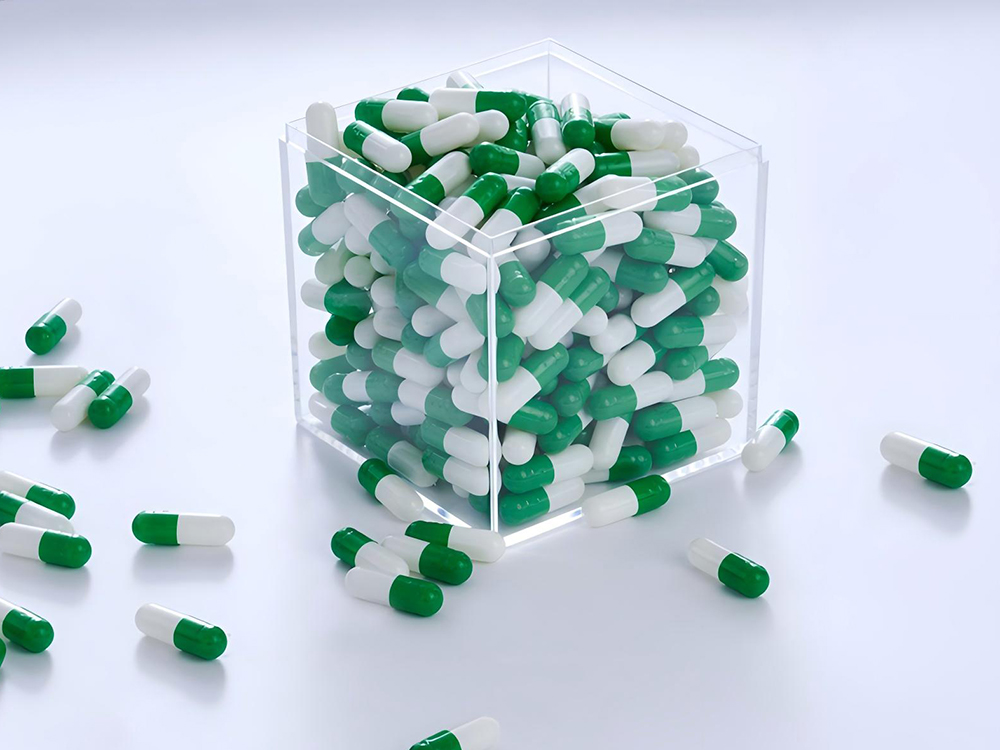
Buyers who request titanium-dioxide-free capsules usually have two questions. The first is whether the new pigment actually works — whether the capsule is opaque enough to protect the formulation, whether it holds up under normal storage conditions, whether it survives the encapsulation machine without brittleness or static issues. The second is whether they can defend the change to a regulator — whether the EU dossier or the FDA filing will accept the substitution without a re-stability study, and whether the analytical methods behind the substitution are documented well enough to survive an audit.
Both questions reduce to the same answer: run the validation. This article is the bench protocol we walk customers through when they ask "how do I prove this capsule is doing its job." We will work through the opacity test, the UV transmission test, the accelerated stability study, and the most common failure modes — with the goal of giving you a complete validation plan you can hand to a QA team.
1. The Two Properties That Matter
Any TiO2-free capsule formulation needs to demonstrate two properties that titanium dioxide delivered essentially by default. Both are measurable on a standard bench, and both need to be in the documentation file before the formulation can be cleared for an EU or FDA "TiO2-free" label claim:
| Property | What It Protects Against | Bench Method | Target Window |
|---|---|---|---|
| Opacity | Visible-light degradation, brand color consistency, capsule aesthetics | Contrast-ratio testing on flat plaques, or transmission densitometry on formed shells | Contrast ratio ≥ 0.90 vs TiO2 control |
| UV-A barrier | UV-induced oxidation of light-sensitive actives (vitamins, fish oils, probiotics, botanical extracts) | UV-Vis transmission spectrophotometry from 280 to 400 nm | < 5% transmission at 320 to 400 nm |
If your TiO2-free formulation fails either property against the titanium dioxide control, the formulation is not yet ready to replace the incumbent. Both properties need to clear before the validation can move forward to formal stability.
2. The Opacity Test, Step by Step
Opacity on a hard capsule shell is most reliably measured on flat plaque samples of the same wall composition, because the geometry of the formed shell interferes with straightforward transmission measurements. The procedure below is the one our QA lab uses for first-pass screening:
- Cast plaques. Prepare flat film plaques of the same gel composition used in the capsule shell, at a defined film thickness (typically 0.5 mm, matching the average shell wall). The plaques should be cast on a smooth release surface to avoid surface texture artifacts. The standardized methods for excipient testing referenced in this article follow the United States Pharmacopeia (USP) general chapter framework for capsule and dosage form testing.
- Condition the plaques. Store the plaques at 23°C and 50% relative humidity for 24 hours before testing. This stabilizes the moisture content and brings the pigmentation system to equilibrium.
- Measure reflectance. Use a spectrophotometer or a colorimeter to measure reflectance over a black substrate (Rblack) and over a white substrate (Rwhite). The contrast ratio is Rblack divided by Rwhite.
- Compare against control. Run the same measurement on a control plaque cast with titanium dioxide at the same loading level as the incumbent product. The mineral opacifier system should match or exceed the contrast ratio of the control.
- Record the result. A contrast ratio of 0.90 or higher against the same film thickness is the standard strong-opaque window. Below 0.85 the capsule is likely too translucent for branding purposes and for light-sensitive formulations.
The plaque-based method works because it isolates the pigmentation property from the geometry of the formed capsule. The measurement is direct, repeatable, and reproducible across labs, which matters when the documentation has to be defended in a regulatory review. The formed-shell alternative — densitometry directly on the capsule — is faster but harder to standardize, and we reserve it for production-line spot checks rather than for first-pass validation.
3. The UV Transmission Test, Step by Step
UV transmission is the property that protects the active ingredient from photodegradation inside the capsule. The bench method is straightforward spectrophotometry, but the protocol details matter:
- Prepare formed-shell samples. Cut or mount intact capsule shells in a spectrophotometer cuvette holder that positions the shell wall in the beam path. Use a section of the capsule wall, not a crushed sample — the wall thickness is part of the measurement.
- Scan the UV range. Run a transmission scan from 280 to 400 nm in 1 nm steps. The relevant range is UV-A (320 to 400 nm) and UV-B (280 to 320 nm), which covers the wavelengths most damaging to common supplement actives.
- Identify the peak transmission. The TiO2-free capsule wall typically shows peak transmission somewhere in the visible range (400 to 700 nm) and a sharp drop in the UV range. The mineral opacifier system should reduce UV transmission to below roughly 5% across the 320 to 400 nm band.
- Compare against the control. Run the same scan on a control capsule made with titanium dioxide. The mineral opacifier system should match or beat the control's UV transmission curve.
- Note any UV leaks. If the mineral formulation shows UV transmission above 10% in any portion of the 320 to 400 nm band, the pigmentation level needs to be increased. Above 15%, the formulation does not provide adequate protection for light-sensitive actives.
This test is the most critical one for any formulation containing a UV-sensitive active. Vitamins A, D, E, and the B complex are all known to degrade under UV exposure; fish oils oxidize; probiotics lose viability; botanical polyphenols shift color and potency. A TiO2-free capsule that fails the UV transmission test should not be cleared for any formulation containing these actives, regardless of how clean the label claim looks. The broader public-health framing of UV-induced nutrient degradation is published by the World Health Organization in its micronutrient stability references.
4. The 14-Day Accelerated Stability Screen
Once the opacity and UV transmission tests pass on the initial batch, the formulation should go through an accelerated stability screen to flag any issues that only show up over time. The procedure is the standard ICH-style accelerated condition, with one specific addition for TiO2-free work:
The 14-day screen is enough to flag the most common failure modes for TiO2-free formulations: opacity drift, surface bloom, color shift, and brittleness. None of these will necessarily show up in a one-day test, and waiting for a full 90-day ICH stability study before flagging them is too slow for a development timeline.
At the end of the 14 days, pull the capsules and re-run the opacity test, the UV transmission test, and a visual inspection under standard lighting. The mineral opacifier system should hold its contrast ratio within roughly 5% of the initial measurement, and the UV transmission curve should be unchanged. Anything outside those windows is a flag for formulation revision before the 90-day study begins.
5. The 90-Day Formal Stability Study
For any TiO2-free capsule that is going to carry an EU or FDA "TiO2-free" claim on a commercial label, the formal stability study follows the ICH Q1A(R2) guideline for the long-term and accelerated conditions. The standard pull points are 0, 30, 60, and 90 days for the accelerated arm (40°C / 75% RH), with the corresponding long-term arm at 25°C / 60% RH running for 24 months in parallel. The U.S. side of the corresponding excipient regulation runs through the U.S. EPA and is published in the Federal Register agricultural and chemical-excipient rules.
At each pull point, the analytical battery includes:
- Visual inspection under standard lighting (color uniformity, surface defects, brittleness)
- Opacity measurement (plaque-based contrast ratio or shell densitometry)
- UV-Vis transmission scan (280 to 400 nm)
- Disintegration time per USP <701> or EP 2.9.1
- Moisture content (loss on drying)
- Heavy metals per ICH Q3D
- Microbial limits per USP <61> / <62>
- Titanium dioxide content (must be below the limit of detection for the "TiO2-free" claim)
The titanium dioxide content test is the one specific to the TiO2-free claim. The standard analytical method is ICP-MS (inductively coupled plasma mass spectrometry), which detects titanium at parts-per-billion levels. A "TiO2-free" capsule formulation should test below the limit of detection — typically below 5 ppm total titanium — for the claim to be defensible. The supporting documentation for the analytical method and the LOQ should be in the dossier.
6. The Five Common Failure Modes
The five failure modes we see most often when buyers run their first TiO2-free validation study are summarized below. None of them are show-stoppers, but they each have a defined fix:
| Failure Mode | Symptom | Likely Cause | Fix |
|---|---|---|---|
| Opacity drift | Contrast ratio drops below 0.85 by day 14 of accelerated stability | Mineral opacifier migration in the gel matrix under heat and humidity | Reduce opacifier particle size distribution; tighten encapsulation temperature profile |
| UV leak | Transmission above 10% in the 320 to 400 nm band | Pigmentation level too low for the wall thickness | Increase mineral opacifier loading; verify wall thickness tolerance |
| Surface bloom | Whitish haze develops on shell exterior under humidity | Mineral particles migrating to the surface during drying | Adjust drying curve; consider internal plasticizer adjustment |
| Brittleness | Cracking or chipping at the cap-body joint on stability | Mineral loading too high, plasticizer system overwhelmed | Reduce mineral loading; adjust glycerol or sorbitol plasticizer level |
| Color shift | Shell tone moves off-spec under accelerated conditions | Iron oxide component sensitive to humidity and pH drift | Switch to a more humidity-stable mineral color system |
The most common of these — opacity drift — is the one we have spent the most engineering time on. The fix is rarely fundamental to the mineral approach. It is usually either a particle-size-distribution adjustment on the opacifier, a small change to the gel matrix plasticizer system, or a tightening of the encapsulation temperature profile. All three are within the standard manufacturing toolbox.
7. Frequently Asked Questions
How do you measure opacity in a TiO2-free capsule?
Opacity on a capsule shell is typically measured by contrast-ratio testing on flat plaque samples of the same wall composition, or by transmission densitometry on the formed shell itself. The reference method in the pharmaceutical excipient literature is the contrast ratio at a defined film thickness, with values above 0.90 commonly cited as a strong opaque. Mineral-based TiO2-free formulations should match or exceed that benchmark — if they fall below, the pigmentation level needs to be increased or a different mineral opacifier selected.
What wavelength matters most for light-protection testing?
UV-A in the 320 to 400 nm range is the most damaging band for the active ingredients most commonly encapsulated in TiO2-free formulations — vitamins, fish oils, probiotics, and certain botanical extracts. UV-B below 320 nm is largely blocked by any well-pigmented shell. The bench test that matters is the transmission spectrum between 280 and 400 nm, with the goal of measuring how much of the UV-A energy actually reaches the formulation inside the capsule.
Do mineral opacifiers perform as well as titanium dioxide?
In our experience at Shancy, properly formulated mineral opacifier systems — typically calcium carbonate or iron oxide bases at carefully tuned loading levels — can match titanium dioxide for opacity at the wall thicknesses used in hard capsules. They do not perform as well on a per-mass basis (you need slightly more mineral than TiO2 to reach the same opacity), but the formulation has the headroom to absorb that. The trade-off is meaningful for buyers that need to defend a Clean Label claim.
Is a 14-day accelerated stability study enough?
For first-pass screening, a 14-day accelerated stability study at 40°C and 75% relative humidity is enough to flag obvious problems with the pigmentation system. For a final dossier — the kind that supports an EU or FDA label claim — a 90-day study with periodic pull points is the standard. For a TiO2-free claim specifically, we recommend also running a parallel control batch with titanium dioxide at the same loading level, so the comparison is on the same bench, on the same day, with the same instrument.
What is the most common validation failure for TiO2-free capsules?
The most common validation failure we see is opacity dropping below the spec window during the accelerated stability study. The mineral opacifier migrates slightly in the gel matrix under heat and humidity, and the surface becomes translucent in patches. The fix is usually a small adjustment to the opacifier particle size distribution or to the encapsulation process temperature profile. Both are addressable; the failure is rarely fundamental to the mineral approach.
Can I validate a TiO2-free capsule in my own lab?
Yes for the screening tests — opacity, visual uniformity, and disintegration. A bench spectrophotometer, a humidity chamber, and a standard capsule disintegration tester cover the basics. For the full regulatory dossier, an external CRO with ICH-compliant stability chambers and validated analytical methods is the right answer. The first-pass screening at your own lab will tell you whether to invest in the formal study.
8. Sourcing Notes for Procurement and QA Teams
For procurement teams evaluating a TiO2-free capsule supplier, the validation package to ask for is straightforward and well-defined. The supplier should be able to provide, at minimum:
- Opacity data at defined film thickness, contrast ratio against a TiO2 control, on three consecutive production batches.
- UV-Vis transmission scan from 280 to 400 nm, with the same three-batch comparison.
- Accelerated stability data at 40°C / 75% RH for at least 14 days, with pull points at 0, 7, and 14 days, on at least one production batch.
- ICP-MS titanium content below the limit of detection for the formulation to qualify as "TiO2-free" under the EU E171 regulation and the FDA labeling guidance.
- Mineral opacifier declaration — calcium carbonate, iron oxide, or whatever system is in use — at the loading level used in the formulation.
That five-part documentation set is what we provide as a standard data package for our mineral-based TiO2-free capsule line. Detailed configuration is available from the product page, or by contacting the Shancy team for a sample and a custom quote. For the broader regulatory framing that drives the EU and FDA label claims, the standard references include the European Medicines Agency's classification guidance for excipients and the U.S. FDA drug guidance and compliance portal for the corresponding U.S. side.
9. The Takeaway in Three Steps
Validating a TiO2-free capsule formulation is a three-step process. First, run the opacity test on a flat plaque sample and confirm a contrast ratio above 0.90 against a TiO2 control. Second, run the UV transmission scan from 280 to 400 nm and confirm below 5% transmission in the UV-A band. Third, run the 14-day accelerated stability study with a parallel TiO2 control batch, and confirm that opacity and UV transmission are both stable. If all three pass, the formulation is ready for a 90-day formal study and the dossier that supports an EU or FDA "TiO2-free" label claim. If any of them fails, the formulation is sent back to the lab with a defined fix — most commonly a particle size adjustment, an opacifier loading adjustment, or a process temperature adjustment.