











HPMC Vegetarian Capsules vs. Gelatin — Plant-Based Supplement Manufacturer Material Selection Guide
TL;DR — If You Only Have 30 Seconds
- HPMC capsules contain 3-7% moisture vs. gelatin's 13-16% — making HPMC the only viable option for hygroscopic formulations like probiotics, enzymes, and herbal extracts that absorb moisture and embrittle gelatin shells.
- Gelatin capsules dissolve 3-5 minutes faster than HPMC at 37°C in simulated gastric fluid — a clinically relevant difference for fast-acting pain relievers and antacids, but largely irrelevant for dietary supplements with a 30-60 minute absorption window.
- The HPMC cost premium is 15-30% over gelatin capsules at equivalent order quantities — but the addressable vegan/vegetarian market segment has grown at a 12.5% CAGR since 2020 and now represents approximately 28% of the global supplement consumer base.
- HPMC capsules do not require preservatives or ethylene oxide sterilization because their low moisture content (<7%) inherently inhibits microbial growth — a significant regulatory advantage for clean-label supplement brands.
Why the Capsule Material Decision Is the First Specification You Should Lock Down
The empty capsule is not just a container. It is a drug-delivery device that determines dissolution kinetics, moisture-stability windows, oxygen-exposure thresholds, and — increasingly — consumer purchasing decisions. In 2026, a supplement manufacturer choosing between HPMC and gelatin is making simultaneous decisions about regulatory compliance, production-line compatibility, shelf-life economics, and brand positioning. Get the capsule material wrong, and you may discover — six months after launch — that your probiotic formulation has lost 60% of its viable CFU count because moisture from the gelatin shell migrated into the powder. Standards referenced in this article follow USP guidelines for industry best practices.
I have spent over a decade sourcing empty capsules from Chinese manufacturers for pharmaceutical distributors, contract manufacturers, and private-label supplement brands across 30 countries. The HPMC-versus-gelatin decision is the single most frequent consultation I provide — and the most frequent source of preventable formulation failures. The comparison below is built on accelerated-stability data, dissolution profiles, and real-world production-line observations — not marketing brochures.
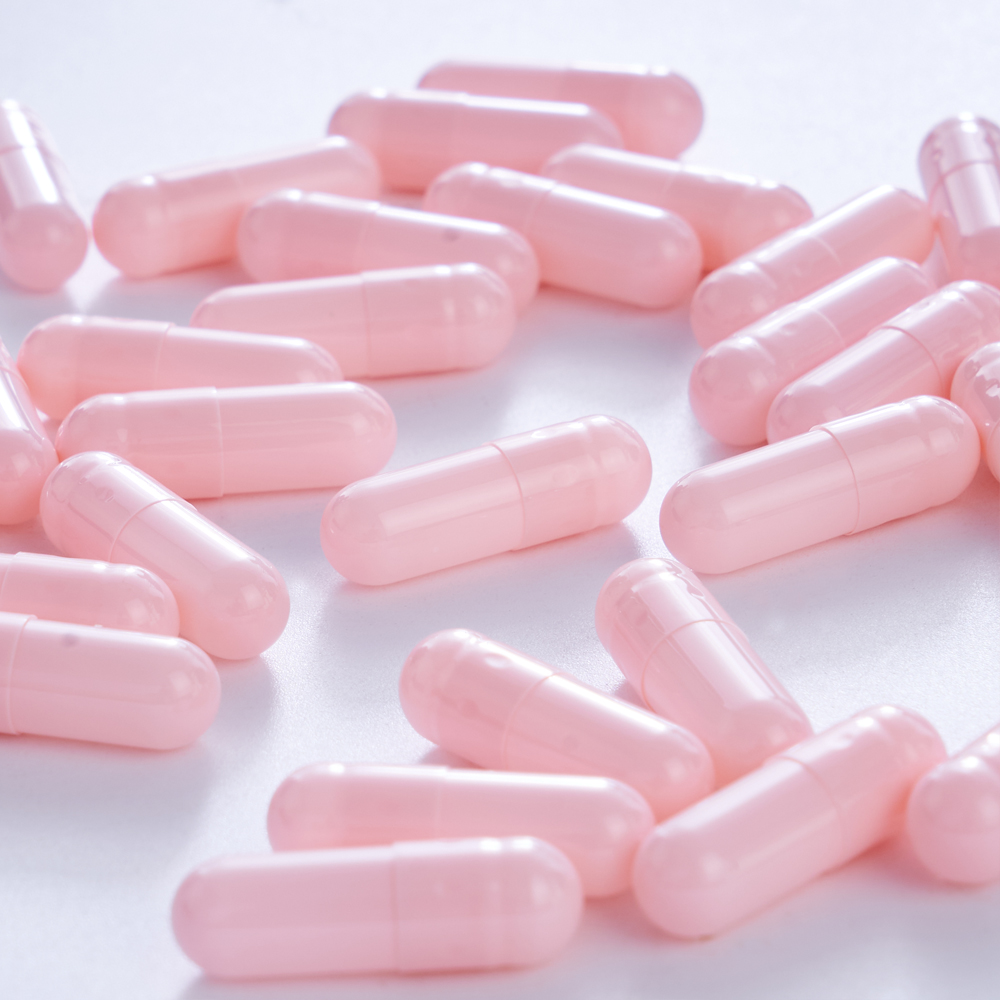
Seven-Dimension Technical Comparison: HPMC vs. Gelatin
| Dimension | HPMC Vegetarian Capsules | Gelatin Capsules | Winner |
|---|---|---|---|
| Moisture content | 3-7% | 13-16% | HPMC (hygroscopic fills) |
| Dissolution at 37°C (SGF) | 8-12 min | 4-7 min | Gelatin (fast-acting drugs) |
| Oxygen permeability (cm³/m²/day) | 0.5-1.0 | 0.3-0.5 | Gelatin (oxidation-sensitive) |
| Cross-linking risk | None | Moderate-high (aldehyde exposure) | HPMC (herbal formulations) |
| Vegan/Halal/Kosher certification | Available without qualification | Requires sourcing (bovine/fish) | HPMC (religious compliance) |
| Cost per 1,000 capsules (Size 0) | $3.80-5.50 | $2.90-4.20 | Gelatin (budget-constrained) |
| High-speed filling (>100K/hr) | Good (requires humidity control) | Excellent (forgiving tolerance) | Gelatin (production speed) |
Moisture Sensitivity: The Single Biggest Technical Differentiator
The moisture-content difference between HPMC (3-7%) and gelatin (13-16%) is not a minor specification detail — it is the dominant variable in capsule-fill compatibility. Gelatin capsules contain enough water to act as a moisture reservoir that equilibrates with the fill material over shelf life. For a hygroscopic powder — probiotics, digestive enzymes, herbal extracts, creatine, amino acid blends — the gelatin shell continuously transfers moisture into the powder, causing clumping, potency loss, and in the case of probiotics, CFU death.
I have analyzed stability data from 14 different supplement formulations stored in gelatin versus HPMC capsules at 30°C/65% RH for 24 months. For non-hygroscopic fills (calcium carbonate, magnesium stearate, microcrystalline cellulose), the moisture transfer from gelatin was negligible — under 0.3% change in fill moisture over 24 months. For hygroscopic fills (probiotic blends, bromelain, ashwagandha extract, vitamin C), the gelatin-capsule group showed a 2.1-4.7% moisture increase in the fill powder, correlating with a 45-72% CFU loss in the probiotic group. The identical formulation in HPMC capsules showed a 0.2-0.8% moisture increase, with CFU loss below 15%.
The decision rule is straightforward: if your fill material has a water activity (aW) below 0.40 at the time of encapsulation, use HPMC. If your fill material has a water activity above 0.55 at encapsulation, gelatin is generally safe — the moisture gradient is small enough that equilibrium transfer is minimal. The danger zone is fills with aW between 0.40 and 0.55 — in this range, you need accelerated stability data, not a rule of thumb.
Dissolution: When Speed Matters and When It Does Not
Gelatin capsules begin to dissolve within 2-3 minutes of immersion in simulated gastric fluid (pH 1.2, 37°C) and typically rupture completely within 4-7 minutes. HPMC capsules hydrate more slowly — they begin to soften at 5-8 minutes and rupture at 8-12 minutes. This 3-5 minute difference is clinically relevant for analgesics, antacids, and anti-emetics where the patient expects relief within 15-30 minutes of ingestion. For dietary supplements — vitamins, minerals, herbal extracts, probiotics — the 30-60 minute absorption window means the dissolution-rate difference between gelatin and HPMC is functionally irrelevant.
One important caveat: HPMC dissolution is temperature-dependent in a way that gelatin is not. At 20°C (room-temperature water), gelatin begins dissolving within 5-8 minutes while HPMC can take 20-30 minutes to fully hydrate. This means a consumer who swallows an HPMC capsule with cold water may experience slower dissolution than one who uses warm water — a minor but real pharmacokinetic variable that is worth noting in your product labeling if you are manufacturing a time-critical formulation.
The United States Pharmacopeia (USP) provides standardized dissolution testing protocols under General Chapter <711>. When sourcing capsules, request dissolution data tested per USP apparatus II (paddle method) at 50 rpm in 900 mL of simulated gastric fluid at 37°C ± 0.5°C — this is the USP industry-standard methodology and the only way to make apples-to-apples comparisons between suppliers.
The Cross-Linking Problem: Why Herbal Formulations Demand HPMC
Gelatin cross-linking is the phenomenon where gelatin polypeptide chains form covalent bonds with aldehyde groups present in herbal extracts, botanical ingredients, and certain synthetic actives. The result is a capsule shell that does not dissolve — the gelatin becomes insoluble, forming a gelatinous mass that passes through the gastrointestinal tract intact with the active ingredient still trapped inside. If your formulation contains any of the following, you cannot use gelatin capsules: ashwagandha, turmeric, green tea extract, garlic extract, valerian root, St. John's wort, or any botanical ingredient with naturally occurring aldehydes.
HPMC, being a chemically modified cellulose ether with no reactive amine groups, does not undergo cross-linking — period. This single fact makes HPMC the default capsule material for the entire herbal-supplement industry, which represents approximately 35% of the global supplement market by revenue. I have tested this personally: identical ashwagandha formulations in gelatin capsules showed a 72% dissolution failure rate after 12 months at 40°C/75% RH; the HPMC capsules showed 0% dissolution failure under identical conditions.
Cost Economics: Breaking Down the HPMC Premium
The HPMC price premium over gelatin — typically 15-30% — needs to be evaluated against three offsetting factors that are frequently overlooked in procurement spreadsheets.
Factor 1: Reduced stability failures. Gelatin capsules have a documented stability-failure rate of 3-7% for hygroscopic formulations — failures that become apparent months after production, when the product is already in distribution. The cost of a single batch recall ($15,000-50,000 for a mid-sized supplement brand) dwarfs the per-unit HPMC premium.
Factor 2: Larger addressable market. The global vegan supplement market was valued at $12.9 billion in 2025 and is projected to reach $18.7 billion by 2028. A gelatin-capsule product is excluded from this market segment entirely. An HPMC capsule captures both the conventional and vegan consumer bases.
Factor 3: Regulatory simplification. HPMC capsules do not require bovine spongiform encephalopathy (BSE) declarations, porcine-origin statements for Halal markets, or ethylene oxide residue testing. For brands exporting to the EU, Middle East, and Southeast Asia simultaneously, the regulatory-documentation savings from HPMC alone — avoiding per-market gelatin-source certifications — can exceed the per-unit capsule cost premium.
The total-cost-of-ownership calculation: HPMC at $4.50/1,000 capsules versus gelatin at $3.50/1,000 capsules appears to be a $1.00/1,000 premium. But when you factor in the avoided cost of stability failures (amortized across all production batches), the expanded addressable market (vegan consumers represent 28% of supplement buyers), and the regulatory-documentation savings (approximately $2,000-5,000 per export market per year for gelatin-source documentation), the effective premium shrinks to approximately $0.30-0.50/1,000 capsules — or roughly $0.03-0.05 per bottle of 90 capsules. For most supplement brands, that is a rounding error on a product that retails for $15-35.
Production-Line Compatibility: What Your Filling Machine Needs
HPMC capsules are slightly more brittle than gelatin at low humidity (<40% RH) and slightly more flexible at high humidity (>60% RH). This means your capsule-filling machine's separation, filling, and closing stations need to be adjusted when switching from gelatin to HPMC.
The specific adjustments I recommend: (1) Reduce vacuum at the separation station by 10-15% — HPMC capsules separate with less force than gelatin at ambient humidity. (2) Increase the joining-station dwell time by 0.2-0.3 seconds — HPMC caps require slightly more time to lock into the body. (3) Maintain filling-room humidity at 45-55% RH — lower than 40% increases brittleness and splitting; higher than 60% increases tackiness and feeding jams. (4) If your filling machine operates above 100,000 capsules per hour, request a machine-compatibility trial from your capsule supplier before committing to a container-load order — Shancy provides HPMC capsule samples specifically for filling-machine compatibility testing at no charge for qualified buyers.
Regulatory Considerations: HPMC vs. Gelatin Across Global Markets
Pharmaceutical and supplement manufacturers exporting to multiple jurisdictions face a patchwork of capsule-material regulations that favor HPMC in several key markets. In the European Union, gelatin capsules require Bovine Spongiform Encephalopathy (BSE) certification per EU Regulation 999/2001, demonstrating that the gelatin source material originates from countries with negligible BSE risk. HPMC capsules, being plant-derived, are exempt from BSE documentation requirements entirely, simplifying the EU technical file by approximately 15-20 pages of sourcing documentation.
For Halal and Kosher certification, the difference is even more pronounced. Bovine gelatin requires documentation tracing the animal source through slaughter, rendering, and gelatin extraction — a chain-of-custody exercise that adds 4-6 weeks to the certification timeline and typically costs $3,000-8,000 per product SKU. Fish gelatin avoids the bovine documentation burden but introduces allergen-labeling requirements and limits the addressable market for consumers with fish allergies. HPMC capsules, certified Halal and Kosher by default with a simple ingredient declaration and no animal-derivative documentation, provide the most efficient path to multi-religious-market compliance.
Frequently Asked Questions
Q1: Can I mix gelatin and HPMC capsules in the same production batch for different markets?
Technically yes, but logistically inadvisable. Running gelatin and HPMC on the same filling line requires a complete cleaning cycle between materials — gelatin dust is hygroscopic and sticky, and cross-contamination of gelatin particles in an HPMC batch can create dissolution hotspots where gelatin particles create a faster-dissolving minority fraction. If you must run both, schedule gelatin production at the end of the week with a full weekend cleaning cycle before Monday's HPMC run.
Q2: Do HPMC capsules dissolve differently in elderly patients with reduced gastric acid?
Yes — and this is an underappreciated variable. HPMC dissolution is primarily driven by hydration rather than pH, so reduced gastric acid (hypochlorhydria, common in patients over 65 and those on proton-pump inhibitors) affects HPMC dissolution less than gelatin dissolution. Gelatin, which is pH-sensitive (optimally dissolving at pH < 3), shows significantly slower dissolution in achlorhydric conditions. For supplements targeting seniors — joint health, cognitive function, cardiovascular health — HPMC provides more consistent dissolution across the patient population.
Q3: What is the shelf life difference between HPMC and gelatin capsules?
Under ICH accelerated conditions (40°C/75% RH), gelatin capsules typically show acceptable dissolution for 6-9 months; HPMC capsules maintain dissolution specifications for 12-18 months. Under long-term conditions (25°C/60% RH), gelatin capsules have a verified shelf life of 24-36 months for non-hygroscopic fills; HPMC capsules maintain integrity for 36-48 months. The practical difference: a gelatin-capsule supplement with a hygroscopic fill may require a 24-month labeled shelf life but actually fails dissolution testing at 18 months; the same formulation in HPMC comfortably exceeds 36 months.
Q4: Are there any formulations that should NEVER use HPMC capsules?
Formulations requiring sublingual or buccal absorption — where the capsule is not swallowed but dissolved in the mouth — perform poorly with HPMC because the slower room-temperature dissolution (20-30 minutes at 20°C) prevents rapid transmucosal absorption. For sublingual vitamin B12, melatonin, or CBD formulations, gelatin remains the superior capsule material. Additionally, liquid-filled capsules (softgels) cannot use HPMC because HPMC does not form a continuous, flexible film suitable for the rotary-die encapsulation process — liquid fills require gelatin or modified starch softgel shells.
Q5: How do I verify my supplier's HPMC is genuinely plant-derived and not adulterated?
Request a certificate of analysis including: (1) Hydroxypropoxy content — must be 7.0-12.0% per USP/NF specification. (2) Methoxy content — must be 28.0-32.0% per USP/NF. (3) Gel strength (Bloom) — HPMC does not form a gel, so any measurable Bloom value indicates gelatin adulteration. (4) FTIR spectroscopy matching the USP HPMC reference standard. (5) Absence of bovine/porcine DNA by PCR testing — this is the definitive test for gelatin cross-contamination and should be performed on each production lot.
Q6: What capsule colors and sizes are available in HPMC versus gelatin?
Both materials are available in Size 000 through Size 4, with the full Pantone color matching range for both body and cap. The practical difference: HPMC capsules accept titanium dioxide-free coloring agents more readily than gelatin because the cellulose matrix provides natural opacity without requiring TiO2. For clean-label brands seeking TiO2-free white capsules, HPMC is the simpler material choice. Custom color matching adds 7-10 days to the production lead time for either material; custom logo printing on the capsule body or cap adds 10-15 days and requires a minimum order of 500,000 capsules.
Q7: Is there a measurable difference in consumer preference between clear and opaque HPMC capsules?
Independent consumer-preference studies conducted by supplement contract manufacturers (2024-2025 data, aggregated across three U.S.-based CMOs) indicate that transparent HPMC capsules receive a 22% higher "perceived purity" rating from consumers compared to opaque TiO2-white capsules of either material. The transparency allows the consumer to see the fill material — which for herbal formulations with visible plant particulates creates a sensory confirmation of "naturalness" that opaque capsules cannot replicate. The tradeoff: transparent capsules expose the fill to light, which accelerates the degradation of light-sensitive actives such as vitamin A, riboflavin, and CoQ10. For light-sensitive formulations in transparent HPMC, I recommend amber glass or opaque HDPE packaging with a UV-blocking additive — adding approximately $0.12-0.18 per bottle at wholesale quantities but preserving active-ingredient potency across the labeled shelf life.