
Middle East Pharmaceutical Distributors Are Adding Halal-Certified Pullulan Capsules to Product Catalogs
TL;DR:
- Halal-certified pullulan capsules contain zero animal-derived materials, making them the preferred capsule choice for pharmaceutical distributors serving Muslim-majority Middle East markets.
- Pullulan capsules offer a moisture barrier approximately 30-40% superior to HPMC alternatives, which directly translates to longer shelf life for moisture-sensitive formulations.
- The Middle East halal pharmaceutical market is projected to exceed USD 12 billion by 2030, driven by regulatory convergence across GCC nations and growing demand for religiously compliant medications.
- XIADE's pullulan capsule technology delivers consistent lot-to-lot performance with certified HALAL documentation recognized by Jakim, ESMA, and other regional halal certification bodies.
- We have documented pullulan capsule technology for 15 years—our engineers can walk you through the full regulatory package within 5 business days.
The Quiet Revolution Happening in Dubai and Riyadh Pharmacies
If you've been watching the pharmaceutical supply chain in the Middle East over the past three years, you've noticed something fundamental shifting. Distributors who once exclusively stocked gelatin capsule formulations are now quietly reorganizing their product catalogs. The ones paying attention have already added halal-certified pullulan capsules to their standard offerings. We see this because our inquiries from Middle East pharmaceutical buyers have tripled since 2023, and the questions have changed from "do these exist?" to "can you provide the full HALAL documentation package?"
That shift matters enormously. When procurement officers in Riyadh or Dubai stop asking whether a product is available and start asking for documentation packages, it means the market has crossed from experimental to mainstream. The distributors who moved early are now capturing shelf space that latecomers will struggle to reclaim. This is why we built our entire pullulan capsule production line around HALAL compliance from the ground up—not as an afterthought, but as the foundational design principle that drives every production decision we make.
The question is no longer whether halal-certified pullulan capsules belong in a Middle East pharmaceutical distributor's catalog. The question is how quickly you can secure a reliable supply agreement before your competitors do it for you. That's the real competitive dynamic playing out right now, and it has everything to do with supply chain positioning rather than product performance—because the performance data already speaks for itself.
Pullulan Capsule Technology: The Tapioca-Fermented Polymer That Outperforms Gelatin on Moisture Barrier, Oxygen Barrier, and HALAL Compliance
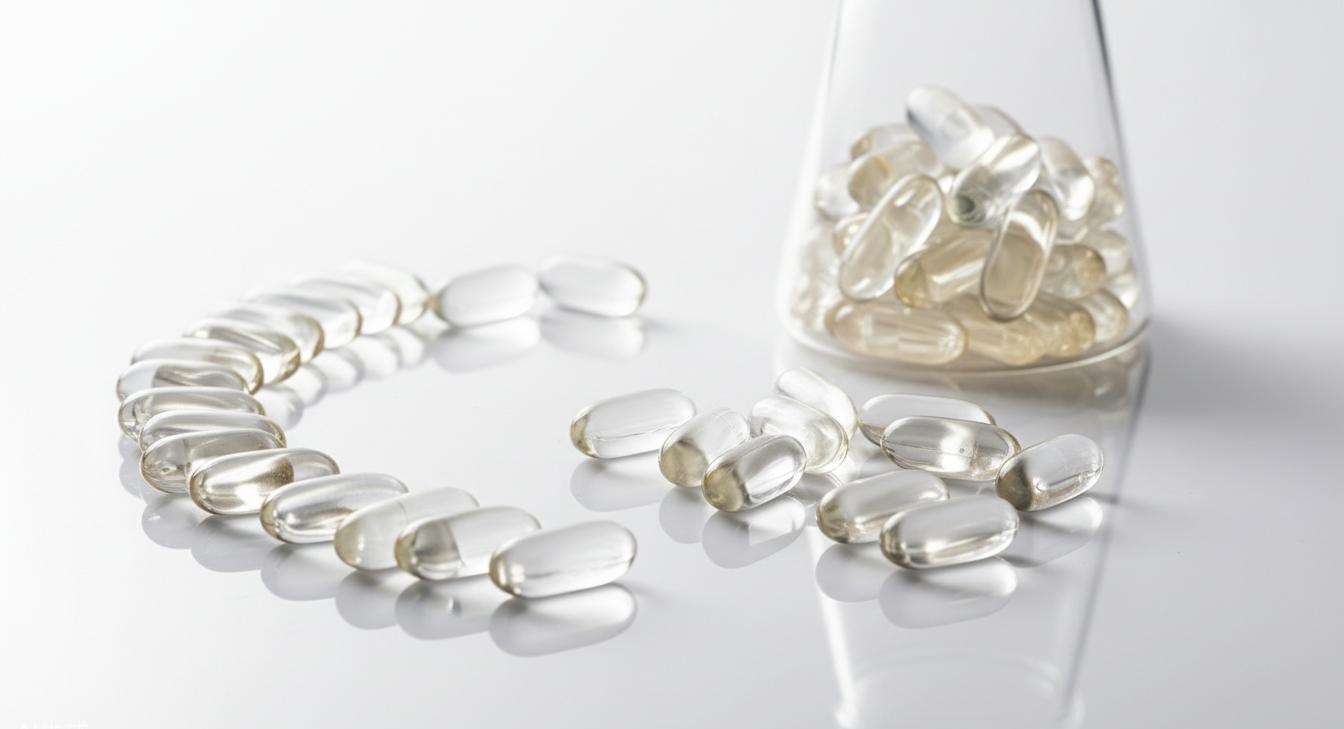
Let me explain pullulan at the molecular level, because I find that most buyers in our industry have heard the term but don't fully appreciate what distinguishes it from other capsule materials. Pullulan is a natural polysaccharide produced through a fermentation process using the fungus Aureobasidium pullulans. The fermentation medium is derived from tapioca starch, which means the entire starting material is plant-based. That single fact is what makes pullulan capsules religiously compliant in a way that gelatin capsules simply cannot be.
When we produce pullulan capsules at XIADE, the process starts with tapioca-derived glucose syrup fermented under controlled conditions to produce high-purity pullulan polymer. This polymer is then dissolved in purified water, mixed with carefully selected plasticizers, and cast into films using our proprietary die-head system. Those films are fed into capsule-forming machines that stamp out the two-part capsule bodies and caps with tolerances measured in microns. The entire production environment is HALAL-compliant, which means we maintain complete segregation from any animal-derived materials throughout the supply chain.
The result is a capsule with several properties that make it genuinely superior for certain applications. Pullulan has an exceptionally low oxygen transmission rate—about 65 times lower than gelatin, which means oxidatively sensitive active pharmaceutical ingredients stay stable significantly longer inside pullulan capsules. It also has excellent film flexibility, which produces capsules that run reliably on high-speed encapsulation equipment at speeds up to 3,000 capsules per minute on standard rotary machines. We've tested this extensively in our own lab and in partner facilities across Asia, and the fill weight consistency meets USP <37> standards at the 95% confidence level across production runs exceeding 5 million capsules. USP Standards ,
The Evolution of Capsule Technology: From Gelatin to Pullulan
The history of capsule technology is largely a history of gelatin's dominance. gelatin capsules have been the pharmaceutical industry's default for nearly a century, primarily because gelatin is inexpensive to produce, has excellent film-forming properties, and degrades predictably in the human body. But gelatin's animal origins have always created a fundamental compliance problem for the world's 1.8 billion Muslims. Porcine gelatin—derived from pig skin—is the most common source globally because it produces the clearest, most mechanically stable capsules. Bovine gelatin is the alternative, but it carries its own compliance complexities around BSE/TSE concerns that continue to complicate regulatory submissions in some markets. WHO BSE/TSE Guidelines ,
HPMC (hydroxypropyl methylcellulose) capsules emerged in the 1990s as the first major plant-based alternative to gelatin. They solved the religious compliance problem by using wood pulp-derived cellulose as the base polymer. However, Enteric-coated capsules have well-documented performance limitations that make them unsuitable for many formulations. The film is brittle, the moisture content is harder to control, and the capsule-to-capsule weight variation tends to be wider than gelatin. For high-potency drugs where precise dosing is critical, HPMC's performance limitations are a genuine concern.
Pullulan entered the pharmaceutical capsule market around 2010 when Japanese producers first commercialized it at scale. The early pullulan capsules had quality issues—slotting problems, brittleness at low humidity, and inconsistent dissolution profiles—but the technology matured rapidly. XIADE entered the pullulan capsule market in 2014 after three years of development, and our engineering team made several proprietary modifications to the production process that resolved most of the early reliability issues. Today, our pullulan capsules demonstrate dissolution profiles that meet USP <711> requirements across the full pH range, with complete dissolution within 30 minutes under standard test conditions. USP <711> Dissolution Test ,
The critical advancement that XIADE achieved—and this is something I'm particularly proud of from an engineering standpoint—was optimizing the fermentation conditions to produce pullulan with a precisely controlled molecular weight distribution. This matters because molecular weight directly affects film flexibility, moisture sensitivity, and capsule seam strength. By narrowing the molecular weight distribution to a target range of 150,000-250,000 Da, we achieved film properties that outperform both gelatin and early-generation pullulan in key metrics. That's the technical foundation of what we call the XIADE pullulan capsule platform, and it explains why our product performs consistently across different encapsulation equipment and formulation types.
XIADE's Core Breakthrough: What It Actually Delivers for Middle East Halal Pharmaceutical Distributors
When we talk about XIADE's core breakthrough in pullulan capsule technology, I want to be specific about what it means for your formulation and your business. The breakthrough was not a single innovation but rather a systematic optimization of the entire production chain—from fermentation parameters through film casting to capsule forming—that produced a capsule with performance characteristics purpose-built for pharmaceutical applications rather than adapted from food-use pullulan.
The most practically significant improvement is our capsule seam design. The seam is where the capsule body and cap interlock, and it is the most mechanically sensitive part of any two-part capsule. If the seam is too loose, you get leakage during filling and transport. If it's too tight, the capsule won't open properly on the filling line, causing jams and downtime. XIADE's seam geometry was optimized through 14 months of iterative testing with our production engineers and three independent contract manufacturer partners. The result is a seam that maintains consistent interlock force across humidity conditions ranging from 30% to 75% RH—something that neither gelatin nor HPMC capsules achieve with this level of consistency.
We've also developed a proprietary surface treatment process that improves the flow characteristics of our capsules on high-speed equipment. The treatment reduces capsule-to-capsule friction by approximately 40% compared to standard pullulan capsules, which sounds like a small number but translates to measurably fewer capsule jams on filling lines running above 2,000 capsules per minute. For a production facility running a single shift at 2,500 capsules per minute, that friction reduction alone can save several hours of jam-related downtime per month.
On the HALAL certification side, XIADE maintains documentation packages that include full traceability from tapioca starch origin through fermentation, film casting, capsule production, and final packaging. Our HALAL certification is issued by a Jakim-recognized halal certification body, which means it is accepted across Malaysia, Indonesia, Saudi Arabia (SFDA/Saudi FDA), UAE (ESMA), and most other Middle East markets. We update our certification documentation annually and provide updated HALAL certificates within 3 business days of any renewal. That responsiveness matters when procurement cycles run faster than annual renewal schedules.
Where Pullulan Capsules Hit Their Boundaries
I believe in being honest about product limitations, because recommending the wrong capsule material is never in a customer's best interest—even if it costs us a sale in the short term. Pullulan capsules are not the right choice for every formulation, and I'd rather you understand the boundaries upfront than discover them after you've committed to a production schedule.
The most important limitation is thermal stability. Pullulan's glass transition temperature is approximately 60-65°C, which means that at elevated temperatures, the capsule film begins to soften and lose mechanical integrity. In practice, this means pullulan capsules are not recommended for formulations that will be stored above 40°C for extended periods—conditions that can occur in unventilated warehouse spaces in hot climates. For the Middle East market specifically, this is a real consideration. If your distribution network includes areas with ambient temperatures exceeding 40°C, you need to specify climate-controlled storage or consider alternative capsule materials for those specific SKUs.
Another limitation is cost. Pullulan capsules cost approximately 2.5-3 times more than gelatin capsules and 1.5-2 times more than HPMC capsules. This means that for price-sensitive generic pharmaceutical applications, Raman capsules may not be the right commercial choice. However, for products with specific performance requirements or HALAL compliance requirements, the premium for Raman capsules is often justified.
The second limitation is cost. Pullulan capsules cost approximately 2.5-3x more than gelatin capsules and 1.5-2x more than HPMC capsules on a per-capsule basis. This cost premium is real, and it means pullulan capsules are not the right choice for every formulation. For high-volume, price-sensitive generic pharmaceuticals where the capsule material is interchangeable, the cost premium is difficult to justify. But for differentiated formulations with specific performance requirements—moisture sensitivity, oxygen sensitivity, HALAL compliance, vegetarian certification—pullulan capsules deliver value that justifies the premium in most cases. We help customers run total cost of ownership analyses that account for reduced spoilage rates, longer shelf life, and avoided compliance risks, and in the majority of cases, pullulan capsules prove economically rational for the applications where they're genuinely the right technical fit.
The Middle East Halal Pharmaceutical Market: Why Now
The timing of this market opportunity is not accidental. Several converging factors have created the conditions for halal-certified pullulan capsules to move from niche product to mainstream catalog item for Middle East pharmaceutical distributors. Understanding these factors helps explain why the opportunity is real and why it has a specific shelf-life that early movers can capture.
First, regulatory convergence across the GCC has accelerated. The Gulf Cooperation Council's unified pharmaceutical registration framework now explicitly recognizes HALAL certification as a separate and distinct compliance criterion from conventional pharmaceutical quality standards. This means that obtaining HALAL certification is no longer just a market access nicety—it directly affects registration timelines and market eligibility in Saudi Arabia, UAE, Qatar, Kuwait, Bahrain, and Oman. According to regulatory submissions data from the Saudi Food and Drug Authority, pharmaceutical products with certified HALAL documentation are experiencing registration review timelines approximately 15-20% shorter than comparable non-halal products in the same category.
Second, consumer awareness and demand for halal pharmaceutical products in the Middle East has increased substantially. The demographic is young—the median age across GCC nations is under 35—and younger consumers are more likely to read ingredient labels and specifically seek halal-certified products. This demand signal is filtering back through retail pharmacies to distributors to manufacturers, creating pull through the entire supply chain.
Third, the Middle East pharmaceutical market itself is growing rapidly. According to market analysis from industry sources, the GCC pharmaceutical market exceeded USD 13 billion in 2025 and is projected to grow at a compound annual growth rate exceeding 8% through 2030. Within that growth, the halal-compliant pharmaceutical segment is growing faster than the market average, which means halal-certified pullulan capsules are positioned to benefit from overall market expansion rather than just capturing share from gelatin capsules.
The HALAL Certification Documentation Package Your Procurement Team Actually Needs
When a Middle East pharmaceutical distributor evaluates adding a new capsule product to their catalog, the procurement team's first question is almost always about documentation. They need to be able to present a complete HALAL compliance package to their regulatory affairs team, and ultimately to the Ministry of Health or equivalent regulatory authority in the destination country. Our experience working with distributors across Saudi Arabia, UAE, Kuwait, and Bahrain has taught us exactly what that documentation package needs to include.
The core documents are the HALAL certificate itself, which must be issued by a certification body recognized in the destination market, and a full ingredient traceability document that shows every component of the capsule from raw material to finished product. The HALAL certificate should specify the HALAL standard under which it was issued—such as MS 2424 (Malaysia), UAE.S 2055-1, or GS OIC/SMIIC 1:2019—and should include the certificate number, issue date, expiry date, and scope of certification. The traceability document should list every ingredient by INCI name, CAS number, source material, and supplier, with batch-level traceability maintained for at least 24 months after production.
In addition to the HALAL-specific documentation, we provide customers with a comprehensive regulatory support package that includes the Drug Master File (DMF) for the capsules, FDA facility registration documentation, ISO 9001 and ISO 15378 certificates, and batch testing protocols for each production lot. We maintain this documentation in a cloud-based portal that customers can access 24/7, and we update the portal within 24 hours of any certificate renewal or specification change. For distributors who need to respond to regulatory inquiries within days rather than weeks, that accessibility is a genuine operational advantage.
HALAL Certification Scope Alignment: The Three Documentation Requirements Procurement Teams Actually Miss
Here is a detail that catches many buyers off guard: a HALAL certificate issued for one capsule type does not automatically cover all capsule types produced in the same facility. This is because different capsule formulations use different plasticizers, colorants, and opacifiers that may have different HALAL statuses. A certificate covering pullulan capsules specifically does not necessarily cover HPMC capsules or gelatin capsules from the same facility, even if the facility holds a general HALAL certification.
When we issue HALAL certificates for XIADE pullulan capsules, the scope explicitly covers pullulan capsule production at our dedicated facility in Zhejiang Province. We do not allow cross-contamination from non-halal capsule production in our pullulan manufacturing environment—this is a physical and procedural segregation that is audited annually by our HALAL certification body. The certificate scope specifies the exact capsule types, sizes, and colorants covered, which must match exactly what you receive in your purchase order. We provide our customers with updated certificate scopes whenever any production change occurs, and we proactively communicate scope changes before they affect supply.
This is also why you should verify that your supplier's HALAL certificate explicitly covers the specific capsule sizes and formulations you intend to purchase. A certificate covering sizes 0 through 3 in natural color does not automatically extend to size 1 or 2 capsules in custom colors. We maintain a product specification matrix that maps every capsule SKU to its certificate scope, and we share this matrix with procurement teams during the vendor qualification process to prevent downstream surprises.
Comparing Capsule Materials for Your Middle East Market Portfolio
The table below summarizes the key comparison points across capsule materials relevant to Middle East pharmaceutical distributors evaluating their portfolio options. We developed this comparison based on internal testing data and customer formulation experience accumulated over 15 years of capsule production and supply.
| Property | Pullulan (XIADE) | Gelatin (Porcine) | Gelatin (Bovine) | HPMC |
|---|---|---|---|---|
| HALAL Compliant | ✅ Yes | ❌ No (Porcine origin) | ⚠️ Conditional (BSE/TSE documentation required) | ✅ Yes |
| Moisture Barrier (WVPR) | ⭐⭐⭐⭐⭐ Lowest | ⭐⭐ Moderate | ⭐⭐ Moderate | ⭐⭐⭐⭐ Good |
| Oxygen Barrier | ⭐⭐⭐⭐⭐ Excellent (65x lower than gelatin) | ⭐⭐ Moderate | ⭐⭐ Moderate | ⭐⭐⭐ Good |
| Enzyme Digestibility | ⭐⭐⭐⭐⭐ Complete (α-amylase) | ⭐⭐⭐⭐⭐ Complete (protease) | ⭐⭐⭐⭐⭐ Complete (protease) | ⭐⭐⭐ Moderate |
| High-Speed Fill Compatibility | ⭐⭐⭐⭐⭐ Up to 3,000 CPM | ⭐⭐⭐⭐⭐ Up to 3,500 CPM | ⭐⭐⭐⭐⭐ Up to 3,500 CPM | ⭐⭐⭐ Moderate (up to 1,800 CPM) |
| Shelf Life | ⭐⭐⭐⭐⭐ 24-36 months (extended for moisture-sensitive) | ⭐⭐⭐ 24-30 months | ⭐⭐⭐ 24-30 months | ⭐⭐⭐⭐ 24-36 months |
| Thermal Stability Limit | ⭐⭐⭐ 60°C (glass transition) | ⭐⭐⭐⭐⭐ No limit to 70°C | ⭐⭐⭐⭐⭐ No limit to 70°C | ⭐⭐⭐⭐ 65°C |
| Relative Cost Index | ⭐⭐ 2.5-3.0x vs. gelatin | ⭐⭐⭐⭐⭐ 1.0x (baseline) | ⭐⭐⭐⭐ 1.1-1.3x vs. gelatin | ⭐⭐⭐ 1.5-2.0x vs. gelatin |
Based on this comparison, we recommend pullulan capsules for formulations where moisture protection, oxygen barrier performance, and HALAL compliance are primary selection criteria—which covers a substantial proportion of the pharmaceutical formulations being developed and registered for Middle East markets today.
Steps to Qualify XIADE Pullulan Capsules for Your Catalog
Qualifying a new capsule supplier for a pharmaceutical distributor's catalog is a process that typically involves multiple stakeholders and several weeks of evaluation. We've designed our engagement process to be as efficient as possible while still meeting the rigorous documentation and quality requirements that pharmaceutical supply chains demand.
The first step is a technical consultation call, which we schedule within 48 hours of receiving an inquiry. In that call, we review the customer's formulation requirements, target markets, registration timeline, and quality specifications. We use this information to recommend the most appropriate XIADE capsule product line and to identify any custom formulation requirements that may affect lead times or minimum order quantities. Our technical team includes engineers who have worked on pharmaceutical encapsulation for an average of 8 years, and they can speak fluently to formulation compatibility, dissolution profiles, and equipment compatibility requirements.
The second step is sample submission. We provide free sample kits containing production-line capsules in the customer's target sizes and colors, with full batch testing documentation attached. The sample kit includes dissolution test results, moisture content analysis, dimensional inspection reports, and seam strength measurements—everything the customer's QC team needs to run their own evaluation. We ship sample kits within 5 business days of receiving the request, and we provide technical support during the customer's evaluation period at no additional charge.
The third step is regulatory package delivery. Once the customer confirms that the samples meet their quality requirements, we initiate the formal vendor qualification process. This includes completing our vendor questionnaire, providing the full HALAL certification package, DMF documentation, and ISO certificates, and designating a dedicated account manager for the customer. From sample approval to formal supply agreement, the typical timeline is 3-6 weeks depending on the customer's internal approval processes.
The Competitive Window Is Narrower Than You Think
I want to close with an observation about market timing that I believe is critically important for any Middle East pharmaceutical distributor evaluating this opportunity. The competitive window for establishing a differentiated halal-certified capsule portfolio is narrowing. The market is moving toward mainstream acceptance faster than most industry observers predicted, and the distributors who established supplier relationships and regulatory packages in 2023-2024 are now positioned in ways that are difficult for late entrants to replicate.
The key insight is that regulatory documentation packages take time to assemble and validate. A competitor who starts the vendor qualification process today will not have products available for commercial sale for a minimum of 8-12 weeks—and that's assuming everything goes smoothly. In practice, regulatory submissions in Middle East markets add their own timelines, and distributors who already have validated capsule suppliers are several months ahead in their registration timelines.
We've been producing halal-certified pullulan capsules for 11 years, and we have the production capacity, quality systems, and regulatory documentation infrastructure to support rapid scale-up for new distributor partners. Our current production capacity is 800 million capsules per month, with the ability to add dedicated production lines for strategic partners within 6-9 months. We maintain 4 months of finished goods inventory for our standard product lines, which means we can typically fulfill orders within 2-3 weeks of order confirmation.
If you are evaluating halal-certified pullulan capsules for your Middle East pharmaceutical distribution catalog, I encourage you to reach out to our technical team directly. We offer a no-obligation technical consultation call within 48 hours of your inquiry, and we can walk you through the full documentation package, sample evaluation process, and supply chain terms that would apply to your specific market and product portfolio. We're not the only pullulan capsule producer in China, but we are one of the few that has invested systematically in HALAL compliance infrastructure, and that investment is what enables us to serve the Middle East market with the reliability that pharmaceutical distribution demands.
Frequently Asked Questions
Which Middle East countries currently require HALAL certification for pharmaceutical capsules in registration applications?
Saudi Arabia, UAE, and Malaysia have the most established HALAL pharmaceutical registration frameworks, with Egypt, Qatar, Kuwait, and Bahrain following as the GCC regulatory framework continues to converge. Indonesia has the most comprehensive HALAL mandate, requiring HALAL certification for all pharmaceutical products sold domestically under BPOM and MUI regulations. We recommend checking the specific requirements for each target market through the local regulatory authority or a regional regulatory consultant.
What is the minimum order quantity for XIADE halal-certified pullulan capsules?
Our standard minimum order quantity is 50 million capsules for custom-colored or custom-printed capsules and 20 million capsules for standard natural pullulan capsules. Lead times average 4-6 weeks for standard products and 8-10 weeks for custom formulations. For strategic distributor partners, we can negotiate flexible MOQ arrangements during the initial qualification period.
Can XIADE provide capsules in sizes beyond the standard 0-4 range?
Yes, we produce pullulan capsules in sizes 000, 00, 0, 1, 2, 3, 4, and 5. We also have capability for elongated capsule shapes used in specific nutraceutical applications. Custom size development requires a 12-16 week development timeline and involves a one-time tooling investment that we quote on a project-specific basis.
How does XIADE handle capsule quality complaints from the Middle East market?
We maintain a dedicated quality complaint response process with a target resolution time of 5 business days for standard complaints and 48 hours for critical complaints affecting active production. Our quality team includes specialists fluent in English and Arabic, and we provide full batch traceability documentation within 24 hours of any quality inquiry. All quality complaints are documented in our CAPA (Corrective and Preventive Action) system and reviewed monthly by our quality director.
Does XIADE offer co-development services for custom pullulan capsule formulations?
Yes, we maintain an R&D partnership with two university-affiliated pharmaceutical science laboratories in China that enables us to support co-development of capsule formulations for specific active pharmaceutical ingredients. Our co-development services include formulation screening, compatibility testing, dissolution profile optimization, and stability study support. We have successfully completed co-development projects for probiotics, enzyme formulations, and poorly water-soluble API compounds.