
Pharmaceutical Grade Gelatin: ChP, USP and EP Monograph Compliance
Three pharmacopoeias, one material, and a claim that only means something if it names the monograph it was tested against. Here is how to read a pharmaceutical grade gelatin claim, and what to ask a capsule supplier before the first order lands.
TL;DR
- Monograph compliance governs the raw gelatin, not the finished capsule. Gel strength, ash, sulphite, iron, heavy metals, microbial limits, moisture and colour are the properties a monograph sets, and the capsule is the delivery format on top of them.
- ChP, USP and EP are three separate documents with separate revision cycles and separate limits. A claim of pharmaceutical grade is only usable if it names which monograph each lot was tested against, and whether one report covers all three.
- Our published product pages state compliance with USP, EP and JP pharmacopoeia standards, with full traceability and certification on request, and the production base operates under China GMP, US FDA and EU EDQM quality systems.
- The capsule layer has its own published numbers: sizes 000 to 5, moisture maintained at 13.0% to 16.0%, pre-lock and final-lock rings, a 99.9% filling success rate, and a full Certificate of Analysis for every shipment.
- EU buyers face a second compliance sweep on top of the monographs, because titanium dioxide has been removed from the EU food additive list and clean-label capsule programmes are now a specification line rather than a preference.
The phrase pharmaceutical grade gelatin is used so loosely in capsule sourcing that it has almost stopped carrying information, and the buyers who get caught are the ones who accepted it at the quotation stage and then had to answer a quality auditor. A gelatin claim becomes meaningful the moment it is tied to a named monograph, a named test method and a named lot.
We export empty hard capsules in gelatin, HPMC and pullulan to pharmaceutical and dietary supplement customers across North America, Europe, the Middle East and Southeast Asia, and the questions arriving with almost every enquiry are the ones this guide answers. Our gelatin hollow capsule range and the production partnership on our about page are the first-party source for everything quoted below.
What Monograph Compliance Actually Governs
The monograph governs the material that goes into the shell, and the shell is a separate compliance conversation, which is where most capsule enquiries go wrong.
A gelatin monograph sets the limits for the raw material: its permitted source, gel strength, ash content, sulphite and iron limits, heavy metals, microbial limits, moisture and the physical and chemical properties of the gel itself, and those limits are what a buyer audits against a Certificate of Analysis. The empty capsule formed from that material then has to meet its own requirements: dimensions, weight variation, wall thickness, joint integrity and disintegration.
Because the material and the shell are audited separately, and because a supplier can be excellent at one and weak at the other, the correct question to ask is which document covers which part of the pack rather than whether the capsules are compliant.
ChP, USP and EP: What Each One Adds
Three monographs, three different bodies and three different revision cycles, so the practical difference between them is the evidence each one produces.
| Compendium | Published body | What the buyer should ask for |
|---|---|---|
| ChP | Chinese Pharmacopoeia, published by the national pharmacopoeia authority at chp.org.cn | A lot-specific test report against the gelatin monograph in the edition your registration or filing references, not a general statement of compliance |
| USP | United States Pharmacopeia and National Formulary, published as USP–NF through doi.usp.org | The monograph identity, the edition, and the results for the properties the monograph lists, including identification and the impurity limits |
| EP | European Pharmacopoeia, published by the EDQM | A Certificate of Suitability for the gelatin material used in Europe, issued by EDQM against a named monograph |
| JP | Japanese Pharmacopoeia | Included in the compliance set our product pages state: USP, EP and JP pharmacopeia standards |
Our published product pages state compliance with USP, EP and JP pharmacopeia standards, with full traceability and certification provided on request, and the production base strictly adheres to China GMP, US FDA and EU EDQM quality systems, with a quality control system spanning raw material procurement through to finished product testing. For a buyer whose filing references the Chinese Pharmacopoeia, the practical step is to request the ChP test report for the specific lot rather than to infer it from a China GMP statement, because the GMP system and the monograph are different documents.
Because the three monographs move on their own schedules and because a supplier who says pharmaceutical grade without naming one of them has not answered the question, the compliant way to compare two suppliers is to ask each of them for the same document, the same edition, for the same property list, and to compare the results rather than the labels.
The Capsule Layer: What Is Published About the Shell
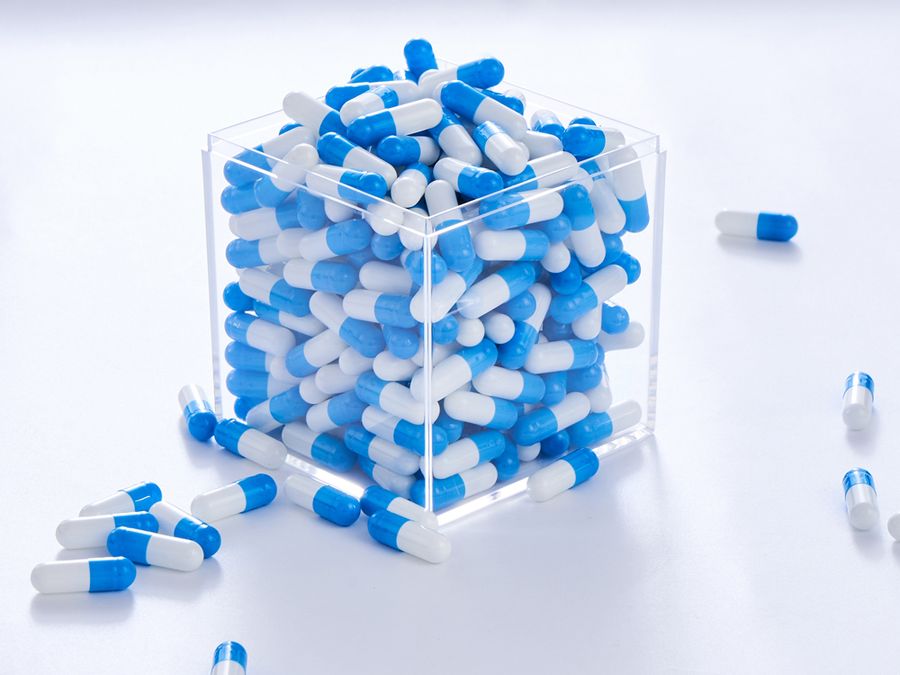
The shell has its own specification, and it is the part a capsule buyer actually touches on the filling line.
- Material and source. Premium bovine or porcine gelatin, with a high-bloom bone gelatin option for high-speed lines. The published material is non-GMO and BSE/TSE-free, with vegetarian alternatives available on request.
- Moisture. Maintained at 13.0% to 16.0%, the published balance between brittleness and structural integrity during filling. Below that band the shell cracks on the machine; above it, the joint takes longer to set.
- Closure geometry. Optimised pre-lock and final-lock rings so the cap holds through the vibration and transport of a high-speed line, plus a specialised air vent that stops trapped air from splitting the joint.
- Filling performance. A published 99.9% filling success rate on fully automatic machines, with shells engineered for manual and automated encapsulation alike.
- Dimensional control. Strict control over wall thickness and dimensional tolerances, batch-to-batch weight and dimension consistency, and a size range from 000 to 5.
- Per-lot testing. Dissolution rate and disintegration time, moisture content and physical integrity, microbial limits and heavy metal screening, and gel strength with capsule wall uniformity, with a full Certificate of Analysis issued for every shipment.
Because the moisture band, the lock geometry and the dimensional tolerances are what determine whether a customer's encapsulation line runs smoothly, and because all three are published rather than negotiable, they belong in the specification sheet and not in the sample evaluation alone.
The EU Compliance Sweeps That Change the Order
For a European buyer, the monograph is the start of the compliance work rather than the end of it, and there are at least three further layers to plan for.
The first is the additive sweep. Titanium dioxide was removed from the Union list of food additives by Regulation (EU) 2022/63, which is why clean-label programmes are now a specification line rather than a marketing preference, and why we publish a dedicated titanium dioxide-free range alongside the standard shells. The second is manufacturing practice: for capsules supplied into Europe, the expectations sit in EudraLex Volume 4, the EU GMP chapters covering medicinal product manufacture and excipients. The third is the material file: an EDQM Certificate of Suitability for the gelatin.
For the United States, the equivalent file is a Type II Drug Master File, and a buyer named in that DMF has rights and obligations around change notification worth understanding before the first supply agreement is signed. Our published capability covers DMF and HALAL certification requirements.
Because these obligations attach to the individual buyer and to the individual lot rather than to the product in general, and because they are settled at documentation stage rather than at inspection stage, the right moment to raise them is the first technical enquiry, not the first audit.
How to Verify a Supplier's Compliance
Seven checks that turn a compliance claim into something you can put in a quality file.
- Ask which monograph, which edition, which lot. A report that names the compendium and the lot number can be filed; a statement that the capsules are pharmaceutical grade cannot.
- Ask for the property list, not a verdict. The numbers for gel strength, ash, moisture, heavy metals and microbial limits, so they can be compared line by line against your own specification.
- Check the raw material source and the change control around it. A switch between bovine, porcine and bone grades is a specification event, not a procurement detail.
- Ask for the Certificate of Analysis for an actual shipment and compare it with the report you were shown at quotation stage.
- Check the documentation you personally hold. The DMF number and whether you are listed as a user, the EDQM Certificate of Suitability, the HALAL certificate with its scope and expiry, and the audit reports.
- Confirm the shell specification in writing. Sizes 000 to 5, the moisture band, the fill success rate and the tolerance commitments, since those are the numbers your filling line lives with.
- Agree the shipping and storage conditions. We ship in climate-controlled packaging to protect capsule integrity, and the storage recommendation belongs in the agreement rather than in the warehouse.
Because each of these checks is answered by a document rather than by a conversation, and because a supplier who cannot produce the document for lot one will not produce it for lot ten, the checks belong in the onboarding stage of the relationship, alongside the framework guidance buyers work to in the ICH quality guidelines on specifications and change control.
How to Order: What to Send Us
Seven details let us return a specification, a documentation pack and a quotation rather than a catalogue page.
- Compendia that matter for your filing or your market, and the editions you work to.
- Capsule size, fill type and the formulation class: powder, granule, pellet or semi-solid.
- Material preference: bovine, porcine or bone gelatin, or a non-animal route.
- Colour, finish and branding, including Pantone matching and axial or circular printing.
- Line speed and machine type, so the filling and closure parameters can be set for it.
- Volume profile and whether you need sample quantities first or bulk OEM quantities.
- Documentation scope: Certificate of Analysis, DMF, Certificate of Suitability, HALAL, packaging and storage.
Our published ordering terms run from sample quantities through to bulk OEM orders, with customization covering size selection, colour matching, printing and packaging design, and technical support for encapsulation optimisation, storage recommendations and regulatory documentation. We do not publish capsule prices here, because size, material, colour, branding and documentation scope all move the number, so the useful answer is a quotation against a written specification. Because the documentation set is what your quality file will be built on, we would rather agree that scope first and quote against it.
Frequently Asked Questions
1. What is the difference between ChP, USP and EP compliance for gelatin?
Three separate monographs, published by three separate bodies and revised on independent cycles, each with its own property list and limits. A claim of compliance is only usable if it names the compendium, the edition and the lot, and states whether one report covers all three or whether separate reports are required for each market. Our published product pages state compliance with USP, EP and JP pharmacopeia standards, and we supply full traceability and certification on request.
2. Does the empty capsule itself have a monograph?
Yes, the empty capsule is covered in its own right in each pharmacopoeia as an excipient, separately from the gelatin monograph covering the raw material. The material and the shell are audited against different documents, so the question to ask a supplier is which document covers which part of the pack, and that is also why excipient GMP guidance is consulted alongside the monographs.
3. What moisture content should pharmaceutical gelatin capsules have?
Our published specification maintains moisture at 13.0% to 16.0%, which is the balance between brittleness, where the shell can crack on the filling machine, and structural integrity during filling and transport. It is worth having that band confirmed in the purchase specification rather than accepted as a general quality statement, because it is the parameter your encapsulation line actually lives with.
4. Which gelatin sources and formats are available?
Premium bovine or porcine gelatin, with a high-bloom bone gelatin option for high-speed automated filling. The published material is non-GMO and BSE/TSE-free, and vegetarian alternatives are available on request. Sizes run from 000 to 5, in clear, opaque and coloured options, with custom printing available.
5. What documentation accompanies a shipment?
A full Certificate of Analysis is provided for every shipment, with full traceability and certification on request, and each lot is tested for dissolution rate and disintegration time, moisture content and physical integrity, microbial limits and heavy metal screening, and gel strength with capsule wall uniformity. We ship worldwide in climate-controlled packaging to protect capsule integrity.
6. Is a titanium dioxide-free option available for the European market?
Yes, and it is now a specification requirement rather than a preference, because titanium dioxide was removed from the Union list of food additives by Regulation (EU) 2022/63. We publish a dedicated titanium dioxide-free capsule range alongside the standard gelatin shells, including EU-compliant and natural mineral-based variants.