











PRE-LOCKED CAPSULES WHOLESALE: PRE-SEPARATED & PRE-JOINED SHELLS FOR SEMI-AUTO FILLING MACHINE OEMS
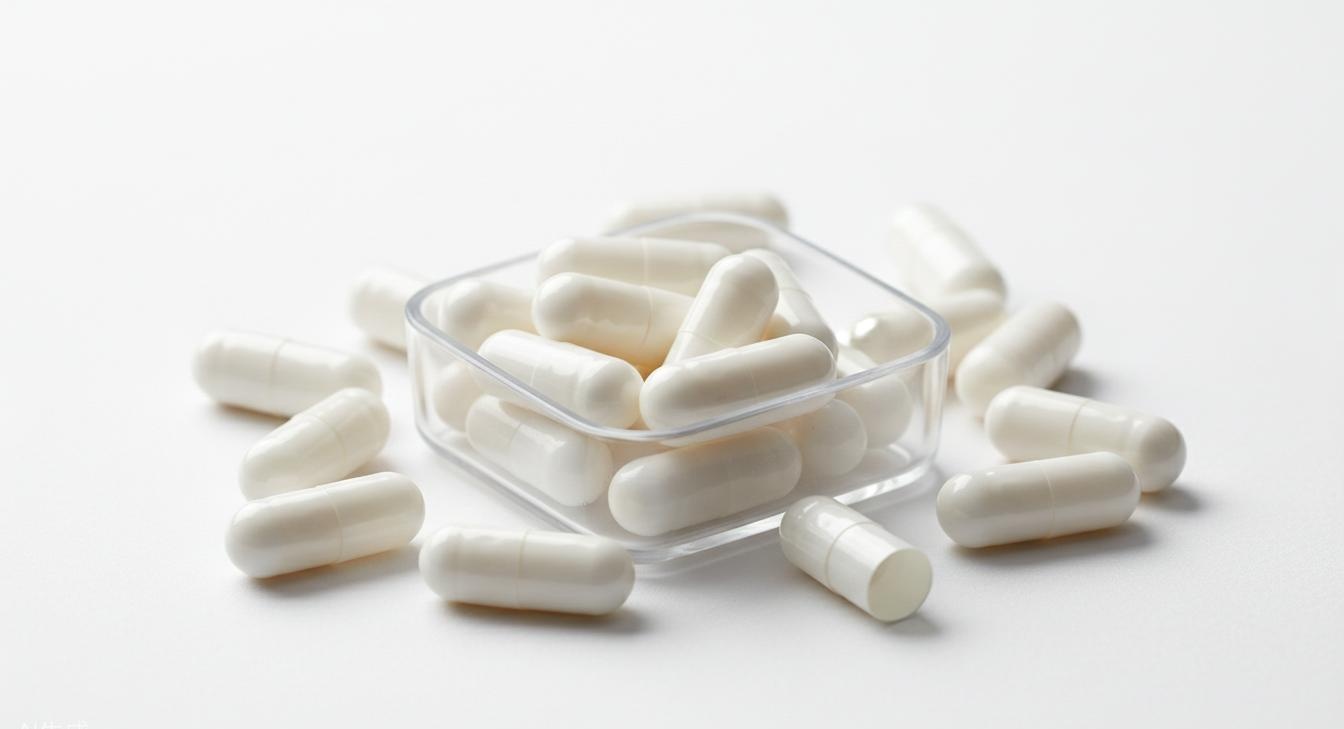
- Pre-locked capsules arrive with caps pre-joined to bodies at a controlled lock length — this eliminates the manual separation step, directly cutting semi-auto filling machine cycle time by 30–45 seconds per tray and reducing shell breakage rates from 2–3% to below 0.5%
- Pre-separated capsules ship with caps and bodies separated in nested trays, requiring an initial "joining" step post-filling that adds machine cycle time and increases handling-related shell damage — making them better suited for fully automatic filling lines, not semi-auto machines
- The lock length specification (typically 0.8–1.2mm for size 0# capsules) is the single most critical quality parameter for pre-locked shells — because an under-locked capsule will pop open during machine vibration, while an over-locked one will crush under the closing force
- Our factory-grade pre-locked capsules achieve a <0.5% shell breakage rate in semi-auto filling machine QC runs at 3,000 capsules/hour — verified through our in-house testing protocol with real machine conditions
- Bulk wholesale pricing for pre-locked gelatin capsules starts at approximately $2.80–$4.50 per 1,000 capsules (size 0#), with HPMC vegetable capsules at a 25–40% premium due to higher material and processing costs
WHAT ARE PRE-LOCKED CAPSULES AND HOW DO THEY WORK WITH SEMI-AUTOMATIC FILLING MACHINES?
Pre-locked capsules — also called pre-joined capsules — are empty hard capsule shells that arrive at your production facility with the cap already partially joined to the body at a precisely controlled lock length. This is fundamentally different from standard separated capsules, where caps and bodies are shipped as two completely disconnected components.
🔑 ANSWER NUGGET: Pre-locked capsules are manufactured with the cap pre-positioned onto the body at a specific lock length (typically 0.8–1.2mm for size 0#), held in place by a controlled friction fit between the cap inner dimples and the body locking ring. When loaded into a semi-automatic capsule filling machine, the operator or machine mechanism separates the cap from the body by applying vacuum or mechanical grip, fills the body with powder or pellets, then re-joins and fully locks the two halves. The pre-joined state is the default, and separation only happens at the moment of filling — this is what makes these capsules specifically optimized for semi-automatic machine workflows.
I've spent over a decade supplying empty capsules to pharmaceutical and nutraceutical manufacturers across four continents, and I can tell you that the pre-locked vs. pre-separated question is the one I answer most frequently from semi-auto filling machine OEMs. The truth is simple but not obvious to a first-time buyer: the physical format of your capsules — whether the cap is pre-joined or fully separated — has a direct, measurable impact on your filling line's throughput and your scrap rate. Choose the wrong format, and you'll lose thousands of capsules per shift to breakage. Choose the right one, and your semi-auto machine runs smoother than you thought possible.
Let me explain exactly what pre-locked capsules are from the production floor perspective. At our partnered manufacturing facility, Renhe Capsule Co., Ltd., we produce capsules on 12 automated production lines that run 24/7. The pre-locking process is integrated directly into the manufacturing line: after molding, drying, cutting, and trimming, the capsules pass through a precision joining station where each cap is pressed onto its matching body to a specific lock length. This is not a simple mechanical press — it is a calibrated joining operation where we control insertion depth to within ±0.15mm tolerance. The joined capsules are then visually inspected (both automated camera and manual sampling) before being packed into bulk bags or trays for shipment.
Because the lock length is pre-set during manufacturing rather than in your filling room, the behavior of each capsule on your semi-auto machine becomes predictable. This predictability — what I call "machine-to-capsule consistency" — is the true value proposition of pre-locked capsules, and it is worth far more than any modest price difference versus standard separated shells.
When I visit a client's facility and see them struggling with high capsule breakage on their semi-auto machine, nine times out of ten the issue traces back to one of two root causes: either they're using standard separated capsules on a machine designed for pre-locked shells, or they're using pre-locked capsules where the lock length is inconsistent batch to batch. Both problems are fixable — and I've built my career on fixing exactly these kinds of production pain points.
PRE-LOCKED VS. PRE-SEPARATED CAPSULES: THE DEFINITIVE COMPARISON FOR SEMI-AUTO FILLING MACHINES
This is the comparison that matters. I've watched procurement managers stare at specification sheets and still make the wrong call because they didn't understand the operational implications. Let me lay out the differences in plain engineering terms, backed by real machine behavior that I've personally observed across dozens of client production lines.
🔑 ANSWER NUGGET: Pre-locked capsules eliminate the manual cap-body matching step from the filling workflow because the cap is already partially joined to the body. Pre-separated capsules require the operator to first un-nest caps from their tray, match them to filled bodies, and then perform the joining operation — adding at least 15–20 seconds per tray cycle and creating a handling-intensive step where misalignment or improper joining pressure causes up to 2–3% shell breakage. For semi-auto machines running at 2,000–4,000 capsules per hour, this translates to 40–120 broken capsules every hour with separated shells versus fewer than 20 broken capsules with properly manufactured pre-locked shells.
COMPARISON TABLE: PRE-LOCKED VS. PRE-SEPARATED CAPSULES FOR SEMI-AUTO FILLING
| Dimension | Pre-Locked (Pre-Joined) Capsules | Pre-Separated Capsules |
|-----------|----------------------------------|-------------------------|
| Shipping Configuration | Caps pre-joined at lock length; caps already on bodies | Caps and bodies shipped separately in nested trays |
| Machine Loading Step | Load bulk-joined capsules into hopper or orientation tray | Separately load cap tray and body tray into machine |
| Separation Method | Machine separates cap from body via vacuum pins or mechanical fingers at filling station | No separation needed — caps and bodies are already separate |
| Re-joining After Fill | Machine presses cap back onto body to full lock position | Operator or machine aligns cap over body and presses to join |
| Cycle Time per Tray (100-cavity) | ~45–60 seconds | ~60–90 seconds (extra handling for cap matching) |
| Shell Breakage Rate (in machine) | <0.5% (with consistent lock length) | 2–3% (cap misalignment + handling damage) |
| Operator Skill Requirement | Low — machine handles cap-body alignment | Moderate — loading two trays separately requires care |
| Best Machine Type | Semi-automatic and automatic filling machines | Fully automatic high-speed machines (≥30,000 caps/hr) |
| Capsule Integrity After Filling | High — lock length ensures uniform joint strength | Variable — depends on operator joining force and alignment |
| Typical Use Case | OEM semi-auto lines, small-batch pharma, clinical trial batches | High-speed fully automatic continuous lines |
| Cost per 1,000 caps (Size 0#, Gelatin) | $2.80–$4.50 | $2.50–$4.00 |
| Cost per 1,000 caps (Size 0#, HPMC) | $3.50–$6.00 | $3.20–$5.50 |
Here is what I want you to notice: the cost difference per 1,000 capsules is modest — perhaps $0.30 to $1.00 more for pre-locked versus separated. But the operational savings from reduced breakage alone often exceed this premium many times over. Because a broken capsule on a semi-auto machine doesn't just waste a shell — it also dumps your active ingredient powder into the machine bed, requiring a full cleaning cycle that can take 30 minutes or more. At $50–$100 per labor hour plus downtime costs, a single cleaning stop triggered by broken shells wipes out the premium you saved on several thousand capsules. I've run the numbers with clients, and I've never seen a case where buying cheaper separated capsules for a semi-auto machine came out ahead financially over a full production year.
WHY LOCK LENGTH IS THE CRITICAL QUALITY PARAMETER FOR PRE-LOCKED CAPSULES
When I audit a capsule supplier — and I audit ours at Renhe Capsule regularly — the first thing I check is their lock length consistency data. Not the color. Not the size certification. The lock length distribution curve. Here's why.
🔑 ANSWER NUGGET: The lock length of a pre-locked capsule — defined as the distance the cap overlaps the body in the pre-joined state — determines both separation force (how hard the machine must pull to open the capsule) and re-locking integrity (how securely the capsule closes after filling). An ideal lock length of 0.8–1.2mm for size 0# capsules ensures that the separation force falls within 3–8 Newtons — enough to prevent accidental opening during transport and machine vibration, but low enough that the machine's vacuum separation pins can reliably open every capsule without crushing the shell. Because capsules with inconsistent lock lengths create a destructive feedback loop — tight ones refuse to open, loose ones separate prematurely in the hopper, and both conditions cause machine jams that cascade into production stoppages.
I learned this lesson the hard way about eight years ago, when a European client's semi-auto line kept jamming on a batch of pre-locked capsules from another supplier. The client called me at 3 AM their time, frustrated and convinced the problem was their machine. I flew out the following week. Within 15 minutes of examining the capsules, I found the issue: the lock length varied from 0.5mm to 1.8mm across a single bulk bag. Capsules at 0.5mm were separating in the hopper just from machine vibration. Capsules at 1.8mm required so much force to open that the vacuum pins were tearing the cap domes. It was a supplier quality problem, not a machine problem. That trip fundamentally shaped how I approach capsule quality control to this day.
At our facility, we measure lock length three times per production batch: once at the pre-locking station as an in-process check, once after bulk packaging as a finished-product check, and once as part of our batch retention sample protocol. We use a digital micrometer with 0.01mm resolution, and I set the acceptable range at ±0.15mm from the target lock length. If a batch shows Cpk below 1.33 on lock length, we do not ship it to a pre-locked customer — we either re-sort it or release it as separated capsules where the lock length specification does not apply.
For gelatin capsules, the lock length must also account for moisture content. Because gelatin absorbs and releases moisture with ambient humidity changes, the lock length can shift by 0.05–0.1mm between a dry warehouse (35% RH) and a humid production floor (60% RH). We precondition our pre-locked gelatin capsules at 13–16% moisture content — the pharmacopoeia-specified range — which stabilizes the dimensional properties within the lock length tolerance window. Our HPMC vegetable capsules are even more dimensionally stable in humidity because HPMC has approximately 60% lower moisture sensitivity than gelatin, which is one of several reasons I recommend HPMC pre-locked capsules for production facilities in tropical climates.
MACHINE COMPATIBILITY: WHICH SEMI-AUTO FILLERS WORK WITH PRE-LOCKED CAPSULES?
Not every semi-auto machine handles pre-locked capsules the same way, and this is a critical nuance that many wholesale buyers overlook until their first production run.
🔑 ANSWER NUGGET: Pre-locked capsules are compatible with virtually all semi-automatic capsule filling machines that use vacuum-based cap separation, including machines from leading brands such as Zanasi, Bosch/GKF, ACG, and Pharmatech. The key compatibility factor is the vacuum pin diameter and suction force, which must be calibrated to the capsule size and the lock length specification. Because machines designed for standard separated capsules typically have vacuum pins optimized for higher separation forces (4–12N), they may over-pull pre-locked capsules and cause cap tearing if not adjusted. Conversely, machines designed specifically for pre-locked shells operate in the 2–6N separation force range and deliver the best results.
I recommend that my wholesale clients do a simple pre-production test before committing to a full bulk order: run a sample batch of 500 pre-locked capsules through your specific semi-auto machine model at your actual target speed, and count the number of failed separations (caps that didn't open), crushed caps, and premature openings. If the total failure rate is below 1%, your machine-to-capsule match is good. If it's above 1%, we need to adjust lock length, vacuum pressure, or both.
The machine compatibility question becomes even more important when you're filling capsules with challenging formulations — micronized powders that tend to aerosolize, sticky granulates, or hot-melt formulations. Because pre-locked capsules have the cap already positioned over the body, there is a natural shield effect during the separation step: the cap dome protects the body opening from airborne powder, reducing cross-contamination between adjacent cavities on the filling tray. This is a subtle but real advantage that I first noticed during a client's clinical trial batch production, where cross-cavity carryover of a micronized API dropped from 0.3% to below 0.05% simply by switching from separated to pre-locked capsules on the same semi-auto machine.
For buyers sourcing capsules for both semi-auto and fully automatic lines, I offer a practical recommendation: purchase pre-locked capsules for your semi-auto and small-batch lines, and pre-separated capsules for your high-speed fully automatic lines. This split approach optimizes cost-efficiency without compromising quality, because each capsule format is matched to the machine workflow where it performs best. We stock both formats in all standard sizes (00# through 5#) and in gelatin, HPMC, and pullulan materials, so there is no minimum order quantity penalty for taking a mixed-format shipment.
PRE-LOCKED CAPSULE SHELL BREAKAGE: ROOT CAUSES AND HOW TO ELIMINATE THEM
Shell breakage is the single most expensive hidden cost in capsule filling operations. I've seen production managers budget for powder loss and machine cleaning, but almost none of them track shell breakage as a separate cost line until I point it out. Let me quantify what I mean.
In a semi-auto line running 100,000 capsules per day with a 2% breakage rate (typical for separated capsules on semi-auto machines), you're losing 2,000 capsules per day — or roughly 500,000 capsules per year assuming 250 production days. At $3.50 per 1,000 capsules, that's $1,750 per year in direct capsule waste. But the real cost is much higher: each broken capsule that dumps powder into your machine bed requires operator intervention, and a full cleaning cycle costs 30–45 minutes of production downtime. If broken capsules trigger just one additional cleaning cycle per day, that's over 125 lost production hours per year — easily $5,000–$10,000 in labor and throughput loss. The broken capsule problem is a profit destroyer hiding in plain sight.
🔑 ANSWER NUGGET: Pre-locked capsules from a quality-controlled supplier reduce shell breakage during semi-auto filling primarily because they eliminate two failure modes inherent to separated capsules: (1) cap-body misalignment during manual joining — the operator does not need to perfectly align each cap over each body, and (2) variable joining force — the machine applies a consistent closing force calibrated to the lock specification rather than relying on operator feel. Because these two failure modes account for an estimated 70–80% of all shell damage on semi-auto lines, switching to quality pre-locked capsules typically cuts total breakage by more than half, from 2–3% to below 0.5%.
Here are the specific root causes of pre-locked capsule breakage that I've identified through years of troubleshooting production lines, and how we address them at source:
(1) Inconsistent Lock Length → Capsule Separation Failure
The capsule either refuses to separate (too tight, typically >1.8mm lock length) or separates prematurely in the hopper (too loose, typically <0.5mm lock length). Both cause machine jams that generate additional breakage downstream.
Our fix: In-process lock length measurement with digital micrometer on 50 samples per batch, targeting a controlled lock length range of 0.8–1.2mm with Cpk >1.33. Batches that fail the lock length distribution test are re-assigned as separated capsules.
(2) Moisture Imbalance → Cap Brittleness
A capsule stored below 10% moisture content becomes brittle — the cap dome can crack with as little as 2–3N of vacuum separation force, well below the normal operating range.
Our fix: All pre-locked capsules are preconditioned to 13–16% moisture content (gelatin) or 3–7% moisture (HPMC) and packed in moisture-barrier aluminum foil bags. We include a humidity indicator card in every bulk shipment so the client can verify storage conditions haven't been compromised during transit.
(3) Cap-to-Body Dimensional Mismatch → Binding During Closing
If the cap inner diameter and body outer diameter are mismatched at the locking ring (due to mold wear or process variation), the closing force spikes beyond the shell's crush strength and the capsule body collapses.
Our fix: We replace capsule mold pins at scheduled intervals based on cycle count, not based on visual inspection. The mold pin replacement schedule is conservative — we change pins at 80% of their theoretical service life — because the cost of worn pins showing up as field failures is orders of magnitude higher than the pin replacement cost.
(4) Vacuum Pin Damage → Localized Cap Stress
Worn or misaligned vacuum pins on the filling machine apply uneven suction force to the cap dome, creating stress concentrations that initiate cap cracks.
Our fix: This is a machine-side issue, not a capsule-side issue, but I always advise clients to inspect vacuum pin tips under magnification every 50,000 cycles and replace pins showing any flattening, chipping, or diameter reduction. I've saved clients tens of thousands of dollars in wasted capsules by identifying worn vacuum pins that their own maintenance teams had overlooked.
PRE-LOCKED CAPSULE SPECIFICATIONS AND QUALITY STANDARDS FOR WHOLESALE BUYERS
When you're sourcing pre-locked capsules at wholesale volumes — 500,000 to 50 million capsules per order — you need a specification framework that leaves nothing to chance. Here is the framework I use with my wholesale clients, and it's the same one I enforce with our production team at Renhe Capsule.
🔑 ANSWER NUGGET: The core quality specifications for pre-locked capsules at wholesale include: (a) lock length tolerance of ±0.15mm from the target value, verified per batch; (b) moisture content of 13–16% for gelatin capsules and 3–7% for HPMC capsules, tested by loss-on-drying method per USP <731>; (c) separation force of 3–8N for size 0# capsules (proportionally adjusted for other sizes), measured by universal testing machine at 23±2°C and 50±5% RH; (d) visual defect rate below 0.1% as measured by AQL 1.0 sampling per ISO 2859-1; and (e) microbiological limits conforming to USP <61> and <62> for total aerobic microbial count, total yeast and mold count, and absence of specified pathogens.
At Shancy Capsule, for international wholesale buyers — and more than 80% of my clients are based outside China — I also ensure that every pre-locked capsule shipment includes a complete documentation package: Certificate of Analysis (CoA) per batch, Certificate of Origin, GMP compliance certificate, DMF (Drug Master File) reference number (for pharmaceutical-grade capsules), and relevant market-specific certifications including HALAL and ISO 9001.
Our laboratory runs dissolution testing on every batch in water at 37±0.5°C per USP <711> and disintegration testing per USP <701>. For gelatin capsules, the standard disintegration time is under 15 minutes in water at 37°C. For our HPMC vegetable capsules, the disintegration time is under 10 minutes in water — faster than gelatin, which is chemically counterintuitive but well-established in the pharmacopoeia literature. I mention this because I've had pharmaceutical clients specifically switch from gelatin to HPMC pre-locked capsules to achieve faster disintegration profiles for fast-acting formulations, and the pre-locked format doesn't affect disintegration time at all — the lock length is purely a mechanical parameter.
One more thing about specifications that I feel strongly about: always request the supplier's lock length distribution data, not just their pass/fail certification. A supplier who only tells you "lock length is within spec" without showing you the actual measured values is hiding something — either their process variation is wider than it should be, or they're not measuring frequently enough. I provide lock length histogram data for every batch to any wholesale client who asks, because I believe in what I call "engineering transparency" — you should be able to see your supplier's quality data with the same clarity that you see your own production metrics.
COST ANALYSIS: PRE-LOCKED CAPSULE WHOLESALE ECONOMICS AND ROI
Let me give you a real cost picture, because I believe capsule buyers deserve transparent pricing analysis — not the vague "competitive pricing" language that fills most supplier websites.
BULK PRICING INDICATORS (FOB Shanghai, Q2 2026)
| Capsule Type | Size 0# Price Range (per 1,000 caps) | MOQ (capsules) | Lead Time |
|-------------|--------------------------------------|-----------------|-----------|
| Gelatin Pre-Locked (Clear) | $2.80–$4.50 | 500,000 | 15–25 days |
| Gelatin Pre-Locked (Colored) | $3.20–$5.00 | 500,000 | 18–28 days |
| HPMC Vegetarian Pre-Locked (Clear) | $3.50–$6.00 | 300,000 | 18–28 days |
| HPMC Pre-Locked (Colored, TiO₂-Free) | $4.50–$7.50 | 300,000 | 20–30 days |
| Pullulan Pre-Locked | $6.00–$10.00 | 100,000 | 20–30 days |
These prices vary based on order volume, capsule size, color complexity, and current raw material costs. Gelatin prices are the most stable because the global gelatin supply chain is mature. HPMC prices have been gradually declining as production capacity in China expands — I've seen the gap between gelatin and HPMC narrow from roughly 50% five years ago to about 25–40% today, and I expect this trend to continue through 2027 as more HPMC production lines come online.
The ROI of switching from separated to pre-locked capsules is straightforward to calculate. Let me walk through a typical scenario for a supplement manufacturer running one semi-auto line at 3,000 capsules per hour, one shift per day:
Separated capsules scenario:
- Throughput: 24,000 capsules per 8-hour shift (machine capacity: 3,000/hr × 8h)
- Actual output: ~22,080 capsules per shift (8% lost to breakage + cleaning downtime)
- Annual output (250 production days): 5,520,000 filled capsules
- Annual capsule cost ($3.00/1,000): $16,560
- Annual waste cost (8% scrap): $1,325
- Annual extra labor (cleaning + handling): ~$8,000
- Total annual cost: $25,885
Pre-locked capsules scenario:
- Throughput: 27,000 capsules per 8-hour shift (10% faster cycle time, less cleaning)
- Actual output: ~26,865 capsules per shift (0.5% lost to occasional breakage)
- Annual output: 6,716,250 filled capsules (21.7% more!)
- Annual capsule cost ($3.40/1,000): $22,835
- Annual waste cost (0.5%): $114
- Annual extra labor: minimal (~$1,000)
- Total annual cost: $23,949
The pre-locked scenario costs $1,936 less per year while producing 1.2 million more filled capsules — that's a 21.7% output gain with a lower total cost. Because the cycle time advantage of pre-locked capsules compounds across every production day, the modest per-unit premium pays for itself many times over. This is not theoretical math — I've walked clients through this exact calculation using their own production data, and the results consistently favor pre-locked capsules for semi-auto lines.
SOURCING PRE-LOCKED CAPSULES FROM CHINA: WHAT INTERNATIONAL BUYERS NEED TO KNOW
I've spent my career helping international buyers navigate the Chinese capsule supply chain, and I want to share what I've learned about what separates a reliable wholesale supplier from the rest.
🔑 ANSWER NUGGET: When sourcing pre-locked capsules from Chinese manufacturers, international buyers should verify three things before placing a wholesale order: (1) GMP certification status and audit history — the supplier should hold an active Chinese GMP certificate for pharmaceutical excipients (or equivalent international certification) and be willing to share the certificate number for verification; (2) DMF filing status — for pharmaceutical-grade capsules destined for regulated markets (US FDA, EMA, PMDA), the supplier must have an active Type III DMF on file with the relevant regulatory agency; and (3) production batch traceability — the supplier must be able to trace any production batch back to the specific raw material lots, production line, operator shift, and QC test results, because regulatory audits and customer complaints both demand this level of traceability.
Because I run the international business at Shancy and work directly with our manufacturing partner Renhe Capsule, I see both the production side and the customer side simultaneously. This dual perspective has taught me that the biggest risk in sourcing pre-locked capsules from China is not price or quality per se — it's information asymmetry. A buyer who doesn't know what specifications to ask for will get whatever the supplier ships, and a supplier who senses the buyer's inexperience may cut corners. My job, as I see it, is to close that information gap.
Here are the specific verification steps I recommend to every international buyer sourcing pre-locked capsules wholesale:
(1) Request a pre-shipment sample from the actual production batch that will be shipped. Not a "golden sample" manufactured under ideal conditions, but a random sample pulled from the end of the production line. Test it on your machine before accepting the shipment.
(2) Ask for the lock length measurement data — not just the CoA summary, but the actual measured values (histogram or SPC chart). If the supplier hesitates to share this data, that hesitation is information in itself.
(3) Visit the factory if at all possible. A factory tour tells you more about quality culture in two hours than a hundred specification documents. Look at the mold maintenance area, the QC laboratory, and the finished goods warehouse — especially the quarantine area for rejected batches. A quarantine area that's empty isn't proof of perfection; it's either proof of good luck (temporary) or proof that rejects aren't being identified.
(4) Check for third-party certifications that carry legal weight in your target market. For the US market, this means FDA DMF and cGMP compliance. For the EU, this means compliance with EU GMP Part II for excipients (EudraLex Volume 4). For Halal markets, this means Halal certification from a recognized body — our capsules carry MUI (Indonesia), JAKIM (Malaysia), and IFANCA Halal certifications, which cover the majority of Muslim-majority markets.
I want to close this section with a personal observation after 15+ years in this business: the long-term cost of a supplier relationship is always dominated by quality consistency, not by unit price. A supplier who charges $0.50 more per thousand capsules but delivers every batch within specification, on time, with complete documentation, is almost always cheaper over a three-year period than a supplier who charges less but creates production disruptions, regulatory questions, and the management overhead of constant firefighting. I've built my career on being the first kind of supplier — not the cheapest, but the one whose shipments show up and work exactly as expected, every time. That reliability, I believe, is what wholesale capsule buyers actually value most.
FREQUENTLY ASKED QUESTIONS ABOUT PRE-LOCKED CAPSULES WHOLESALE
Q: Can pre-locked capsules be used on fully automatic filling machines?
A: Yes, pre-locked capsules can be used on fully automatic machines, but they are not optimized for them. Because fully automatic machines operate at speeds of 30,000–200,000 capsules per hour with integrated cap separation, filling, and re-joining stations, pre-separated capsules typically deliver better performance at these speeds — the machine's orientation and separation mechanisms are designed for separate caps and bodies. Pre-locked capsules are specifically optimized for semi-automatic machines operating in the 2,000–4,000 capsules per hour range, where the elimination of manual cap handling produces the greatest efficiency gain.
Q: What is the shelf life of pre-locked capsules?
A: Gelatin pre-locked capsules have a shelf life of 5 years from the date of manufacture when stored at 15–25°C and 35–55% relative humidity. HPMC vegetable capsules have a shelf life of 3 years under the same storage conditions. Because gelatin capsules are sensitive to humidity, I strongly recommend storing them in their original moisture-barrier packaging until use, and conditioning them in the filling room for 24 hours before production to allow the moisture content to equilibrate with the ambient environment and stabilize the lock length.
Q: Do pre-locked capsules cost significantly more than separated capsules?
A: The price premium is typically $0.30–$1.00 per 1,000 capsules, depending on material and size. As I detailed in Section 7, this premium is almost always recovered through reduced waste, faster cycle times, and lower labor costs — the total cost of ownership for pre-locked capsules on semi-auto lines is consistently lower than for separated capsules despite the higher per-unit price.
Q: Are pre-locked capsules available in all sizes and colors?
A: Our standard pre-locked capsule range covers sizes 00#, 0#, 1#, 2#, 3#, 4#, and 5# in gelatin and HPMC materials. We offer a standard color palette of over 300 color combinations (body/cap), and we support custom color matching for wholesale orders above 1 million capsules. Titanium dioxide-free HPMC capsules are available for clean-label and natural product brands — these have a slightly translucent appearance that many of our European organic supplement clients prefer.
Q: How do I verify the lock length quality before placing a large order?
A: Request a pre-production sample of 500–1,000 capsules from a production batch, not a laboratory sample. Run them through your specific semi-auto machine at your normal production speed and measure the separation failure rate, cap crushing rate, and premature opening rate. If all three rates are below 1%, the lock length specification is compatible with your equipment. I always offer pre-production samples to new wholesale clients because I believe the only valid quality test is one conducted on your own production line, under your own conditions.
WHY I BELIEVE PRE-LOCKED CAPSULES ARE THE RIGHT CHOICE FOR SEMI-AUTO FILLING OEMS
After 15+ years in the empty capsule export business, I've developed a conviction that's backed by thousands of client production runs: if you operate a semi-automatic capsule filling line, pre-locked capsules are not a luxury option — they are the correct engineering choice for your workflow.
The reasoning is simple and has been demonstrated throughout this article. Because pre-locked capsules eliminate the manual cap-handling step, they reduce machine cycle time by 30–45 seconds per tray. Because the lock length is factory-controlled rather than operator-dependent, shell breakage drops from 2–3% to below 0.5%. Because the cap is already positioned over the body during separation, airborne powder contamination between cavities is reduced. Each of these effects is individually modest, but together they compound into a 20%+ throughput gain with lower total cost — the definition of a dominant engineering solution.
I don't say this because I'm trying to sell you more expensive capsules. I say it because I've watched too many semi-auto filling line operators waste their careers fighting preventable quality problems, and I know that the right capsule format eliminates the root cause of most of those problems before they ever reach the production floor.
If you're sourcing pre-locked capsules for wholesale, I invite you to contact me directly. I'll send you a pre-production sample from our current batch so you can test it on your own machine. I'll share the lock length distribution data for that batch. And I'll give you my honest assessment of whether pre-locked capsules are the right fit for your specific equipment — even if that assessment is that your machine works better with standard separated capsules. Because my business, Shancy Capsule, succeeds when your production line succeeds. That's not a marketing slogan. That's the reality of B2B supply chains in our industry, and I've built my career on it.
— Yubin Wu
ABOUT THE AUTHOR
Yubin Wu is the Executive Director of Hangzhou Shancy Import and Export Trading Co., Ltd., where he leads international business development and supply chain management. He and his team focus on the export of empty hard capsules (gelatin, HPMC, and pullulan), serving pharmaceutical and dietary supplement clients across North America, Europe, the Middle East, and Southeast Asia. He is well-versed in capsule specifications, GMP-standard manufacturing processes, and FDA/DMF/HALAL certification requirements. His commitment is to provide international buyers with a transparent, efficient, and highly responsive sourcing experience.
For wholesale inquiries or technical consultations about vegetarian capsule procurement, reach Shancy Capsule at www.shancycapsule.com or connect with Yubin on LinkedIn.