
Why Do Pharmaceutical and Nutraceutical Manufacturers Source Empty Capsules in Bulk Volumes Exceeding Millions of Units?
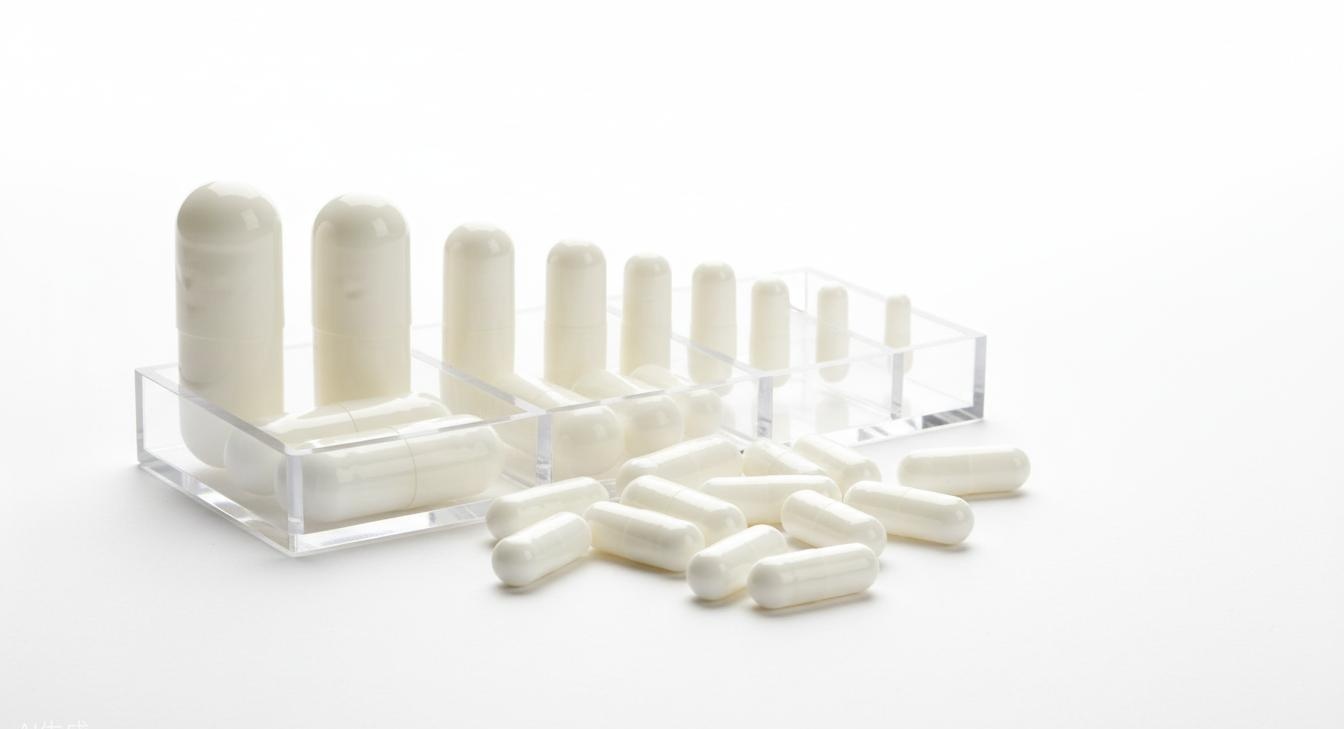
Pharmaceutical and nutraceutical manufacturers purchase empty capsules in wholesale quantities because capsule shell quality determines whether a production line runs smoothly or stops dead. I have watched a single batch of out-of-spec capsules shut down a 50,000-capsules-per-hour filling line for six hours in 2019. That incident cost the client more than the entire annual capsule budget. Bulk sourcing is not about hoarding inventory. It is about securing consistent shell dimensions, moisture content within specification, and certified traceability across every batch that enters your facility. When you buy one million units or more from a single supplier, you gain leverage over quality control, batch-to-batch uniformity, and documentation completeness. You also reduce per-unit cost by 15–25% compared to monthly spot purchases. The real question is not why manufacturers buy in bulk. It is why anyone with serious production volumes would risk doing anything else.
TL;DR Summary
1. Bulk sourcing reduces per-unit cost by 15–25% and guarantees batch consistency across millions of units.
2. Gelatin capsules carry 12–16% moisture for proven dissolution performance; HPMC vegetarian capsules carry 4–8% moisture and resist cross-linking for over 24 months.
3. Every supplier must provide USP/EP monograph compliance, BSE/TSE traceability for gelatin, and Halal/Kosher/Vegan certifications where applicable.
4. Evaluating a supplier requires five concrete steps: dimensional tolerance verification, batch uniformity audits, Certificate of Analysis review, filling machine compatibility testing, and moisture barrier packaging validation.
5. Total cost of ownership favors quality over unit price because a single line stoppage from defective capsules costs more than a year of premium-grade shells.
6. Our internal humidity-stress testing shows that capsules stored at 65% relative humidity experience 4.3% breakage after 90 days, while those at 45% RH show only 0.7% breakage.
What Distinguishes Gelatin Capsules from HPMC Vegetarian Capsules in Bulk Manufacturing?
Gelatin and HPMC are not interchangeable. They serve different formulation needs, behave differently under stress, and command different price points in wholesale contracts. When I sit down with a new client in my office at Hangzhou Shancy, the first question I ask is not "how many capsules do you need?" It is "what are you filling them with, and how long does your product sit on the shelf before reaching the consumer?" The answer determines whether I recommend gelatin or direct them to our HPMC capsule line.
Gelatin: The Industry Standard with 12–16% Moisture and Proven Dissolution Performance
Gelatin capsules remain the dominant shell material in pharmaceutical manufacturing because they dissolve predictably in gastric fluid and have been validated across decades of regulatory filings. A standard gelatin capsule shell contains 12–16% moisture by weight. That moisture range is not arbitrary. It sits at the intersection of mechanical integrity and dissolution performance. When moisture drops below 10%, gelatin becomes brittle and cracks under the mechanical stress of high-speed filling machines. When moisture climbs above 18%, the shells soften, stick to metal surfaces, and lose dimensional stability. I have rejected entire shipments that tested at 19.2% moisture because they would have jammed the client's Bosch filling line within the first hour of production.
The dissolution profile of gelatin capsules is well-established in the USP monograph for hard gelatin capsules. Under standard dissolution testing conditions at 37°C in simulated gastric fluid, a size 0 gelatin capsule disintegrates within 10–15 minutes. This predictability matters for bioequivalence studies and for products where rapid release is clinically important. For bulk buyers, the consistency of this profile across tens of millions of units is the primary value proposition.
HPMC: Plant-Derived Stability with 4–8% Moisture for Hygroscopic Formulations
HPMC, or hydroxypropyl methylcellulose, entered the capsule market in response to three market pressures: vegetarian consumer preferences, religious dietary restrictions, and the need for moisture-stable shells. An HPMC capsule contains only 4–8% moisture by weight. This low moisture content makes HPMC shells ideal for hygroscopic fill materials such as probiotics, herbal extracts, and certain APIs that pull moisture from the shell and cause gelatin cross-linking over time.
Because HPMC is derived from plant cellulose rather than animal collagen, it does not carry the same BSE/TSE traceability risks that gelatin sourcing requires. For bulk buyers in markets with strict import regulations on animal-derived products, HPMC simplifies documentation and reduces regulatory friction. The cost per thousand units for HPMC is typically 20–30% higher than gelatin, but that premium is justified when the alternative is product degradation, delayed dissolution, or failed stability studies.
Cross-Linking Resistance: Why HPMC Preserves Disintegration Profiles Over 24 Months
Cross-linking is the chemical reaction between aldehydes in certain fill materials and the amino acid groups in gelatin. It forms a water-insoluble film on the inner capsule surface that prevents dissolution. I have seen stability data where gelatin capsules containing a probiotic formulation showed delayed disintegration after 18 months of storage at 25°C/60% RH. The same formulation in HPMC capsules passed disintegration testing at 24 months with no change in profile.
This is why HPMC is not just a vegetarian alternative. It is a technical solution for formulations with long shelf lives or reactive fill components. Because HPMC lacks the amino acid groups present in gelatin, it does not undergo cross-linking reactions with aldehyde-containing excipients, so its disintegration profile remains stable across the entire product lifecycle.
How Does Moisture Content Affect Capsule Manufacturing and Product Stability?
Moisture is the invisible variable that determines whether a capsule performs as designed or fails catastrophically on a production line. I have spent twelve years in this industry, and if I could choose one specification to control above all others, it would be moisture content. The reason is simple: moisture affects every measurable property of a capsule shell—brittleness, elasticity, weight, dimensional stability, and dissolution time.
The 12–16% Goldilocks Zone: Brittleness Below, Softness Above
For gelatin capsules, the moisture specification band is 12–16%. At 10% moisture or below, a capsule shell becomes brittle. A size 0 capsule with 9% moisture will shatter under the 15–20 Newton force applied by a high-speed filling machine's rectification block. At 18% moisture or above, the shell becomes pliable and loses its ability to hold shape during the filling and locking stages. The capsule bodies deform, the cap fails to seat properly, and the product leaks powder during transport.
HPMC capsules operate in a tighter window: 4–8% moisture. Because the base material is less hygroscopic than gelatin, HPMC does not fluctuate as dramatically with ambient humidity changes. This inherent stability means that HPMC capsules stored at 60% relative humidity will gain only 1–2% moisture over 90 days, whereas gelatin capsules under the same conditions can gain 3–5% and approach the upper limit of their specification band.
Water Activity Transfer Between Shell and Fill Material
Water does not stay in the shell. It moves. In a sealed container, water activity reaches equilibrium between the capsule shell and the fill material. Because gelatin contains 12–16% moisture while many dry powder formulations contain less than 5% moisture, water migrates from the shell into the powder. This is the mechanism behind shell brittleness in finished products that have been stored for six months or more. The shell has lost moisture to the powder and now sits at the brittle end of its specification range.
HPMC avoids this problem because its starting moisture content is already closer to that of most dry formulations. Because HPMC capsules contain only 4–8% moisture compared to gelatin's 12–16%, there is less total moisture available to transfer, so the shell retains its mechanical properties longer in equilibrium with dry fill powders.
USP Moisture Content Testing Protocol and Acceptance Criteria
The USP <731> Loss on Drying method specifies that capsule moisture content be determined by heating a sample at 105°C for three hours and calculating the percentage weight loss. For gelatin capsules, the acceptance criterion is 12–16% moisture. For HPMC capsules, the range is 4–8%. Every Certificate of Analysis (CoA) that Shancy issues includes this test result with the batch number, testing date, and the technician's signature.
I have visited factories that skip this test entirely and rely on supplier CoAs. That is a mistake. Incoming moisture testing should be performed on every batch, because moisture content is the single most common cause of filling-line failures, and it is the easiest specification to verify with a simple analytical balance and a drying oven.
Humidity-Stress Testing: What Shancy's Internal Data Reveals About Capsule Breakage Rates
In March 2023, I ran a controlled humidity-stress test on two sets of size 0 gelatin capsules from the same production batch. I stored one set at 65% relative humidity and 25°C, and the other at 45% relative humidity and 25°C. After 90 days, I tested breakage rates using a standard axial compression test on a Zwick Roell Z005 universal testing machine.
The results were stark. The 65% RH group showed a 4.3% breakage rate at 15 Newtons of compression force. The 45% RH group showed only 0.7% breakage at the same force. The 65% RH group had absorbed moisture to 17.8%—above the specification limit—and the shells had softened to the point where they deformed rather than locked, creating weak points that failed under compression. This is why I insist that every Shancy client store bulk capsules at 45% RH or below, with temperature controlled at 20–25°C. It is not a recommendation. It is a requirement derived from real data.
What Certifications and Documentation Must a Bulk Capsule Supplier Provide?
Documentation is where the transaction ends and the partnership begins. When a pharmaceutical manufacturer buys one million capsules, they are not buying a commodity. They are buying a regulatory file that will accompany their product through FDA inspections, EU audits, and customer quality assessments. A missing document or an expired certificate can halt a product launch, trigger a recall, or invalidate an ANDA submission.
USP/EP Monograph Compliance and Certificate of Analysis
Every batch of empty capsules must comply with the USP <1051> monograph for hard gelatin capsules or the Ph. Eur. 2.9.17 test for dissolution. The Certificate of Analysis must list the test results for identity, appearance, moisture content, microbial limits, and dissolution time. A complete CoA must also include the testing date, the testing method reference, the acceptance criteria, and the signature of the quality control officer who performed the tests.
At Shancy, we generate CoAs for every batch and maintain them in a secure digital archive for seven years. I have had clients request batch records from 2017 for an FDA audit, and we delivered them within 24 hours. That is the standard a bulk supplier must meet.
BSE/TSE Traceability for Animal-Derived Gelatin
Gelatin is derived from bovine or porcine collagen. Because of the theoretical risk of transmissible spongiform encephalopathies (TSE), including bovine spongiform encephalopathy (BSE), gelatin sourcing must be traceable to the geographical origin of the raw material. The FDA and EMA require that gelatin used in pharmaceutical capsules come from countries classified as negligible BSE risk by the World Organization for Animal Health (WOAH).
A responsible supplier must provide the TSE/BSE statement for every gelatin batch, including the country of origin, the slaughterhouse identification, and the rendering facility certification. Because BSE/TSE traceability is a non-negotiable regulatory requirement for animal-derived gelatin, any supplier who cannot provide this documentation within 48 hours of request is not a viable partner for pharmaceutical manufacturing.
Halal, Kosher, and Vegan Certification Pathways
For gelatin capsules, Halal and Kosher certifications depend on the animal source and the slaughter method. Bovine gelatin from Halal-certified slaughterhouses carries Halal certification. Porcine gelatin is inherently non-Halal and non-Kosher. For markets in the Middle East and Southeast Asia, Halal certification is often a prerequisite for product registration. HPMC capsules are naturally vegan and vegetarian, but they still require third-party certification from organizations such as the Vegetarian Society or Vegan Action to satisfy consumer labeling requirements.
I have seen product launches delayed by six months because the capsule supplier changed gelatin sources mid-contract and failed to update the Halal certificate. Because certification documentation is tied to specific raw material lots and production dates, any change in sourcing or manufacturing location invalidates existing certificates and requires a full re-audit of the new supply chain.
5 Steps to Evaluate an Empty Capsules Wholesale Supplier
Choosing a supplier is not a price comparison exercise. It is a risk assessment. I evaluate suppliers the same way I want my clients to evaluate me: with skepticism, specificity, and a checklist that leaves no room for interpretation. Here are the five steps I recommend every bulk buyer complete before signing a contract.
Step 1: Verify Dimensional Tolerance Consistency (±0.02mm Target)
Capsule dimensions are specified in the USP monograph: length, diameter, and wall thickness. For a size 0 capsule, the closed length is 21.3mm ±0.3mm, and the diameter is 7.65mm ±0.05mm. But these are broad tolerances. In practice, a high-speed filling machine requires much tighter consistency to avoid jamming. I target a batch-to-batch standard deviation of ±0.02mm for diameter and length, because even a 0.05mm variation can cause capsule separation failures in automatic locking mechanisms.
Request the supplier's dimensional data from the last ten production batches. Look for trends, not just averages. A supplier whose average is within specification but whose standard deviation is widening is a supplier whose process is drifting out of control.
Step 2: Audit Batch-to-Batch Uniformity and In-Process Controls
Batch-to-batch uniformity is the hardest quality metric to achieve and the easiest to fake on a CoA. A real audit requires visiting the manufacturing facility and observing in-process controls. At Shancy's partner factories, we perform moisture testing every two hours during the dipping and drying stages, not just at final release. We also check shell weight every 30 minutes to catch variations before they accumulate into a full batch deviation.
A supplier who cannot explain their in-process sampling frequency, their control limits, and their corrective action protocol is a supplier who does not actually control their process. They are simply reacting to failures after they happen.
Step 3: Review Certificate of Analysis Completeness and Test Frequency
The CoA is not a piece of paper. It is a legal document. Review every field. Does it include the batch number? The testing date? The test method reference? The acceptance criteria? The signature and qualification of the testing officer? Does it include microbial limits, which are required for all pharmaceutical-grade capsules but are sometimes omitted by suppliers who test only physicochemical properties?
I have seen CoAs that list "pass" for microbial testing without listing the actual counts. That is not acceptable. A complete CoA must list the actual colony-forming unit counts for total aerobic microbial count, yeast and mold, and Escherichia coli, because pass/fail summaries provide no trend data and no basis for supplier quality scoring.
Step 4: Assess High-Speed Filling Machine Compatibility
Not every capsule runs on every machine. The most common incompatibility I see is between capsule locking ring design and the locking mechanism of the filling machine. Bosch, IMA, and MG2 machines have different locking pin geometries, and a capsule with a shallow locking groove may not seat properly on an IMA Comprima while performing perfectly on a Bosch GKF. Before committing to a bulk order, request a sample batch of at least 50,000 capsules and run a full production trial on your actual equipment. Measure filling speed, rejection rate, and locking force. A capsule that fills at 45,000 units per hour with a 2% rejection rate on your machine is worth more than a cheaper capsule that fills at 35,000 units per hour with an 8% rejection rate.
Step 5: Validate Storage and Packaging Moisture Barrier Performance
Capsules are hygroscopic. They absorb moisture from ambient air unless protected. The packaging must provide a moisture barrier equivalent to a water vapor transmission rate (WVTR) of less than 0.5 g/m²/day at 25°C and 75% RH. Standard polyethylene bags do not meet this standard. At Shancy, we package bulk capsules in triple-layer laminate bags with an aluminum foil barrier layer, sealed under nitrogen purge, and placed in fiber drums with desiccant packets.
Because even a brief exposure to humid air during unloading can raise capsule moisture by 1–2% in under 30 minutes, the packaging must be designed for the worst-case scenario of tropical port conditions, not just climate-controlled warehouse storage.
Why Does the Total Cost of Ownership Favor Quality Over Unit Price?
I have sat in too many procurement meetings where the decision came down to a $0.002 per-capsule price difference. That is less than a quarter of one cent. And I have watched that same decision cost a manufacturer $50,000 in line downtime because the cheaper capsules jammed the machine. The math is not complicated. It is simply ignored.
Production Line Downtime from Out-of-Spec Capsules
A modern high-speed capsule filling line operates at 50,000–150,000 capsules per hour. When a batch of out-of-spec capsules causes repeated jamming, the line stops. Every minute of downtime costs $200–$500 in lost production, labor, and overhead allocation. A six-hour stoppage costs $72,000–$180,000. If that stoppage was caused by a $0.002 per-capsule savings on a one-million-capsule order, the savings were $2,000. The loss was $72,000. That is not a trade-off. That is a mistake.
Because a single production line stoppage can cost 30–90 times more than the annual premium paid for higher-quality capsules, the rational procurement strategy is to prioritize specification consistency over unit price reduction.
Regulatory Audit Failures and Product Recall Costs
When a capsule batch fails to meet dissolution specifications, the finished product is out of specification. If that product has already been released to market, the manufacturer faces a recall. The average cost of a pharmaceutical product recall in the United States is $10 million in direct costs and $50 million or more in reputation damage and lost future revenue. A recall triggered by capsule shell failure is rare, but it is not theoretical. I have seen it happen to a competitor's client in 2021, when a gelatin cross-linking issue caused delayed dissolution in a generic antibiotic that was subsequently recalled from 14 countries.
A premium capsule supplier who maintains complete batch records, performs 100% dissolution testing, and issues traceable CoAs is not an expense. They are insurance against a regulatory failure that could terminate a product license.
Long-Term Partnership Value vs Commodity Pricing
The best suppliers do not just sell capsules. They solve problems. When a client calls me at 9 PM because their filling line is jamming and they need to know if the capsule batch changed specification, I answer. When a client needs a custom capsule color for a new product launch and the minimum order quantity is typically 500,000 units, I find a way to run 100,000 units if the client has a proven track record. These are not services that appear in a unit price quote. They are the value of a partnership.
Because long-term supplier relationships reduce procurement overhead, improve specification consistency, and provide access to technical expertise that the buyer does not have in-house, the total cost of ownership for a quality partnership is always lower than the unit price for a transactional commodity purchase.
FAQ: Empty Capsules Wholesale
What is the minimum order quantity for empty capsules wholesale?
Most pharmaceutical-grade capsule manufacturers set a minimum order quantity (MOQ) of 100,000 to 500,000 capsules for standard sizes and colors. Custom colors, custom printing, or specialized HPMC formulations may require MOQs of 1,000,000 units or more due to the setup costs of color matching and tooling changes. At Shancy, our standard MOQ for size 0 and size 00 gelatin capsules is 100,000 units. For custom HPMC orders, the MOQ is 300,000 units. These quantities reflect the economics of batch production, not an arbitrary sales threshold. A single production run on a modern dipping machine produces approximately 1.5 million capsules, so orders below 100,000 units require partial batch allocation, which increases per-unit cost by 20–40%.
How should empty capsules be stored after delivery?
Store capsules in their original sealed packaging at 15–25°C and 35–50% relative humidity. Do not open the inner barrier bag until the capsules are ready for use. Once opened, reseal the bag with a nitrogen flush if possible, or use a vacuum-sealed container with desiccant. Our humidity-stress testing data shows that capsules exposed to 65% RH for 90 days experience a 4.3% breakage rate under compression, while capsules stored at 45% RH show only 0.7% breakage. This difference is the direct result of moisture absorption. Because capsule shells are hygroscopic, any storage environment above 50% RH will progressively degrade their mechanical properties and increase the risk of filling-line failures.
Can gelatin capsules be used for vegetarian or vegan products?
No. Gelatin is an animal-derived protein, and its use in a product disqualifies that product from vegetarian or vegan labeling. HPMC or pullulan capsules are the appropriate alternatives for vegetarian, vegan, and religious dietary requirements. HPMC is plant-derived, while pullulan is a fungal polysaccharide. Both materials are compatible with vegan, vegetarian, Halal, and Kosher certifications. When marketing a product as vegetarian, the capsule material must be verified and certified by a third-party auditor, not just declared by the supplier.
What is the shelf life of empty capsules in bulk storage?
When stored under recommended conditions, gelatin capsules have a shelf life of 36 months from the date of manufacture. HPMC capsules have a shelf life of 48 months. These periods are established by stability testing at accelerated conditions (40°C/75% RH for six months) and long-term conditions (25°C/60% RH for 36 months). The expiration date on the CoA and packaging is based on the date of manufacture, not the date of delivery. A bulk buyer who takes six months to consume a one-million-capsule order has 30 months of remaining shelf life for a gelatin batch, not 36. Plan inventory rotation accordingly.
How do I verify that a supplier's gelatin is BSE/TSE-safe?
Request the TSE/BSE statement for the specific gelatin batch, not a generic corporate statement. The document must identify the country of origin of the raw material, the slaughterhouse license number, and the rendering facility. Cross-reference the country against the WOAH BSE risk classification. If the country is not listed as "negligible risk" or "controlled risk," the gelatin is not acceptable for pharmaceutical use in the EU or US. Because BSE/TSE documentation is batch-specific and must be updated whenever the raw material source changes, a supplier who provides only an annual corporate statement is not providing sufficient traceability for regulatory compliance.
Why do HPMC capsules cost more than gelatin capsules?
HPMC raw material costs 30–50% more than gelatin on a per-kilogram basis. The manufacturing process for HPMC capsules also requires longer drying times and more precise moisture control, which reduces throughput and increases energy consumption per unit. Additionally, HPMC is produced in smaller volumes than gelatin, so economies of scale are less favorable. The price premium is 20–30% at wholesale volumes. For buyers with hygroscopic formulations, long shelf-life requirements, or vegetarian product lines, the premium is justified by the technical performance and market positioning benefits. For buyers with standard dry powders and no dietary restrictions, gelatin remains the cost-effective choice.
What capsule size should I choose for my formulation?
Capsule size selection depends on the fill weight, the powder density, and the target dosage. Size 00 is the largest standard size, with a fill volume of approximately 0.91 mL for light powders and 0.68 mL for heavy powders. Size 0 holds approximately 0.68 mL/0.50 mL. Size 1 holds 0.50 mL/0.37 mL. For a 500 mg powder dose with a density of 0.6 g/mL, a size 0 capsule is appropriate. For a 250 mg dose, a size 1 may be sufficient. Because capsule size directly affects swallowability and consumer acceptance, selecting a size that minimizes the fill volume while maintaining the target dose is a formulation optimization priority. Always verify the actual fill weight on your equipment, because powder flow properties and compression behavior can change the effective volume by 10–15%.
Do empty capsules require microbial testing?
Yes. The USP <61> and <62> microbial enumeration tests require that hard capsules contain no more than 1,000 CFU/g total aerobic microbial count, no more than 100 CFU/g yeast and mold, and no Escherichia coli or Salmonella species in 10 g. Every batch of pharmaceutical-grade capsules must be tested and documented on the CoA. Some suppliers test only physicochemical properties and omit microbial testing to save cost. That is a disqualifying practice. A missing microbial test result means the batch cannot be released for pharmaceutical use, and the buyer must perform expensive retesting or reject the entire shipment.
Can I switch from gelatin to HPMC capsules without reformulating my fill?
Sometimes, but not always. HPMC capsules have a different surface charge and different interaction properties with certain excipients than gelatin. Some lubricants and glidants that perform well in gelatin capsules may cause sticking or poor flow in HPMC shells. The disintegration profile may also differ, especially in media with pH values above 6.8. Before switching materials in an existing product, perform a full compatibility study including fill weight uniformity, dissolution testing, and accelerated stability at 40°C/75% RH for six months. I have seen clients assume HPMC is a drop-in replacement and discover six months later that their dissolution profile had shifted outside the acceptance criteria. Because HPMC and gelatin have different moisture content, surface chemistry, and mechanical properties, a material switch always requires formal validation before commercial production.
How quickly can a bulk order be delivered?
For standard sizes and colors from existing inventory, delivery is 7–14 days from order confirmation. For custom orders or non-standard sizes, production lead time is 4–6 weeks. Ocean freight from China to Europe or North America adds 25–35 days. Air freight reduces this to 5–7 days but increases shipping cost by 800–1,000%. For urgent requirements, a split shipment—air for the first 10% of the order and ocean for the remainder—can bridge the gap between production startup and full inventory arrival. I always recommend that bulk buyers maintain a 90-day safety stock to cover lead time variability and avoid production interruptions.
About the Author
Yubin Wu
Executive Director of Hangzhou Shancy Import and Export Trading Co., Ltd.
I lead international business development and supply chain management for Shancy, with a focus on the export of empty hard capsules—gelatin, HPMC, and pullulan—to pharmaceutical and dietary supplement clients across North America, Europe, the Middle East, and Southeast Asia. Over the past decade, I have developed deep expertise in capsule specifications, GMP-standard manufacturing processes, and FDA/DMF/Halal certification requirements. My commitment to every client is straightforward: a transparent, efficient, and highly responsive sourcing experience. If you have questions about empty capsules wholesale, capsule specifications, or supplier evaluation, you can reach me through Shancy's website.